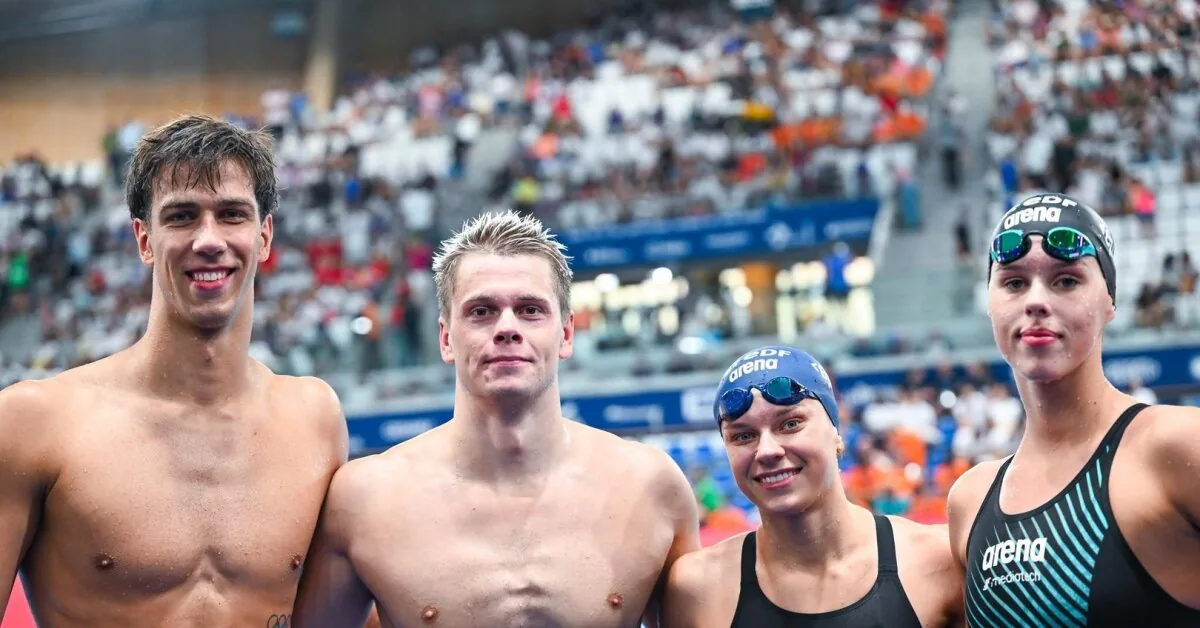
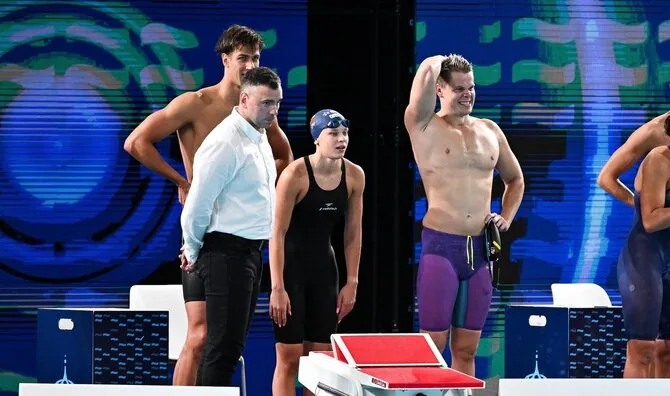
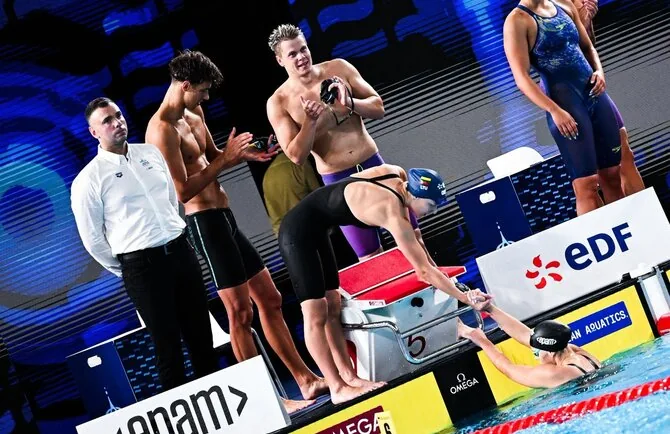
The Lithuanian team delivered a beautiful race in the new event at the European Championship and could hardly blame themselves after a fierce battle in the Paris pool.
Swimming in 7 min. 28.05 sec., the Lithuanian quartet set a new record, cutting almost 4 seconds off the morning qualifying result (7 min. 31.97 sec.).
However, the British, who ultimately improved the championship record (7 min. 24.13 sec.), won gold, the Germans took silver (7 min. 25.43 sec.), and bronze went to the Russians competing under a neutral status (7 min. 26.35 sec.).
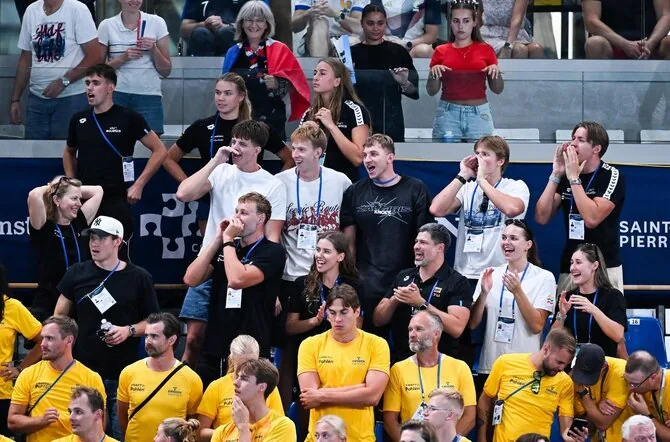
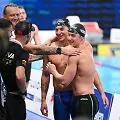
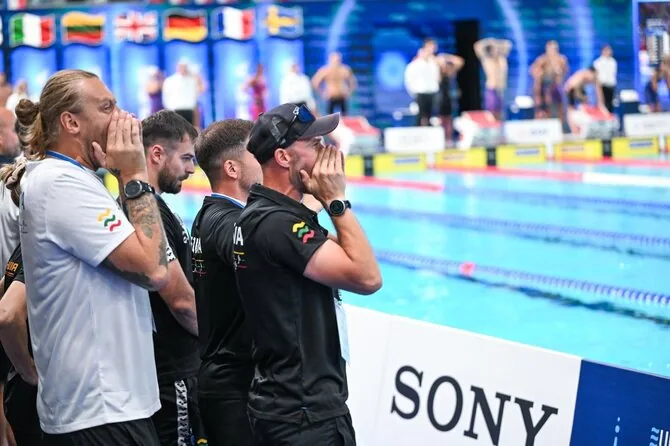
The Lithuanians finished fourth, loudly supported by their teammates in the stands.
“The time is normal, I gave everything I could. I am happy with the team – for the first time two girls and two boys came together. Fourth in Europe, so there is nothing to complain about,” said Tomas Navikonis, the new team leader, who won silver in the 200 m freestyle individual event the day before.
“I think fourth in Europe is quite normal,” assessed Sylvia Statkevicius.
“We all did what we could. Our crowd swam cosmically fast, I am glad that under such European Championship pressure everyone can swim so fast. Really wow!” praised D. Rapšys. “I think there will be very good things in the future.”
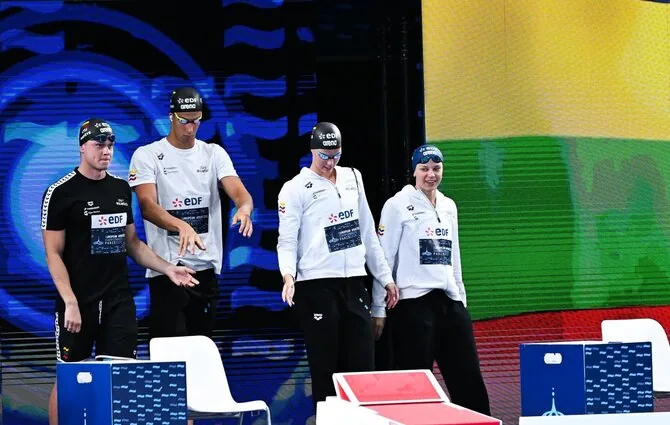
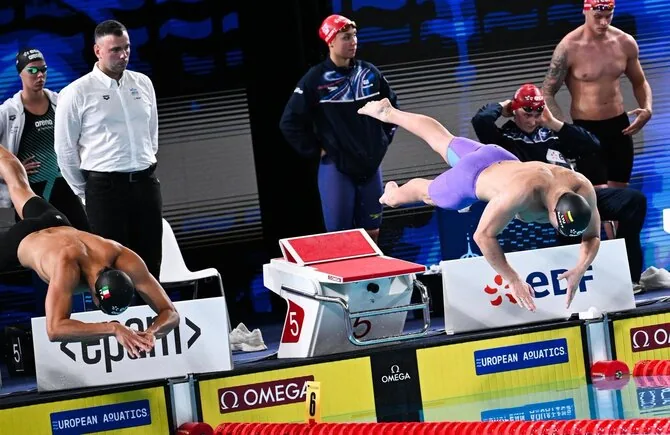
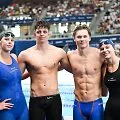
D. Rapšys, T. Navikonis, Sylvia Statkevičius, and Ieva Jurkūnaitė jumped into the final of the new event in the fifth Paris pool.
Two girls also swam in the relay qualifying, where the Lithuanians showed the second-best result among eleven teams.
Meanwhile, Kristupas Trepočka and Tajus Juška, who swam in the qualifying, were replaced by coaches’ prior decision with D. Rapšys and T. Navikonis – both the strongest swimmers in this event.
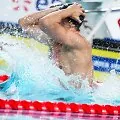
Starting, D. Rapšys gave his all and stayed close to the leaders, slightly behind them.
“I tried to do everything I could, but the last 25 meters started to drag in my eyes. I didn’t feel good in the water, I just did what I could. But how they (other team members) swam – it’s cosmic how well. Maintaining such speed is high skill,” said D. Rapšys.
23-year-old T. Navikonis swam even faster than his teammate eight years his senior, although he fought in the final the day before and had a tough night after winning his first career medal at such a high-level championship.
“I slept poorly, couldn’t relax, so I fell asleep late, but today at lunch I doubled my sleep dose, so it was better,” said T. Navikonis.
Understand instantly
Navikonis, who left opponents behind on the way to the silver finish, marveled at himself: “This is cosmic”
After the record race – a show interview of two Panevėžys natives after the finish: “Absolute cinema”
New event – new Lithuanian hope to win a medal: “The chances are good”
Why did it fail? Our fastest swimming sprinters looked for answers in the Paris pool
He handed over the relay to the team in third place, and then S. Statkevicius tried to keep hope for medals, touching the wall fourth before the last leg.
“It was tough at the end, but I am proud of Ieva because she really pulled us through,” said the 19-year-old Lithuanian-Canadian.
Starting the last leg, I. Jurkūnaitė was ready to try to create a miracle.
Although only a few meters separated her from third place, the youngest team member started the distance powerfully and at one point even surged into second place, overtaking the Russian and German swimmers.
“Ieva jumped into that last leg, Tomas and I said: ‘God, is it possible to finish after starting so fast,’ recalled D. Rapšys. “But she saw the other competitors, started with such a result that even I would have something to do to swim that fast.”
I. Jurkūnaitė swam even faster than a few days ago when she reached the European Championship final for the first time, finishing fifth there and setting a Lithuanian record.
However, she could not maintain the furious pace, and at the end of the relay, competitors from Germany and Russia regained the advantage.
“There was a lot of motivation, but I really started too fast,” admitted I. Jurkūnaitė. “It is what it is.”
The Lithuanians had little to complain about, only D. Rapšys half-jokingly, half-seriously blamed himself.
“We know we can fight for a medal, so the motivation was such that we had to overcome ourselves, no matter how hard it would be
We all started fast, swam well. I think you can blame me – if I had swum a second faster, maybe we would have taken it, but I couldn’t do anything more,” said D. Rapšys.
I told Ieva before: give me some strength, take off at least 10% from yourself so that I would be fine.”
“You told me that I still had a final waiting for me,” smiled I. Jurkūnaitė.
The Lithuanian swimmers, who gave their all this week, are preparing for the end of the championship and the trip home.
Of the relay members, only S. Statkevicius still planned to swim the 400 m freestyle qualifying on Sunday morning.
D. Rapšys and I. Jurkūnaitė, who had previously considered this event, shook their heads.
“I can barely see the image, I hardly see you and only see silhouettes. Maybe that’s enough, we did what we could,” said D. Rapšys. “Unless Tomas can still do it?! When he’s on, maybe he could snag a medal in the 400 m, right, Tomas?”
“No, thanks,” cooled down his teammate T. Navikonis.
“Or split the distance with Ieva. Ieva will start with a world record, and Tomas will finish,” D. Rapšys continued his fantastic idea.
In these competitions, Mantas Pečkaitis officiated lane five, so even the referee received remarks from D. Rapšys.
“He could have sped up our time, at least minimally,” the swimmer joked. “But probably he gave me a penalty and took it off Ieva. It was what it was.”