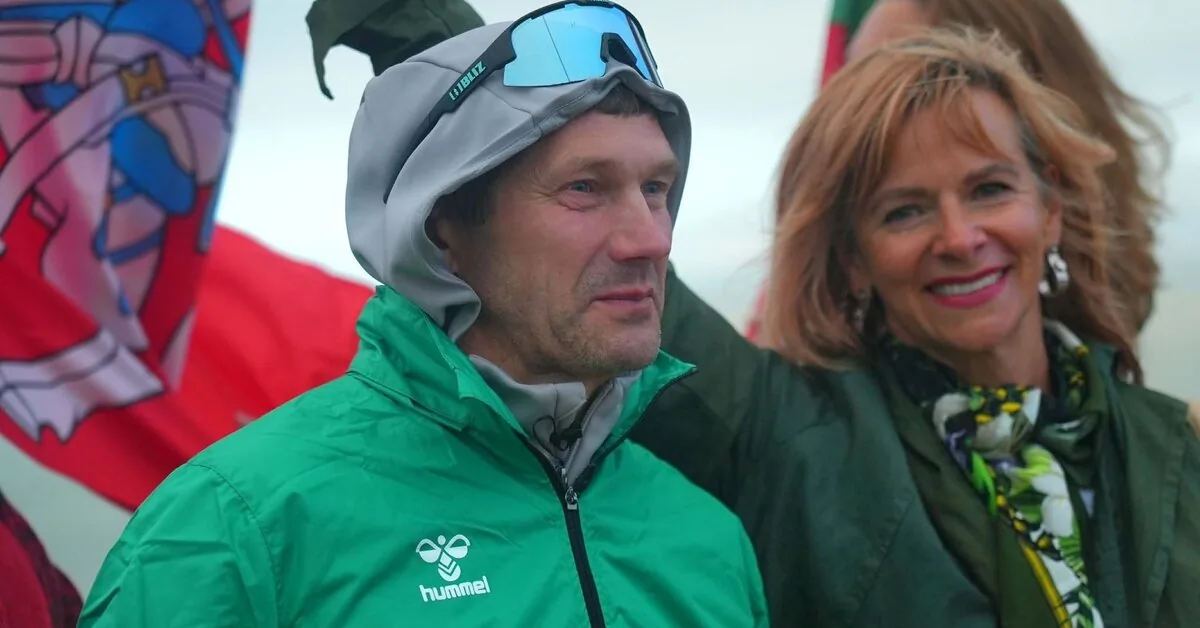
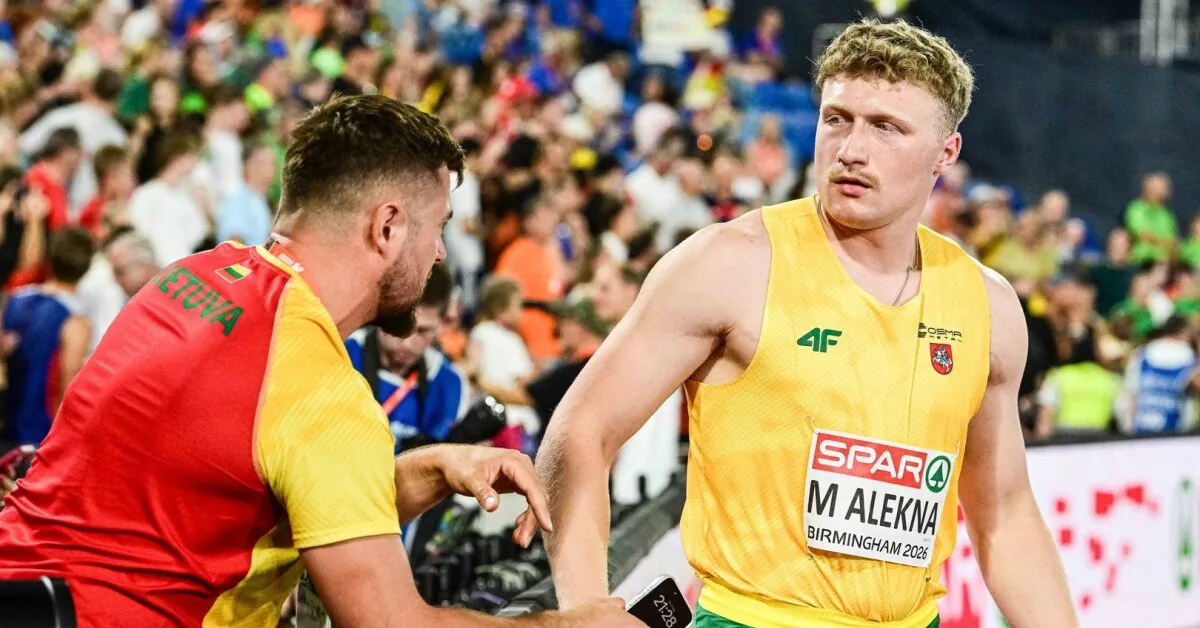
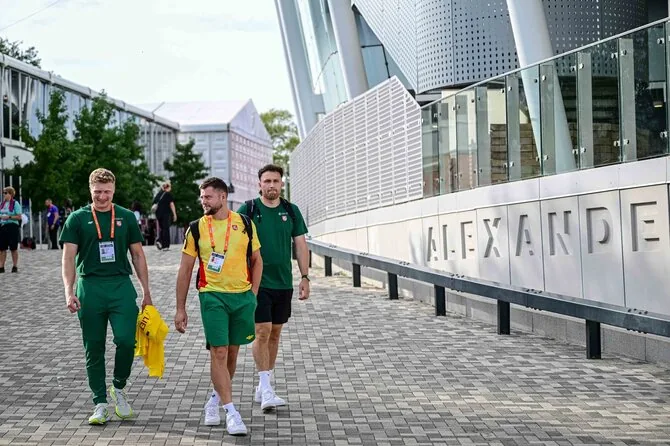
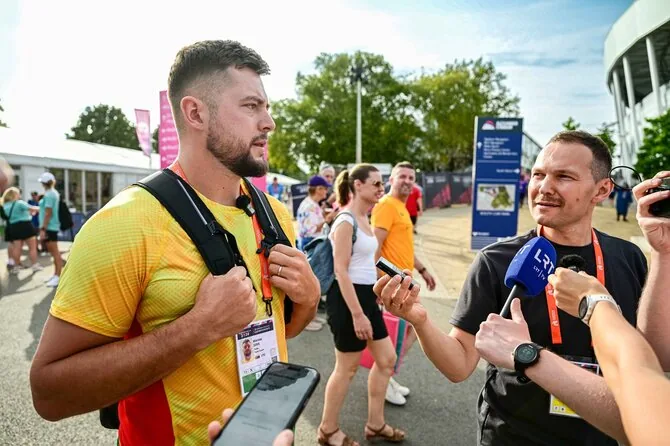
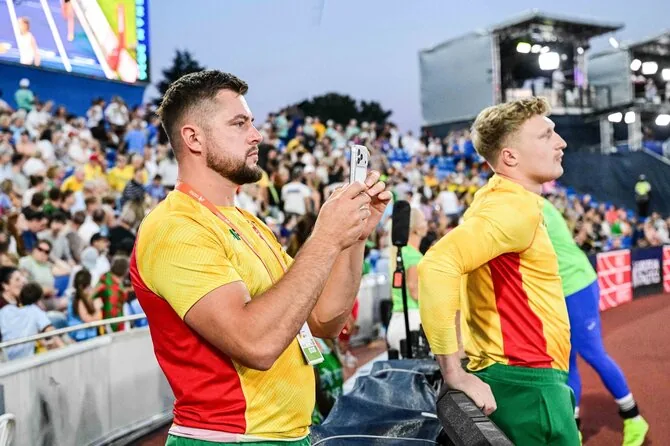
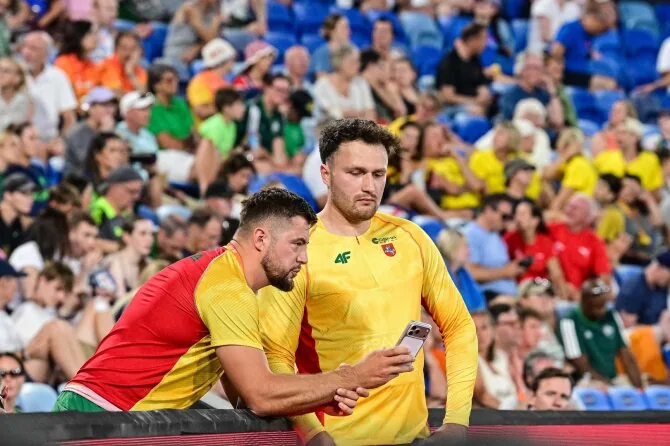
“A medal is a medal. Mykolas is the only discus thrower who has been winning medals for Lithuania at every championship since 2022. The same Kristjan Čeh was not among the medalists at the Olympics, nor at last year’s World Championships in Tokyo. This championship was at such a level that even Daniel Stahl did not make it among the prize winners,” said the 38-year-old specialist before the awards ceremony on Friday near the Alexander Stadium. “Of course, the consistency is pleasing, the medals constantly brought to Lithuania, but we probably want other things now.”
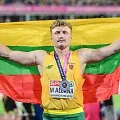
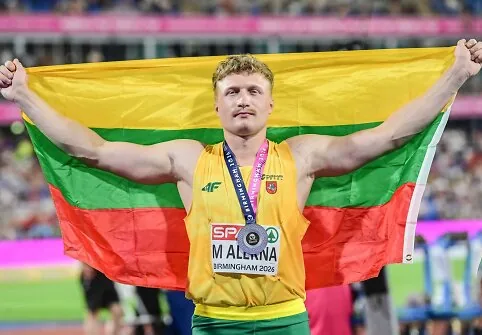
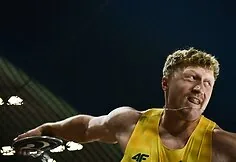
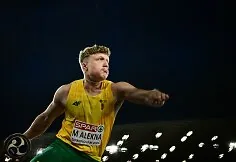
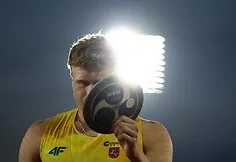
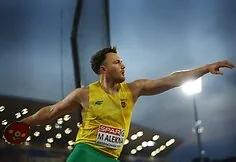
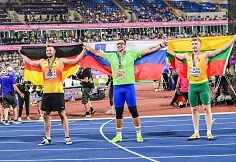
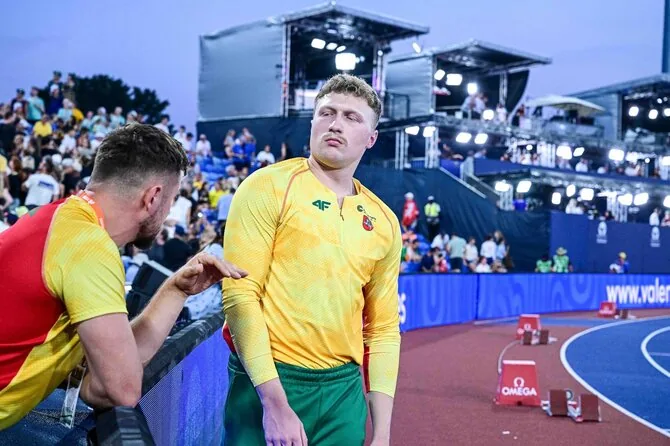
His trainee Mykolas, whose season in spring was hanging by a thread due to a torn chest muscle, took 2nd place (69.89 m) in the historic men’s discus final (highest average result – 66.28 m).
“It takes at least a couple of weeks for all the emotions to settle… To go home, get a good sleep. Now everything is still held inside,” continued M. Jusis.
– There was no big celebration last night. We returned to the rooms, took a bath. It was already about 1:30 a.m. We talked faintly, slept well, and talked again today because a few important starts remain. We want to participate well in them, to show what we are ready for. With those moods, we even went to train today.”
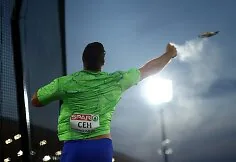
Gold went to the biggest competitor, Slovenian Kristjan Čeh, who set a championship record (72.51 m), and bronze was worn by the German Henrik Janssen, who threw the farthest this season (69.53 m).
2026 European Championships Men’s Discus Final
+29
Another of M. Jusis’s trainees, 25-year-old Martynas Alekna, took 12th place (61.78 m), and the third Lithuanian, 35-year-old Andrius Gudžius, finished 9th (63.99 m).
Understand instantly
The last time three Lithuanian discus throwers competed in the European Championship final was in 1998 in Budapest, when Virgilijus Alekna won bronze (66.46 m), Romas Ubartas took 9th place (61.66 m), and the current coach of A. Gudžius, Vaclovas Kidykas, was eleventh (60.21 m).
– If we look again at that final, what were the key highlights?
– You probably don’t need to be a huge specialist to see them. Mykolas’s first throw was so easy, almost 70 meters, which was very pleasing – it wasn’t a good throw, just the first, valid one, and almost 70 m.
Then K. Čeh made his first throw, throwing 70.83 m. That put some pressure, but it was not yet the thrower whom (Mykolas) could not respond to. On the third throw, K. Čeh threw 72.51 m, and then it was clear that Mykolas psychologically faltered a bit. He lost balance, the emotion was not right, the self-control was off, and it was difficult to come back and respond, although this season we definitely prepared psychologically.
We talked that this is usually our problem in the main competitions. There were competitions in Estonia where we gave a good response, although Kristjan pressed well. There was the Diamond League, where K. Čeh gave a good response, and we responded even better. We really reacted well all those times. This time it didn’t work out, unfortunately. But we don’t lose enthusiasm. There are still 3–4 competitions left this season. We want to fight, to make up for it.
– Romas Ubartas said today that when coming to such championships, athletes try to have more starts – 6–8. For understandable reasons, Mykolas did not have such opportunities this year. Could this have been one of the reasons?
– How a season falls into place… It’s not bad. For example, Mykolas once had many commercial starts, came to the European Championships in Rome, and shot completely empty shells. This season, it seemed he had few starts, no NCAA championship, did not look exhausted, with few competitions, good concentration, preparation, good meters in training – everything is super, but it doesn’t work out… There is no one formula that tells you how to do it. It’s easy to say when it doesn’t work. I don’t think that was the reason because he threw far from the very first competitions this season.
– And if we go back to April and someone told you then that you would win silver at the European Championships – would you take that option?
– I would take gold (laughs). Of course, I would take silver too. No question. But we immediately, as soon as he suffered the injury, talked that he would participate in this championship. He asked not to tell anyone, not to raise expectations for people. We agreed that the plan was just to prepare and participate.
I really thought he would participate, but we thought about 67–68 m and fighting for bronze or fifth place, which is still a very big achievement for Lithuania. After all, there are not many such athletes. But he came back and threw 71–72 m.
– In the final, there was also your other trainee Martynas Alekna and Andrius Gudžius, so again three Lithuanians competed. That also needs to be highlighted, right?
– That is very pleasing. Andrius always participates in finals, although he has many health problems. I think if he could prepare properly and do not 40–50% in training, but at least 90 – he could definitely throw 67–68 m and almost fight for medals.
This season is not so successful and suitable for Martynas. We will sit down after September, discuss all the problems and mistakes. Those mistakes are clear. We will fix them and really want to be in the final again at the World Championships next year. And again have three Lithuanians, which is not easy but very motivating.
– Will you finish the season in Lithuania this year?
– Yes, I invite all Vilnius residents, Lithuanians on September 12 to the Vilnius City Mayor’s Cup. We invited K. Čeh, Olympic champion Jamaican Roj Stone, several Dutch discus throwers from this championship. It will be the season closing, and we can finally celebrate then.
Having won silver, Mykolas completed his collection of European Championship medals (he won gold in 2022 and bronze in 2024).










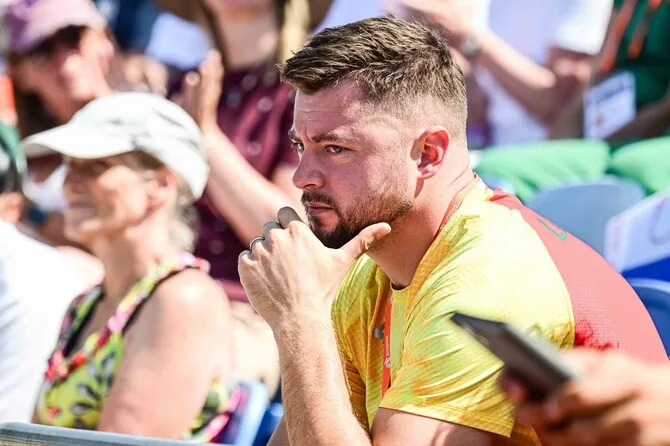

 Kristjan Čeh
 Mykolas Alekna
 Henrik Janssen
 Daniel Stahl
 Shaquille Emanuelson
 Diego Casas
 Dimitrios Pavlidis
 Lukas Weißhaidinger
 Lolasson Djouhan