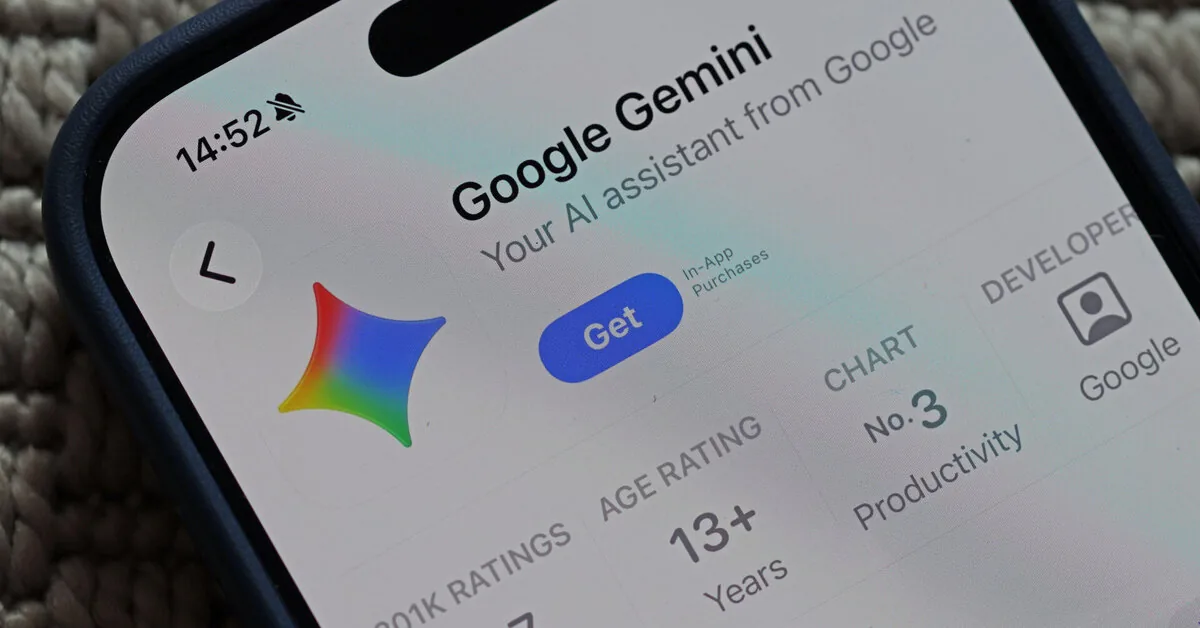
“This is our fastest growing product ever” and the 14th product to reach one billion users, S. Pichai wrote on social media.
Read more A solid EuroLeague club offer for Michael Jordan’s successor
This achievement, which Google calculated based on the number of users of the Gemini app across its ecosystem, is a major victory for the internet search giant at a time when it is fundamentally restructuring its AI division.
Nobel Prize in Chemistry laureate Demis Hassabis recently stepped down from managing the Google DeepMind lab that develops the Gemini models. Several leading researchers also left, including Jeff Dean, who was the main person behind the group’s engineering efforts for nearly three decades.
The new flagship model Gemini 3.5 Pro, initially promised for release in June, has still not been launched, while competitors have already introduced several models considered more powerful, especially in the field of computer code generation – currently the most profitable sector in this field.
Read more Couple and potato soup with smoked sausages – hearty and cozy any day
Given this technological lag, Google’s audience remains the company’s main asset as it integrates AI into its ecosystem – from Search and Gmail to Google Maps and YouTube.
Competitor OpenAI has already reached one billion users across all its interfaces, led by ChatGPT. Every audience metric contributes to the value OpenAI hopes to achieve eventually through an initial public offering (IPO), for which it filed a confidential application in June.
According to data from research firm Sensor Tower, which uses company data to assess product usage, ChatGPT’s market share in the AI assistant segment fell below 50% in the first half of this year, indicating that competition with Gemini, China’s DeepSeek, and US competitor Anthropic, which develops Claude, is intensifying.
Read more Lithuanian priests who received punishments: pornography, sexual relations, and Grušas’ apology