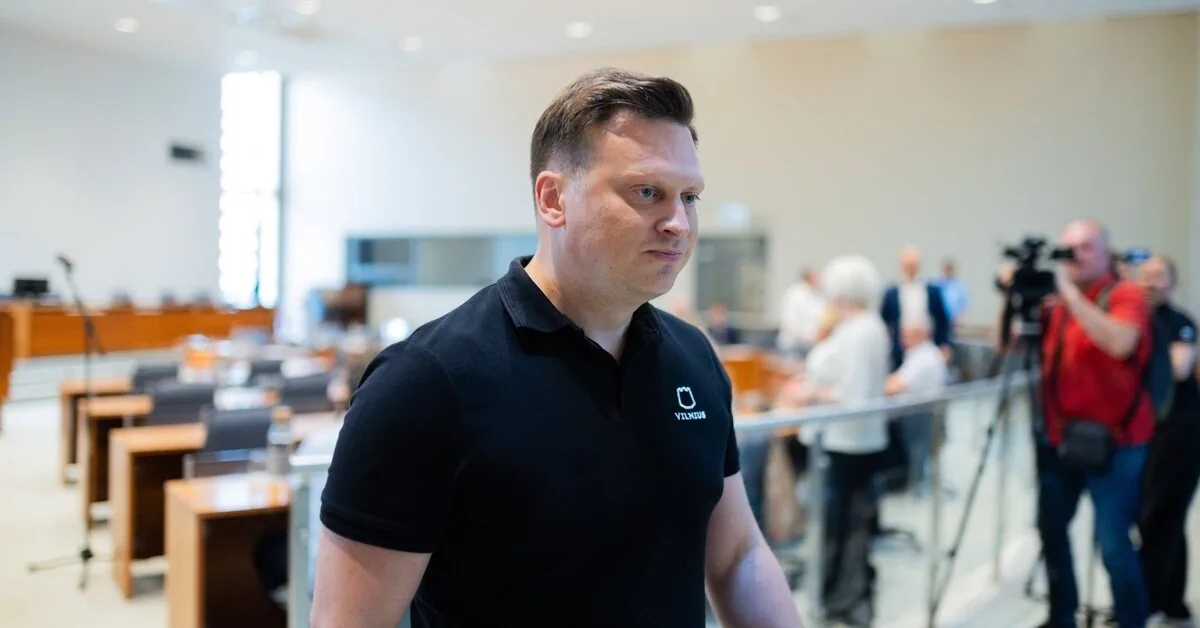
„When we announced initiatives for foreigners arriving from third countries, primarily not to allow their children to study in Russian schools, that was one message. Then we announced our plans to provide opportunities for foreigners to learn Lithuanian if they want to live here for a longer time,” the mayor of Vilnius told journalists on Monday at the Seimas. “And the third initiative, which we are now consistently implementing, is reducing the availability of the Russian language when it comes to receiving public services.”
Read more Resigned and returned Kurtinaitis: «I don’t feel as bad as you would like»
“This is not politicking, but concrete measures that show policy consistency,” he emphasized.
He said this after Prime Minister Mindaugas Sinkevičius doubted the reasons behind this decision – whether it was a political initiative or a communication step. The chairman of the Democrats, Virginijus Sinkevičius, has also stated that this decision is not entirely clear.
As reported by BNS, the Vilnius city municipality announced last week that it will no longer accept residents’ requests and complaints in written Russian. Information in this and other non-European Union languages will be provided verbally if a specific employee speaks them.
Russian has also been abandoned on the website and in the administration’s customer queue management system.
“We do not stigmatize the Russian language itself, that now we will ban speaking it or if we hear someone speaking Russian on the streets, we will start some investigations,” said V. Benkunskas.
Read more Trump and Taylor Swift conflict – unexpected White House decision
“Naturally, if people can only communicate in that language and if we have employees who speak Russian, such services can be provided, especially in healthcare institutions. But at the same time, we will not go out of our way if there are principled positions of people who say: ‘I speak only Russian,’” he said.
According to the mayor, public services and information for Russian speakers will be attempted to be provided by other means, as is currently done when communicating with residents speaking other foreign languages.
The municipality also announced last week that it is expanding Lithuanian language learning opportunities for residents of foreign origin. This year, more than a thousand people are planned to be trained in free courses and remote learning, with an additional funding of 300,000 euros allocated for this.
Moreover, language clubs will start operating in the capital in the fall, regularly held in different parts of the city. By the end of this year, it is planned that foreigners living in Vilnius will be able to independently learn Lithuanian on a dedicated learning platform.