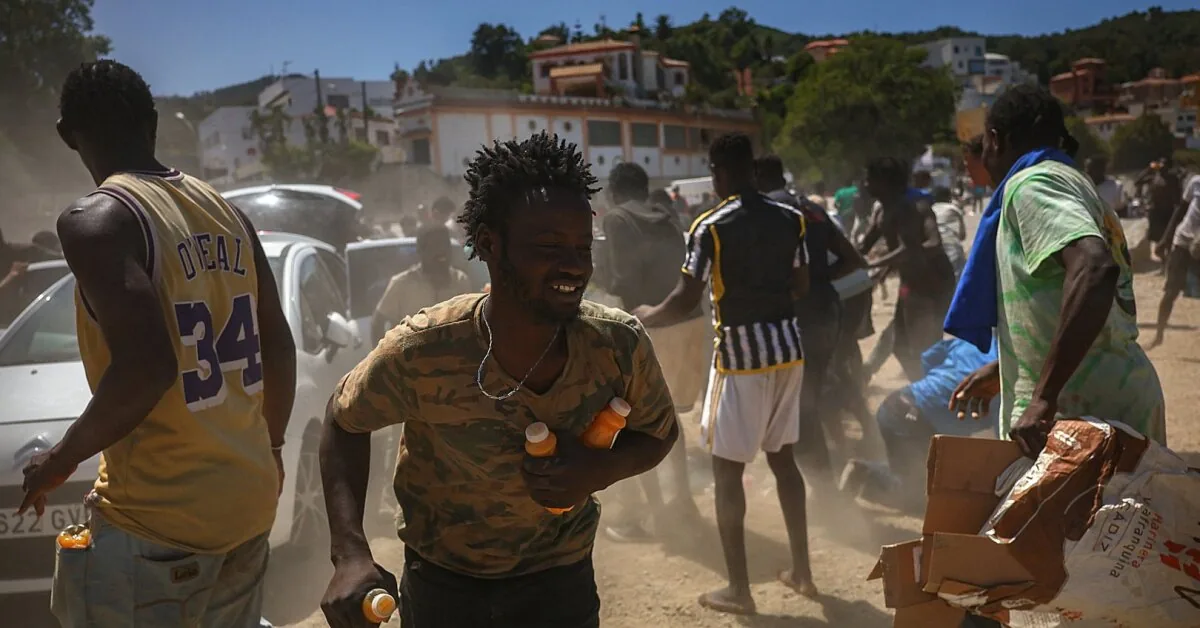
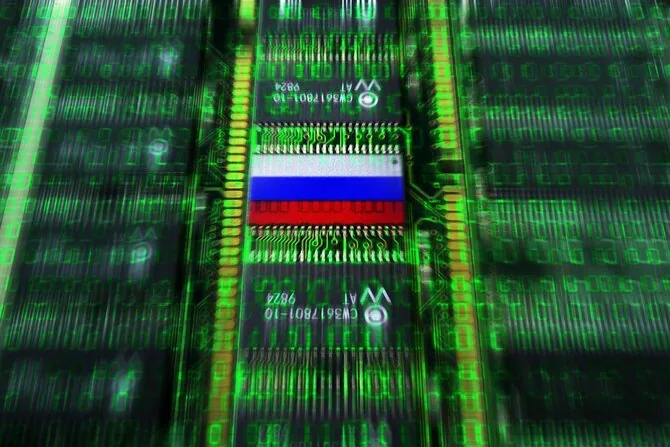
Social media accounts linked to Russia reached more than half a million people within days after the massive influx of migrants into Ceuta, a Spanish territory, according to an analysis by the disinformation-fighting group “411” reported by The Guardian.
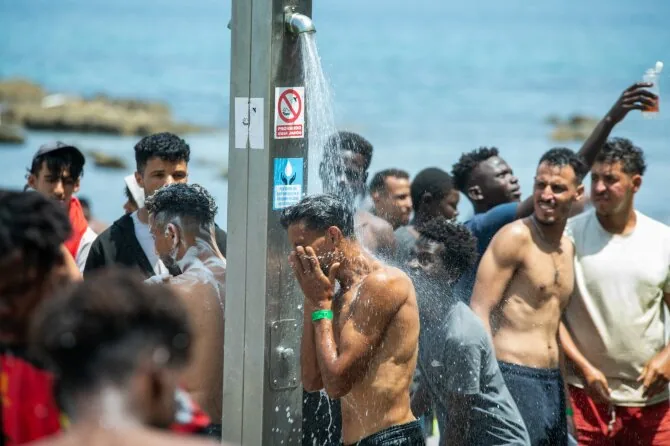
The crisis began at the end of July when tens of thousands of people tried to enter the small Spanish territory in North Africa from Morocco. Within a few days, about 72,000 migrants reportedly entered Ceuta, but most were soon returned.
“411” analyzed approximately 4.5 million social media posts and found that immediately after the crisis began, rapidly spreading coordinated-looking messages emerged, portraying the events as a deliberately organized “attack.” Some messages also claimed that authorities were allegedly aiding migrants, accompanied by Islamophobic and anti-Semitic conspiracy theories.
According to the analysis, these narratives were quickly translated into seven languages and gathered more than 720,000 views in just six hours on August 1.
One of the primary sources of such information identified by researchers is “Rybar” – a popular Telegram channel linked by UK authorities to Russian intelligence. The company managing Rybar in Europe has also been sanctioned.
The content it published was further spread by so-called “repeater” accounts. Among them were channels associated with the “Pravda” network – an international infrastructure used to disseminate Kremlin-friendly content in various countries.
Researchers speak of a functioning “machine”
Saman Nazari, chief researcher at the Brussels-based organization Alliance4Europe, said similar processes are increasingly seen in different European countries.
“It seems there is some kind of functioning machine or structure,” he said.
According to S. Nazari, information campaigns of this nature during crises in Europe recur too regularly to be explained solely by spontaneous engagement with a popular topic.
Read more Tomatoes with apples «2 in 1»: winter preservation recipe without vinegar

“411” chief researcher Ned Mendez compared the process to a “very specific and organized information highway”: content entering it receives a dissemination boost that other messages do not have.
Analysts noted that compared to a similar Ceuta migration crisis in 2021, the far-right mobilization this time was much faster. Calls appeared on social media urging nationalists to go to Ceuta and “patrol” near residential homes and businesses, and within a few days nationalist groups were already gathering in the main city square.
Migrant mutual coordination – a separate phenomenon
However, the study distinguishes two different processes.
Social media also played a significant role in the migration crisis itself. Rumors spread online that the border with Ceuta was open, and advice was shared on how to reach it.
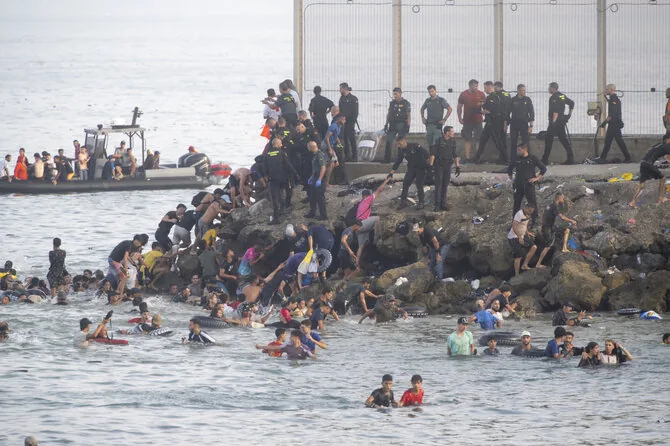
“411” detected many migrant-to-migrant conversations about travel logistics, especially under videos about Ceuta. However, researchers emphasize that this coordination appeared organic: it was mostly carried out by small anonymous individual accounts, not by a single identifiable organizer or recruitment channel.
Thus, the analysis provides no evidence that channels linked to Russia organized migrant movements. The stage linked to Russian structures is the exploitation of the already ongoing crisis to strengthen far-right and destabilizing narratives.
According to “411” researchers, this existing information dissemination infrastructure is the greatest concern because it can be used during another migration or political crisis.
“Next time an incident occurs somewhere in the Mediterranean region at a border, the same information transmission networks will already be ready to take it over and spread it,” warn the authors of the analysis.
Read more Justinas Jarutis and Urtė Andriuškevičiūtė secretly got married: wedding – after 5 years of dating