Citavo “expert”, but got confused
One internet user recalled an old disinformation campaign about allegedly sold organs of dead soldiers in Ukraine. He relied on the words of Stanislav Krapivnik, presented by the Kremlin as a military analyst and former US Army officer.
Read more A group linked to Russia accused of fake recording about Friedrich Merz’s resignation
He spoke about alleged Western officials’ activities in Ukraine – trading organs of dead Ukrainians. According to him, this was allegedly even legalized.
“Ukraine legalized the trade of human organs. Organs are not taken from dead bodies. As soon as the heart stops, blood circulation stops, cells do not receive oxygen, they die, tissue necrosis begins. Organs are taken only from living people.
A soldier, say, is wounded in the leg, but ends up with those black doctors and nothing is left of him. Russia seized these ‘meat factories’ in Ukraine before they could be evacuated.
As a soldier, I have seen many terrible things, but the images from there are tens of times more horrible than the worst Hollywood horror movie. You would not want to see that… These black doctors should simply be destroyed,” the Kremlin expert’s words were quoted by the internet user.
However, the internet user spreading the lie himself got confused: he spoke about trading organs of dead soldiers, although the quoted S. Krapivnik emphasized that organs are allegedly not taken from dead bodies. According to S. Krapivnik, soldiers’ organs go to Western markets and end up with the wealthy.
Who is this character?
S. Krapivnik is a frequent guest of Russian propaganda media, for example “Russia Today” (RT). He is presented as a former US Army officer, but his ideas align with Kremlin narratives. Moreover, the man provides no evidence for his claims about organ trade.
Also read: Welcome to RT – Russia’s propaganda machine
According to Russian media, S. Krapivnik is from Luhansk. Twenty years ago, from 1993 to 2004, he served in the US Army. Since 2010, the man has lived in Russia.
The Kremlin often exploits Western “experts” to support its narratives. For example, earlier, a US general, who was a national security advisor for a while but resigned due to accusations of lying about ties with the Russian government, also spoke about organ trade.
Also read: A legend to scare the gullible: Ukrainian soldiers abroad become organ donors
Rumors about illegal organ trade were also spread by top Russian officials.
Such fake news is part of Russia’s “Black Transplantology” campaign aimed at discrediting Ukraine’s military and political leadership and shaping a negative image of Ukraine in the eyes of the international community, says Ukraine’s Center for Combating Disinformation.
Old narrative
In the Kremlin’s information space, the narrative about alleged organ trade in Ukraine has been circulating for several years. 15min has previously written about the transport of dead soldiers’ organs abroad.
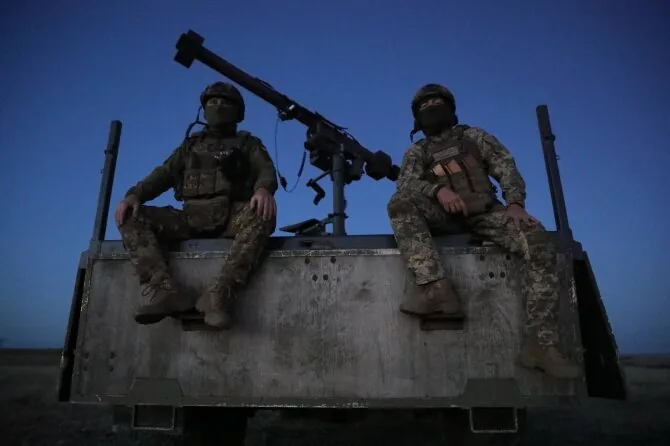
Also read: Explains that Ukrainian soldiers’ organs will be sent abroad for transplantation: is it even possible?
Also read: Did a popular beverage manufacturer really participate in trading Ukrainian children?
The information campaign has been ongoing since 2014. To create an impression of credibility, propagandists forge logos of well-known media outlets and falsely quote international sources.
Ukraine’s security service has previously denied such rumors.
In 2021, content was already spreading accusing the government of Ukrainian President Volodymyr Zelensky without any evidence of trading Ukrainian organs. After the invasion began, this story focused on soldiers killed at the front, in some cases foreigners.
There is no law
Ukraine has not legalized the trade of human organs. On the contrary, in January 2025, Ukrainian President V. Zelensky signed a law that, among other things, prohibits taking organs for transplantation from dead soldiers and persons killed due to armed aggression against Ukraine.
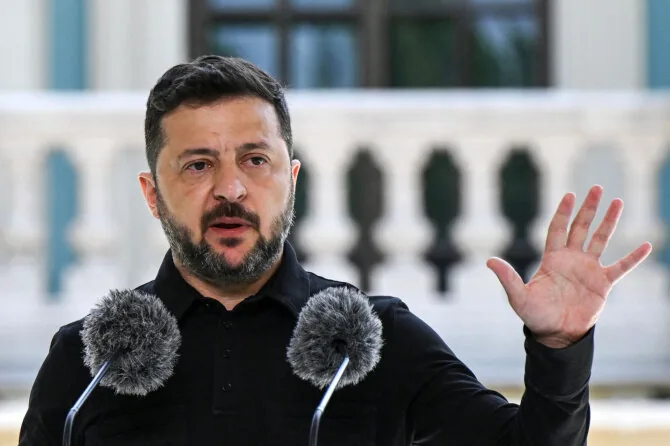
The explanatory note to the law states that anatomical materials for transplantation and/or bioimplant production are prohibited to be taken from orphans and children deprived of parental care, persons declared incapacitated, unidentified persons, persons killed due to law enforcement or security agencies’ coercive measures, as well as from members of defense and security forces killed in the line of duty, and persons killed due to armed aggression against Ukraine.
Read more BNS Sprint: Friday events in brief
Previously, such a ban was only valid in the Donetsk and Luhansk regions.
The authors of the law emphasized that such a strict ban was introduced precisely to prevent Russian manipulations and information attacks. “Hostile propaganda harms the positive perception of voluntary donation and may slow down the development of life-saving medicine,” the explanatory note states.
Such narratives allowed Russia to spread the lie that Russians do not attack Ukrainians but save them, as the country’s authorities allegedly constantly sell human organs on the black market, thus supplementing the budget of the impoverished country.
Meanwhile, families of dead Ukrainian soldiers stated that bodies of soldiers returned by Russia had no organs or showed signs of torture. If these facts were independently confirmed, such actions would be considered war crimes.
Technically impossible
Experts emphasize that the “black organ market” often depicted in popular culture, where organs are allegedly massively removed and sold as ordinary goods, has little to do with real transplantation practice.
Organ transplantation requires complex medical infrastructure, compatibility tests, strict time limits, and a large team of specialists, so secretly performing such operations would be extremely difficult.
Also read: Does Ukraine really pay for military aid with organs sold on the black market?
Mindaugas Šerpytis, head of the intensive care unit at Vilnius University Santaros Clinics, has already explained to 15min that the organ donation process throughout Europe is so expensive and complicated that it would be impossible to organize it bypassing official medical institutions.
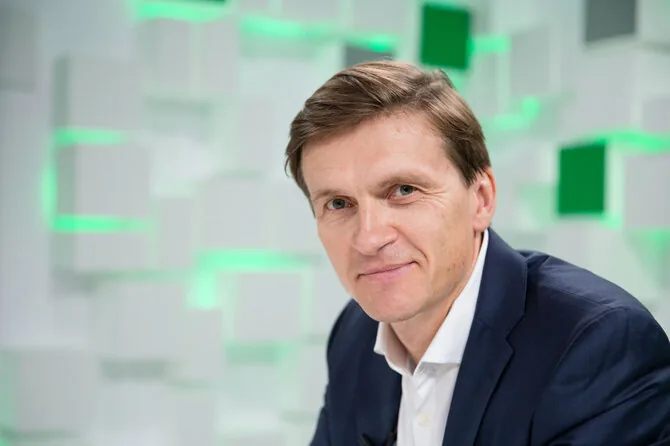
“Very expensive immunological tests are needed to determine which specific recipient a particular organ might fit. Operating rooms are needed, and two large teams of various specialist doctors must work there. Ensuring that a specific organ donor fits a specific patient is a very meticulous and complicated process,” the doctor explained.
According to M. Šerpytis, transporting organs by trains or cars from Ukraine would be an impossibly complicated process, as explanted organs, even connected to special devices that prolong their viability, are suitable for transplantation only for a very short time.
The initial selection of organ donor and recipient is done by an information system. Therefore, neither a person’s social status nor financial capabilities will help to receive an organ donor faster or recover faster. Also, not all persons are suitable to be donors.
M. Šerpytis emphasized that donation is so legally protected in various countries that illegal transplants become practically impossible.
“Physically, the black organ market in Europe is impossible, legally it is also impossible, and I cannot imagine what motive or morality a doctor must have to even think about such things,” the doctor explained.
According to him, organ removal in battlefield conditions is impossible – for a person to become a donor, their death must occur not on the battlefield but in a hospital.
“A person who is so injured that brain death occurs usually also has other organs damaged, so it is impossible to determine whether they would be suitable for transplantation at all.
To diagnose brain death and take organs, more than one doctor’s decision is needed. And, first of all, the patient is tried to be saved, fought for. Only when the situation is hopeless, brain death is declared,” he explained.
15min verdict: lie. The Kremlin “expert’s” stories have no evidence and contradict both Ukrainian laws and medical science.
Publication prepared by 15min in cooperation with “Meta”, aiming to stop the spread of misleading news on social media. More about the program and its rules – here.
Read more Another UTMA win – the coastal fighter stays in the organization for a long time