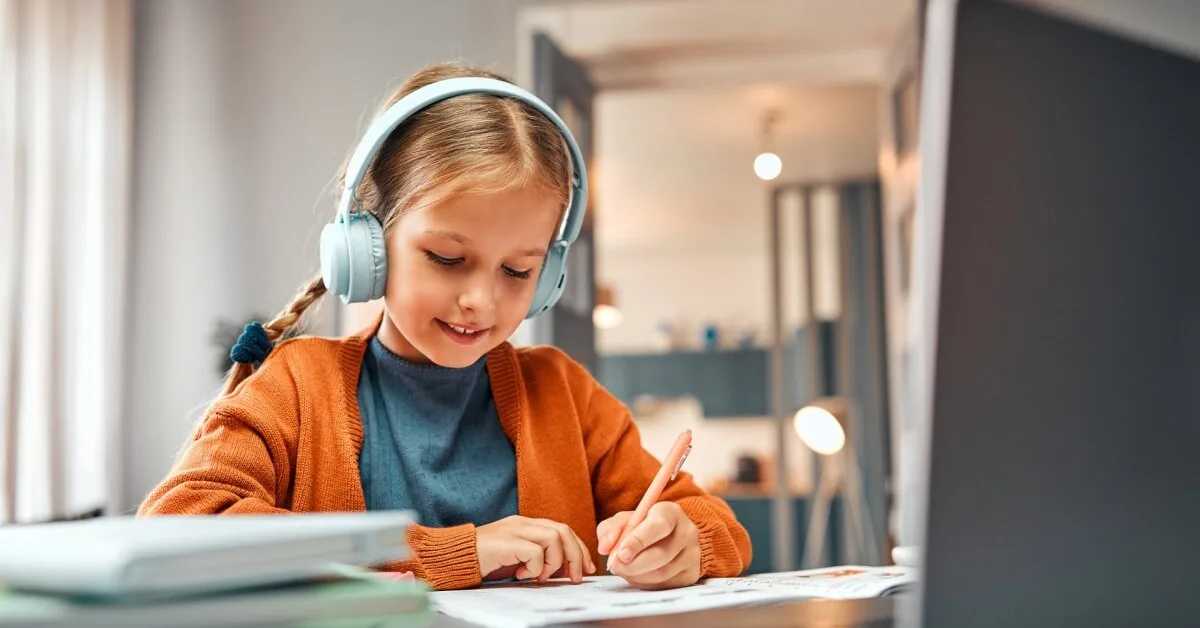
In some countries, discussions are already moving into state policy. With Norway announcing plans to limit AI use in schools, the question becomes relevant for Lithuania as well: should AI be restricted for children, or rather, should they be taught how to use it?
Read more In July, the US economy unexpectedly lost 23,000 jobs
Vitalija Latožaitė, head of VDU Lyceum SOKRATUS and education expert, says there is no single answer. However, the younger the child, the more important it is to first develop their fundamental skills – to teach them to read, write, count, analyze information, and independently seek solutions, according to a press release.
“A student must first be able to think independently. Therefore, the most important thing is not to think about banning, but about responsible use of technology. Problems cannot be solved by bans alone, because AI is already becoming part of our daily lives,” says V. Latožaitė.
Getting the answer is easy – but has the child learned?
According to V. Latožaitė, the greatest risk arises when AI does not complement learning but replaces it. A child who does not understand a math problem can ask AI to explain where they went wrong and why. For someone learning a foreign language, it can help deepen grammar knowledge or expand vocabulary, and in creative activities – suggest a direction.
“AI can definitely be very useful when it complements, rather than replaces, the learning itself. Speaking about creativity, it is important that AI is a source, not a creator who does everything for the student,” emphasizes V. Latožaitė.
However, she notes, technology is often chosen as the shortest path to a result. “Why solve a math problem if the answer can be obtained in a few seconds? The task is done, but knowledge and skills do not develop,” says the education expert. Therefore, it is important to teach the child not only to get the answer but also to evaluate it – whether the information is correct, what it is based on, and how it can be verified.
Is banning only a temporary solution?
Entrepreneur and futurist Ilja Laurs views AI restrictions as a stage society has already gone through with other technologies. “Any new technology goes through a phase when it is feared, it is unknown how to use it, and what the threats are. Therefore, one of the stages is usually simply banning it,” he says.
As an example, I. Laurs cites calculators – their use in schools was once also restricted, but over time they became a common tool allowing more attention to be paid to more complex tasks.
In his opinion, the same will happen with AI. It is already very difficult to control whether a student uses the technology at home when doing assignments. “I think this is a temporary restriction. When children, teachers, and the whole society better understand how to use AI, where its benefits and harms lie, the technology will not only be allowed but also encouraged,” predicts I. Laurs.
V. Latožaitė also agrees that schools cannot escape AI, so it is more important not to try to eliminate the technology but to agree on when and how it can be used. Teachers themselves must first prepare for this.
Read more Blooming Kaunas: the colors of the city’s green spaces are gifted from early spring to late autumn
I. Laurs adds that AI can also change what is generally required from a student in school. If technology can take over some routine tasks, a person has the opportunity to solve more complex problems. “It is important not only to learn to work with AI but also to learn to think independently, know what you want, and be able to set goals,” says I. Laurs.
The younger the child, the more adult involvement
Still, V. Latožaitė emphasizes that children cannot be given the same freedom to use AI. She does not set strict age limits – the maturity and abilities of the individual child are important, but younger children need more adult assistance.
“Many scientists agree that AI should be used only under the supervision and assistance of parents or teachers until the age of 12–13. Older children can be given more independence while also teaching responsibility,” she says.
In schools, according to her, the most important thing should not be bans but clear agreements: when AI can be used and when the student must complete the task independently.
“School must cultivate the young person’s transparency and honesty. If we all agree not to use AI when completing a certain task, we must follow such rules,” says V. Latožaitė.
AI will not pass the exam for the student
The education expert suggests not forgetting a very simple argument – there will be situations when technology simply will not be available.
“We go to take exams without AI. I would invite the student to think about this before choosing the easiest path. On that day, you can fool yourself or the teacher, but when knowledge or critical thinking is really needed, you will have to rely on yourself,” says V. Latožaitė.
Therefore, the question for schools today is probably no longer whether to allow AI. It is already part of students’ daily lives. It is much more important to decide what place to give it so that the technology helps to learn, rather than learning instead of the child.
“I always look for the golden mean and common sense. Extremes will lead nowhere – neither a complete ban on AI nor complete freedom to use it. We must learn for AI to bring us benefits, not for us to become its tool,” summarizes V. Latožaitė.
Read more Ukrainian military intelligence shares footage of marine drones flying to Crimea