Vilnius University Hospital Santaros Clinics has successfully performed the first transcatheter closure of a patent ductus arteriosus (patent ductus arteriosus, PDA) in Lithuania on an extremely low birth weight premature newborn. This is a significant achievement in the field of pediatric interventional cardiology and neonatology in Lithuania, reflecting the consistent implementation of advanced minimally invasive treatment methods and close multidisciplinary team collaboration.
Read more The last and different «goodbye»: Motiejus Lisauskas, who died in Nida, was sent off to eternity
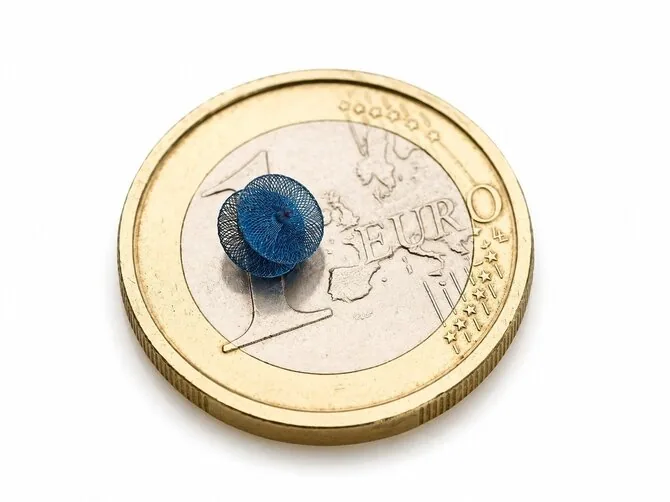
The little patient was born at 30 weeks of gestation and weighed only 918 grams. Despite intensive treatment, due to the negative impact of the patent ductus arteriosus on heart and circulatory function, heart, circulatory, and respiratory failure progressed. A multidisciplinary team of doctors, having evaluated all treatment options, decided to apply minimally invasive treatment. During the procedure, an Amplatzer Piccolo Occluder was implanted through the femoral vein – the world’s first implant specially designed for extremely low birth weight premature newborns, intended for transcatheter closure of the patent ductus arteriosus.
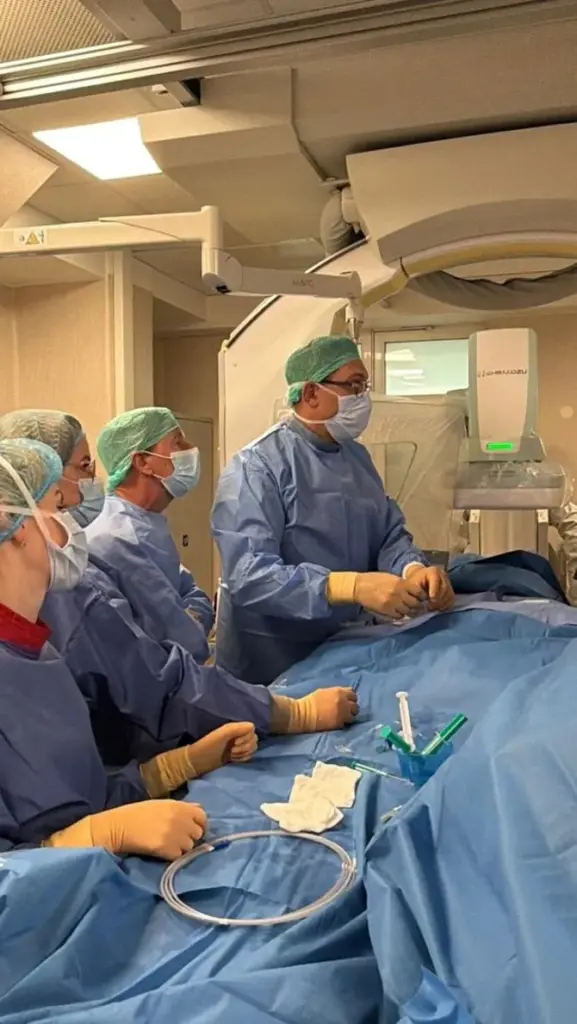
Although the patient weighed only 1300 grams during the procedure, the intervention was successful – the clinical condition stabilized on the same day, and after three days the newborn was transferred from the Neonatal Intensive Care Unit to the Neonatal Ward.
The patent ductus arteriosus is a normal part of fetal circulation that usually closes spontaneously after birth. However, in extremely premature newborns, it often remains open and becomes one of the most common causes of severe clinical conditions – causing heart failure, complicating breathing, increasing the need for artificial lung ventilation, and worsening the function of other organs.
Until now, such patients were primarily treated with medication, and if that failed – surgical closure of the ductus. In recent years, with the emergence of implants specially designed for extremely low birth weight newborns, such as the Amplatzer Piccolo Occluder, minimally invasive treatment has become a safe and effective alternative to surgery. This method allows, in many cases, to avoid urgent surgical operations in the neonatal period.
Consistently strengthening interventional treatment capabilities
Interventional procedures for premature newborns at Santaros Clinics began two years ago. Although there are not many such patients and only a small portion of extremely premature newborns require interventional treatment, various types of interventions have already been performed during this period. All were successful and allowed avoiding urgent surgical treatment or postponing it to a more favorable time when the risk of surgery is lower and the outcomes are better.
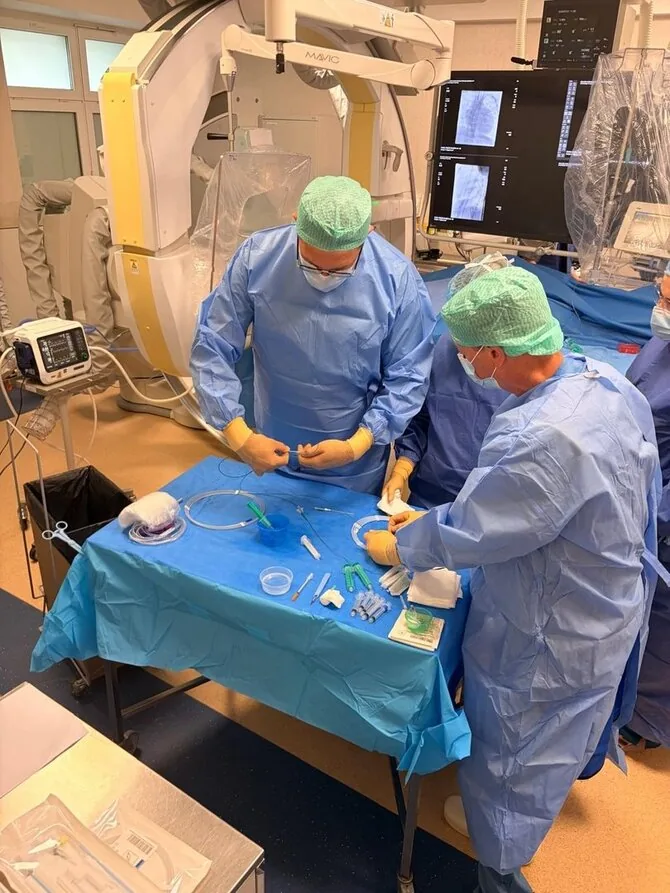
Patient’s mother: “Our daughter has already gained weight – now she weighs 1825 g”
Mother Raimonda recalls that upon learning about the necessary operation, there was a lot of anxiety and stress. The doctors thoroughly explained what procedure awaited, but the news about its complexity was hard to accept. “I hardly remember that day,” says the mother.
Fortunately, the procedure was short and successful. The mother especially emphasizes the positivity of the medical staff, which at that time provided much calm and strength: “Although Dr. Sigitas Čėsna mentioned that this would be the first time performing the procedure on such a small patient, we were reassured by the doctor’s ability to calm and instill confidence. I can say about the medical staff that their calmness, detailed explanations, and confidence in their work helped us endure one of the most difficult periods,” expresses the patient’s mother with gratitude.
Success was due to meticulous preparation and international cooperation
The first such procedure in Lithuania was carefully prepared in advance. To acquire the best international experience, Santaros Clinics doctors visited Finland, where they observed how such procedures are performed, discussed patient selection criteria, technical aspects of the procedure, and postoperative care. Preparation for the intervention also involved constant consultations with foreign specialists.
Read more “President, hands off Poland’s governance”: Sikorski calls Nawrocki’s tactic «suicidal»
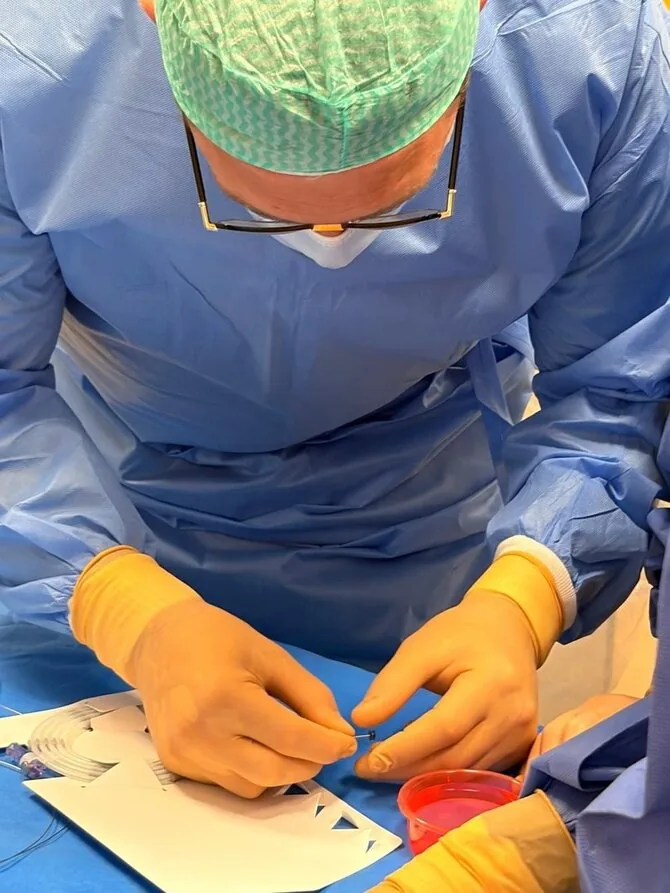
The first procedure in Lithuania was performed with the participation of an experienced pediatric cardiologist from abroad, who planned the intervention together with the Santaros Clinics team and took part in performing it. Such cooperation is a common international practice when introducing new technologies and ensures that they are started in compliance with the highest patient safety and quality standards.
According to Dr. Sigitas Čėsna, head of the Interventional Cardiology and Radiology Surgery Department at Santaros Clinics, the most important thing is not a single procedure, but consistently strengthening the team’s competencies.
“Two years ago, we started interventional procedures for premature newborns. Each is unique and requires meticulous preparation because we are dealing with the smallest and most fragile patients. The first transcatheter closure of a patent ductus arteriosus in Lithuania on a newborn weighing 1300 grams is an important milestone for our team. We prepared for this step consistently – we went to Finland to observe such procedures, consulted with colleagues abroad, and performed the first intervention together with an experienced professor from Norway. This allows us to introduce new treatment methods safely and responsibly.”
According to the doctor, the goal of interventional cardiology is not to replace surgical treatment but to select the optimal treatment strategy for each patient. “In some cases, the interventional procedure allows completely avoiding surgery; in others – safely postponing it until the newborn grows and strengthens. Such a decision can significantly improve surgical outcomes and reduce the risk of complications.”
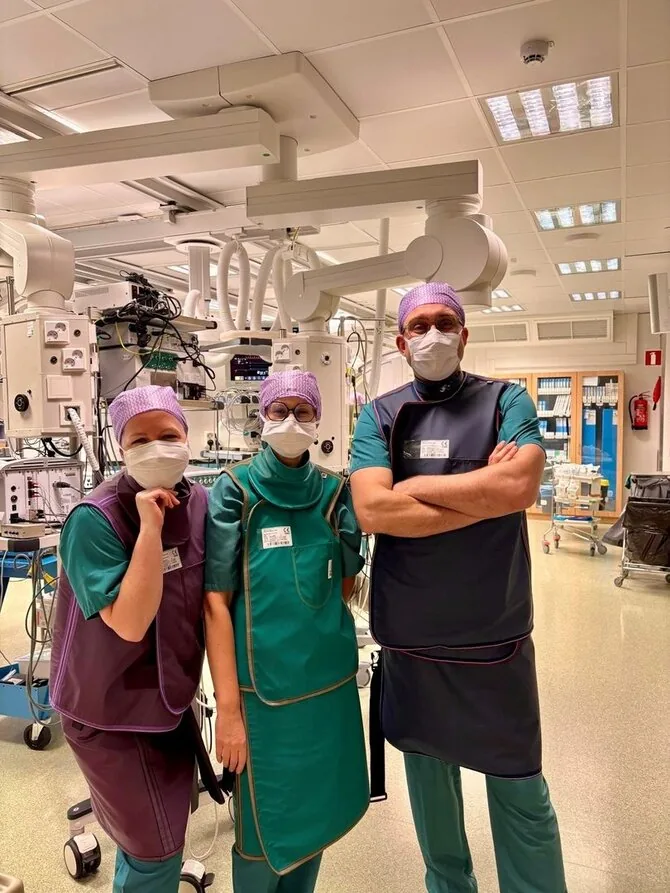
Dr. Aušrinė Pliauckienė, head of the Neonatal Intensive Care Unit, emphasizes that treating such patients is impossible without close collaboration among specialists from different fields.
“Treatment of extremely premature newborns requires individual decisions and close cooperation among specialists from various fields. When medication options are exhausted, minimally invasive intervention can become the best option to stabilize the newborn’s condition. In this case, clinical improvement was observed in the Neonatal Intensive Care Unit on the same day after the procedure, and after three days the patient could continue to grow and strengthen in the Neonatal Ward with her mother.”
Associate Professor Arūnas Liubšys, head of the Neonatology Center, says this achievement is the result of focused multidisciplinary teamwork: “Modern neonatology today is inseparable from close collaboration between neonatologists and specialists from other fields. Such interventions become possible only when a strong multidisciplinary team functions and all links work smoothly. This achievement shows that we can offer Lithuanian patients treatment that meets modern international standards, and the most advanced technologies become available in our country even for the smallest of our citizens.”
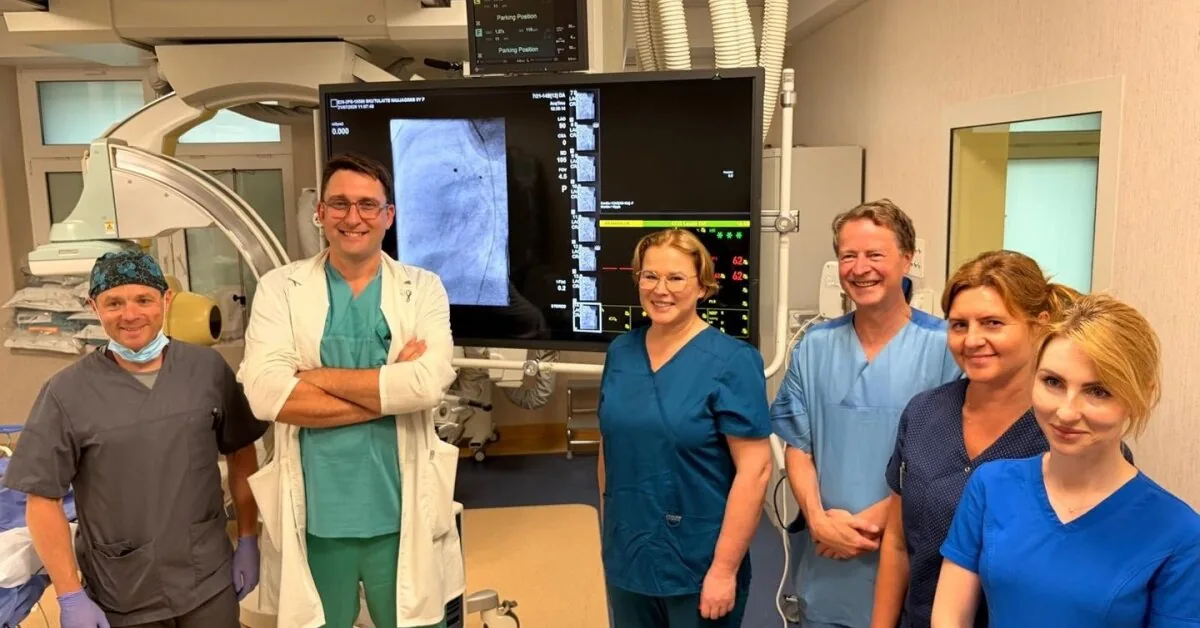
Interventional procedures for premature newborns at Santaros Clinics are performed by a multidisciplinary team consisting of interventional cardiologists, neonatologists, pediatric anesthesiologists, pediatric cardiac surgeons, and specialized nurses. Such close collaboration allows selecting the optimal treatment strategy for each patient and ensuring the highest quality of care.
Read more Life imprisonment for the Afghan who carried out the deadly attack in Munich