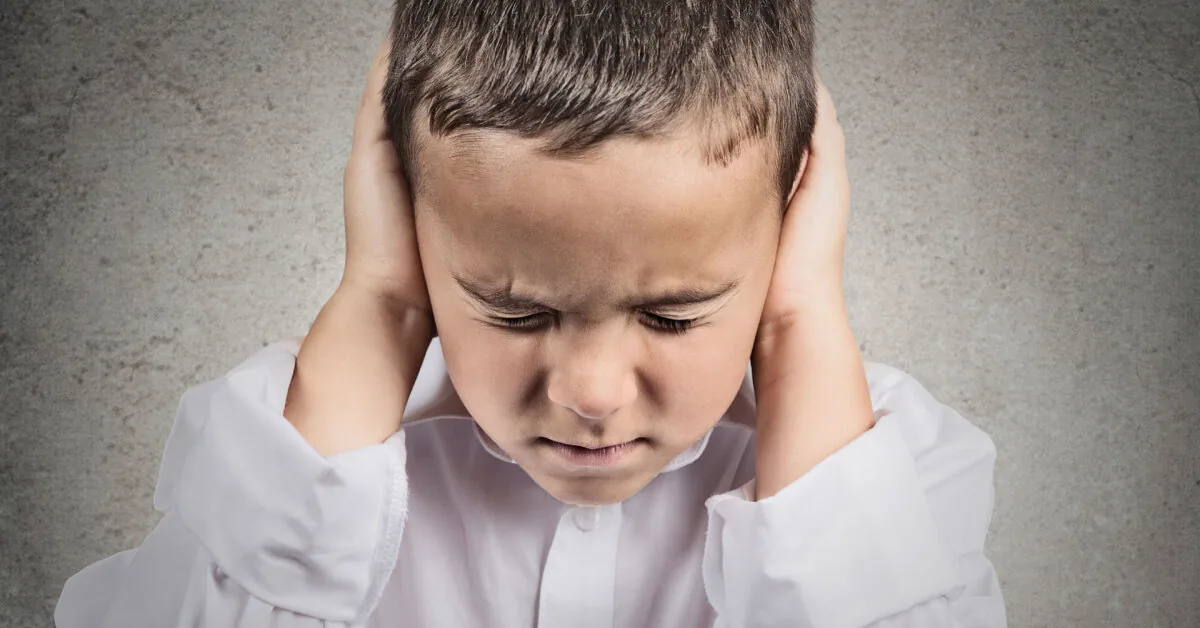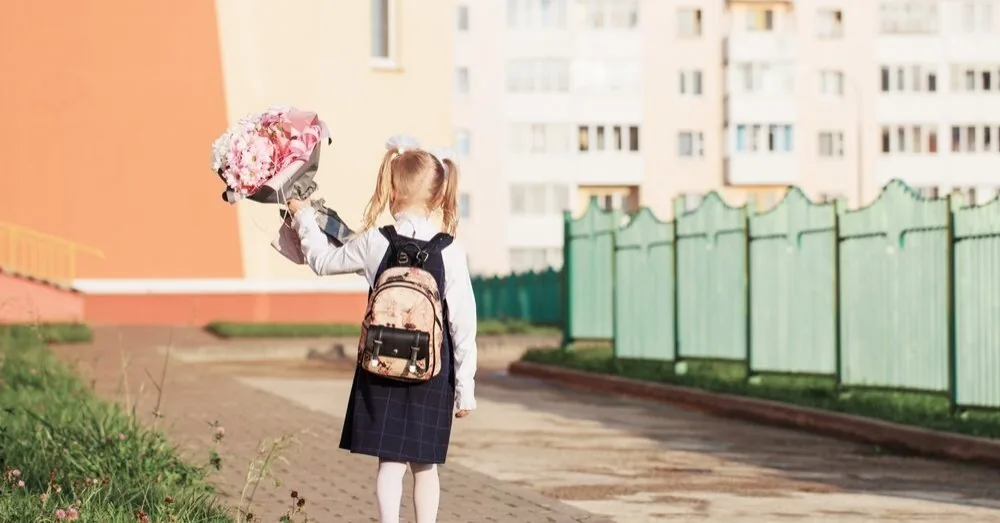
Experts agree – a successful start to the first school year depends not only on a new backpack or notebooks. Much more important is emotional readiness, support, and proper daily habits.
Read more In the LKL rules package – a novelty affecting the duration of the matches
No need to know how to read – the desire to learn is more important
Many parents worry that their child will come to school unprepared if they do not yet read or recognize letters slowly. However, educators emphasize that the first grade is meant for learning.
It is much more important that the child can listen to instructions, concentrate for at least several minutes, communicate confidently with peers, and not be afraid to ask questions if something is unclear.
If the child is curious, eagerly interested in the environment, and not afraid to try new things, they already have a very strong foundation to successfully start school life.
Talk about school positively
Children quickly pick up adults’ emotions. If parents constantly say: “Wait, school will be hard,” “There won’t be so much freedom anymore,” or “You’ll see, you’ll have to work seriously,” a first grader may start to be afraid even before attending classes.
It is much more helpful to talk about new friends, interesting lessons, experiments, drawing, sports, or clubs. School should not seem like a punishment – it should be associated with new opportunities.
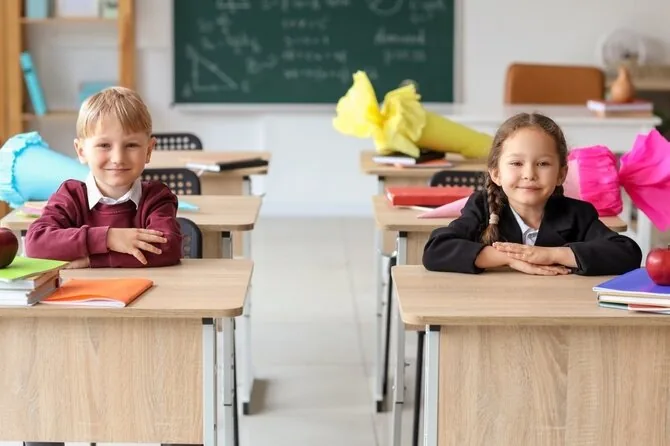
Start preparing in the summer
Suddenly changing the entire daily routine in the last week of August is usually difficult.
Therefore, a few weeks before September, it is worth gradually getting the child used to going to bed earlier and waking up earlier. The body will find it easier to adjust to the new rhythm, and the first weeks of school will cause less stress.
You can also walk together to the future school, show the classroom, yard, or route. The more familiar things the child sees on the first day, the safer they will feel.
Let the child prepare independently
Choosing a backpack, pencil case, or sportswear is one of the most enjoyable preparation stages for many children.
Allow the first grader to participate in this process. Let them choose their favorite color, design, or other detail. This helps them feel that school is also their own choice and a new stage of life.
Of course, the final decision is made by the parents, but it is very important for the child to feel that their opinion also matters.
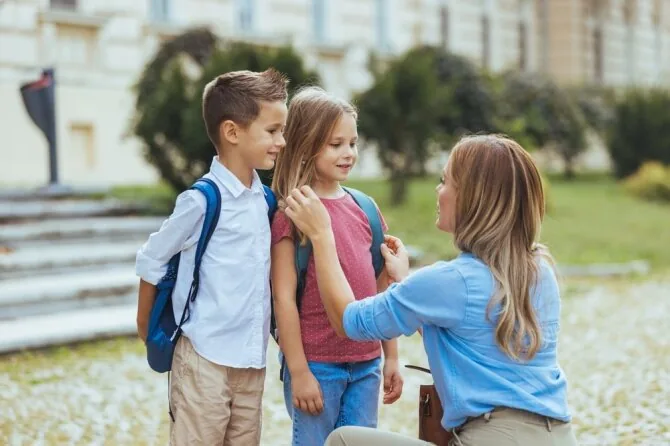
Foster independence
Before starting school, it is worth making sure that the child can perform simple daily tasks.
For example:
- dress independently;
- pack their backpack;
- organize their belongings;
- wash their hands;
- eat without help;
- ask for help if needed.
These skills are often no less important than recognizing letters or numbers.
Teach not to be afraid of making mistakes
There will inevitably be mistakes in the first grade. One day a letter won’t be written neatly, another day a pencil will be forgotten or a problem solved incorrectly.
It is very important that the child understands: mistakes are not failures. They are a natural part of learning.
If parents react calmly to failures and look for solutions together, the child accepts new challenges much more confidently.
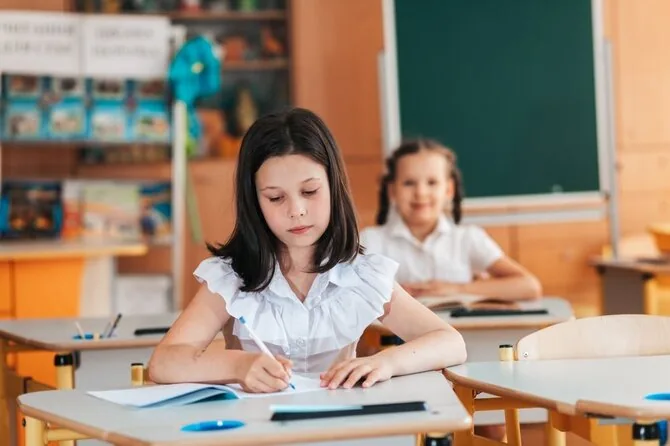
Don’t forget rest
The first weeks at school can be much more tiring than they seem to adults. A new environment, many people, rules, and constant concentration require a lot of energy.
Therefore, after classes, it is not necessary to rush to fill every day with clubs. The child needs time to just play, be at home, or rest quietly.
Don’t overemphasize grades
For first graders, it is much more important to feel that parents care about their experience, not the result.
Instead of asking “How did studying go?” try asking:
- What was the most fun today?
- What new thing did you learn?
- Who did you play with today?
- What surprised you?
- What are you most proud of today?
Such conversations help the child open up and build trust.
Don’t compare your child to others
Every first grader learns at their own pace. Some start reading quickly, others count more easily, and others draw or create stories excellently.
Comparing with classmates often reduces self-confidence and motivation. It is much more useful to notice the child’s own progress – even if it seems small.
The greatest gift – parental support
The start of the first grade is a big change for the whole family. There may be days when the child comes home tired, upset, or says they don’t want to go to school anymore. This is completely normal – adapting to a new routine takes time.
The most important thing parents can do at such times is to be there. Patience, encouragement, and sincere interest in the child’s daily life help much more than strict demands or constant pressure.
After all, first grade is not a race for the best results. It is the beginning of a journey where the most important thing is that the child feels safe, curious, and believes in their abilities. Then school will become a place they go not out of obligation, but with a desire to discover something new every day.
Read more «Žalgiris» Croatian – about the Lithuanian «Hajduk» star: «He is one of my best friends»