







The son of Simona Skaisgirė, founder and head of “Vilnius Auction” and the gallery “Kunstkamera,” Pijus Makselis has been involved with art valuables since childhood.
Read more Felt master Monika Drobulytė: «I couldn’t afford felt slippers, so I started making them myself»
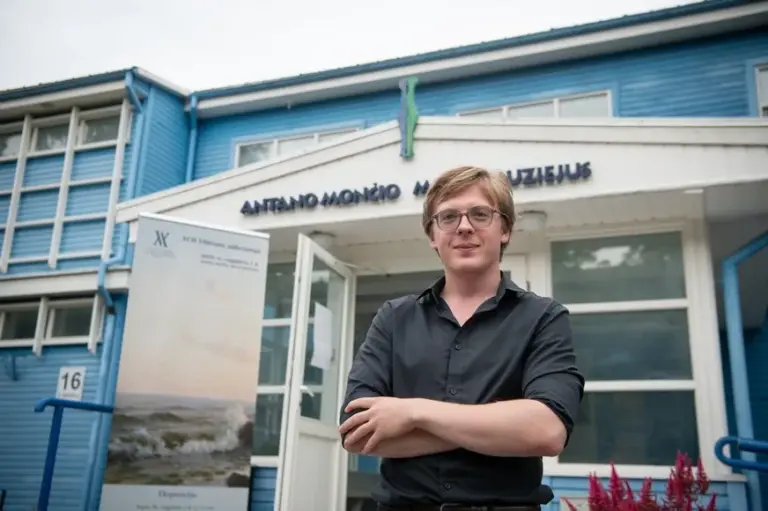
When attending the 5th or 6th grade, the young man used to open the gallery doors – he had to press a button. Today, he, along with a few other employees who help organize auctions, is fully immersed in this activity.
“Vilnius Auction” will celebrate its 20th anniversary next year and is considered one of the first in Lithuania to start organizing auctions regularly – every 2 or 3 months.
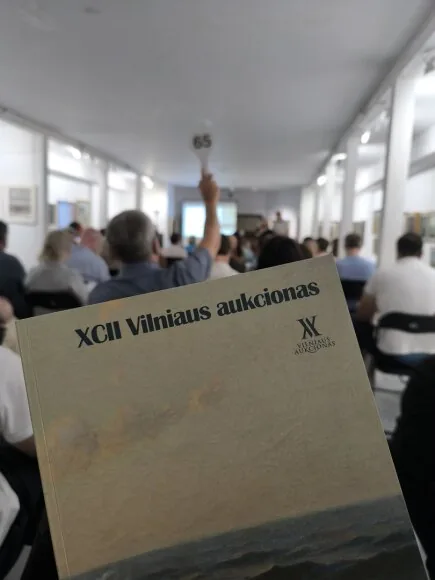
“It can be said that others follow our example. We eagerly await our jubilee hundredth auction. We believe it will take place in 2028,” admitted P. Makselis.
Once a year – in Palanga
So on average, 5 auctions per year. On August 1st, the 92nd was held, and it took place in Palanga.
As the organizers told 15min, once a year participants are gathered exclusively at the resort, at the Antanas Mončys Art Museum, where marine-themed lots (the works sold at auctions) dominate. The atmosphere here is somewhat different, attracting many potential buyers participating in the auction for the first time.
“Escaping the big city to the resort in summer is a sacred Lithuanian tradition, so it’s no surprise that it has not bypassed the auction house: ‘Vilnius Auction’ returns to Palanga for the 12th time. This time, the auction collection – 135 lots – is united by a seaside mood: sea, beaches, ports, ships, signs of the cultural memory of the seaside, the Curonian Lagoon, and Lithuania Minor.
The collection brings together classical marine art and contemporary interpretations of the sea, the history of Western Lithuania, and the perspectives of creators from different generations on the Baltic,” – this text invited visitors to view the auction exhibition.
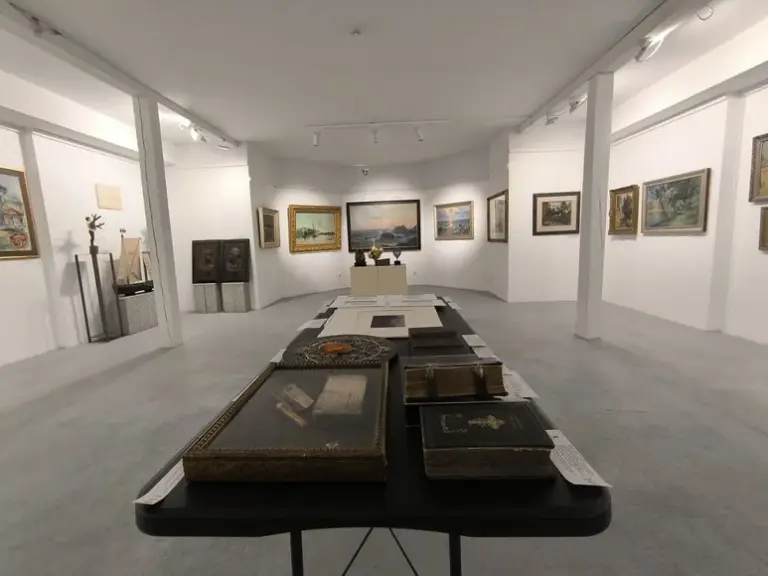
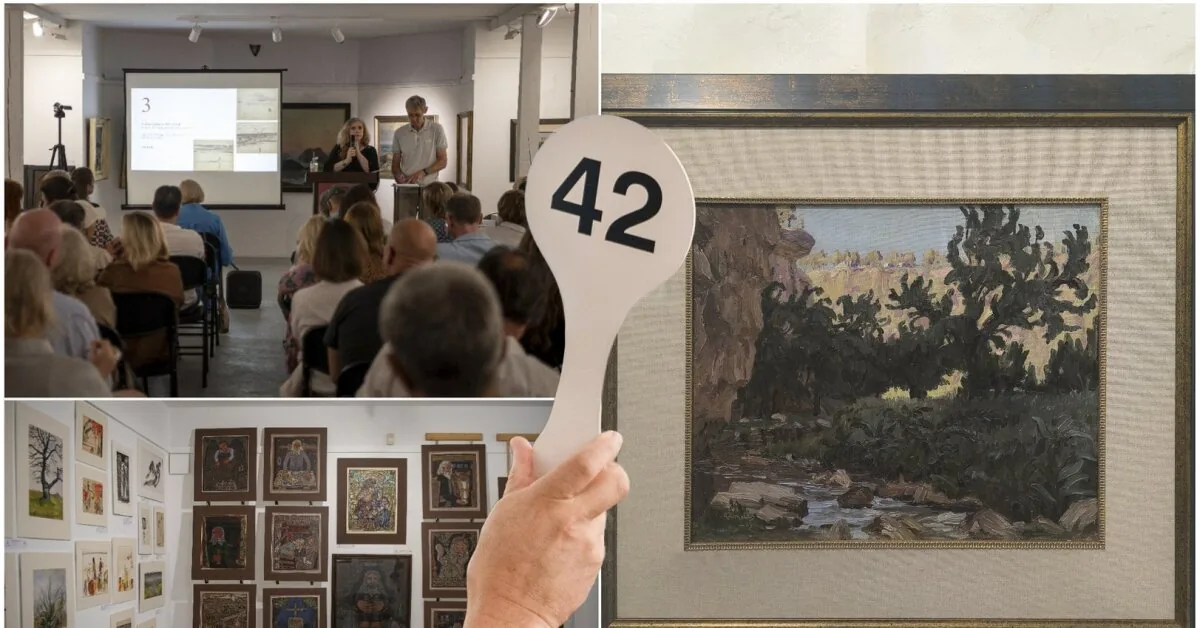
The viewing starts a few days before the auction itself – all works, with their indicated prices, can be viewed displayed like paintings in a gallery.
“We try to be realists, they are optimists”
For the organizers, preparation for the auction begins much earlier. In fact, they prepare for several auctions ahead at the same time.
Read more The tennis legend, losing for the 13th time in a row, faced criticism: «It’s time to retire»
First, a period is announced during which exhibits can be submitted. Usually, the seller/provider sends a photo of the artwork they have. Then the auction organizers perform an initial evaluation – whether the author and style suit them. Sometimes a more serious analysis is needed. When? When it seems too good to be true.
“We have had a work by Slendzinskis – we took it to an expert for evaluation. This is rarely necessary because the auction manager Simona has a very well-trained eye and a good intuition. Usually, it’s clear at a glance,” explained P. Makselis when we met for an interview before the auction started at the A. Mončys Art Museum (by the way, works by A. Mončys himself were also sold at the Palanga auction).
Then the price is negotiated. Naturally, the provider wants to unrealistically raise that price, while “Vilnius Auction” aims to sell the artwork at a realistic price.
“We try to be more realists, sellers are optimists. Providers have to rely on our expertise. A contract is signed. Of course, we hope the price will rise at the auction,” the interlocutor explained.
Sometimes the work brought by the provider, according to P. Makselis, needs to be framed – then it gains a different value. Sometimes the submitted work even needs restoration. For example, this was the case with Kazimiera Zimblytė’s work (ahead of events, a fierce battle among participants at the Palanga auction erupted over it).
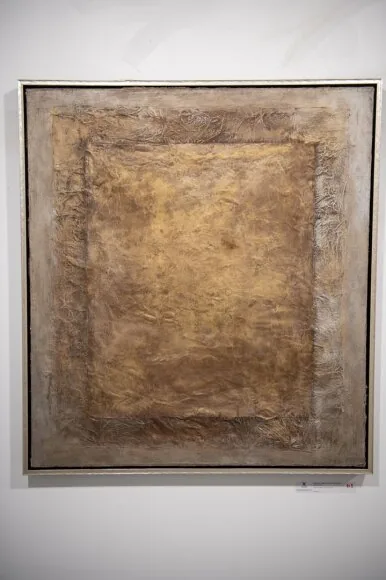
“We restored it, framed it, and look, it shone completely differently,” – gesturing to one of the works in the auction exhibition, P. Makselis assured.
All works sold at the auction are photographed, then a catalog is published. Being reproduced in the catalog slightly increases the value of the work.
In addition to the “hammer price,” a 12-18% (including VAT) auction house margin is added, as well as a LATGA resale fee – 5%, paid to the author of the work or their heirs.
About 150 lots are sold
As the auction approaches, the organizers themselves contact providers, looking for suitable exhibits to sell. Usually, 130-180 exhibits are sold at the auction.
Read more Dagestanis started producing «Martini»: it turned out who is the person behind it