








Reviewer and historian Victor Olifirov explains in an article for “RBC-Ukraine” how the events in the Spanish exclave revealed the scale of problems in the European Union and how these weaknesses are exploited by Europe’s opponents.
Read more Police: 13 people killed in North Pakistan as suicide bomber detonates bomb during protest
For several days, the small Spanish city of Ceuta, located on the African coast, was at the center of attention of the world’s and Europe’s most important capitals.
And although the current crisis, like previous ones, was de facto resolved, it once again revealed the weaknesses and internal disagreements of the European Union – a bloc that, by its idea, should be united.
A major crisis in a small city
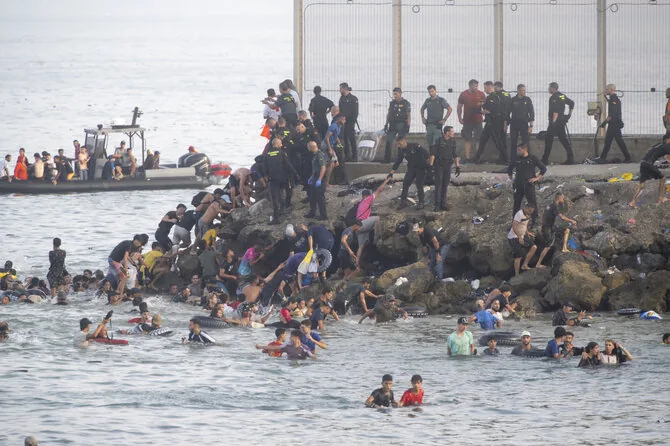
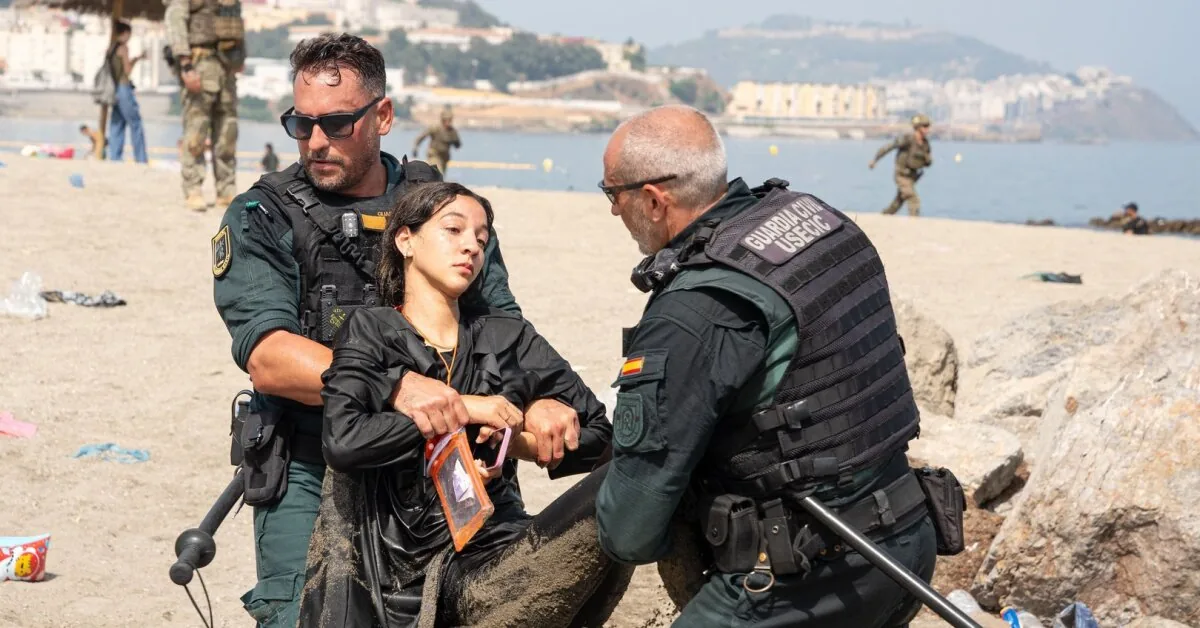
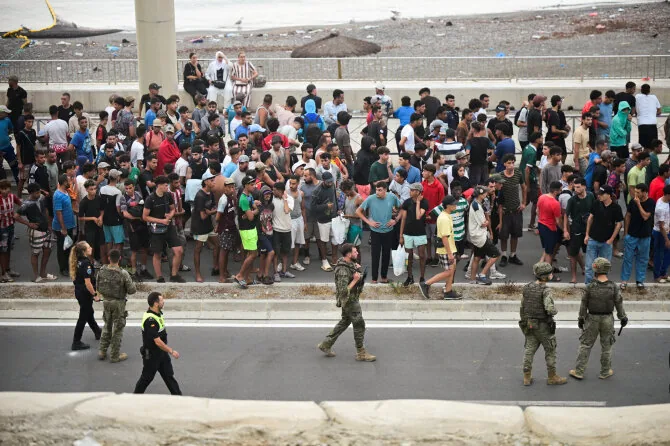
On July 30, Thursday, large groups of migrants from Morocco effectively broke through the border and entered the Spanish exclave of Ceuta in North Africa. In just one day, their number reached 60,000 people – which became a real disaster for a city with about 85,000 inhabitants.
The Spanish government announced that the country’s sovereignty had been violated and sent the military and police forces to the city. However, Europe failed to formulate a common political response to this incident, so each country reacted differently.
For example, France announced it would deploy additional forces at the French-Spanish border. Some countries, including Denmark and the Czech Republic, called for temporarily suspending Spain’s participation in the Schengen area so that migrants could not continue moving within the European Union.
One of the most vocal countries was Italy. It announced it was unilaterally suspending the Schengen agreement with Spain, although it did not clarify that such a “suspension” is legally impossible. Moreover, although Ceuta is Spanish territory, it does not belong to the Schengen area.
Eventually, the European Union managed to announce a joint official position – a joint letter was published.
Signed by 22 of the 27 EU heads of state, it emphasized that uncontrolled border crossings and the use of migration as a hybrid influence tool are unacceptable. According to them, such a situation discredits the entire EU migration policy. The letter stresses the need to urgently deploy EU measures, primarily the border protection agency “Frontex,” to restore control.
Meanwhile, Spanish Prime Minister Pedro Sánchez personally arrived in Ceuta on Friday to take control of the situation. According to the government, the crisis was practically managed within 48 hours – most of the illegally arrived migrants were sent out of the city, and the security situation returned to normal.
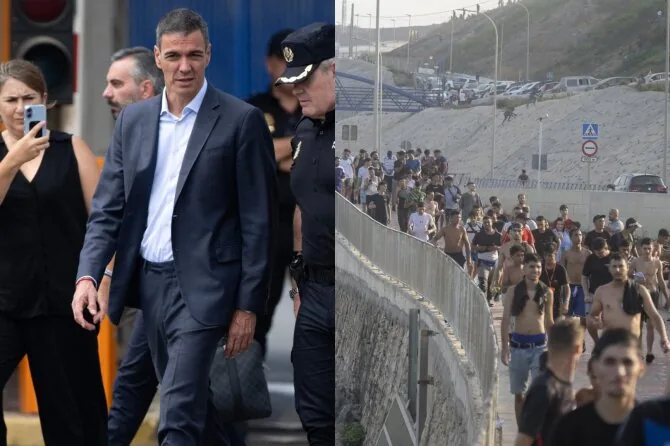
P. Sánchez sent a letter to the European Commission expressing dissatisfaction with the reaction of his colleagues. According to him, during the crisis, they rushed not to help Spain but to “isolate” it.
He also, based on “Frontex” data, noted that the number of illegal migrants entering the European Union through Spain is half that through Italy, although Spain is the only EU country with a land border with Africa.
Both in the joint EU letter and in P. Sánchez’s appeal, there is a call to urgently hold an extraordinary video conference of interior ministers of member states. Its goal is to prepare a common response mechanism to such incidents and clearly show that the protection of external borders is the responsibility of all EU countries, not just border countries.
Despite the tension and not very successful diplomatic background, the crisis could be considered resolved. However, in reality, Ceuta is just a symptom of much more serious problems.
Who and why is using migrants?
What really caused such an unexpected breakthrough?
P. Sánchez himself claims that mafia groups involved in human smuggling spread a false rumor that Spain can no longer deport illegal migrants.
This refers to a June decision by the Spanish Supreme Court, which established that the government cannot immediately deport migrants trying to reach Spanish territories in Africa by sea. According to P. Sánchez, people misunderstood this decision as a ban on deporting undocumented migrants altogether, although it actually relates only to deportation deadlines.
However, whatever the court decision, it does not explain some details of the situation, such as the behavior of Moroccan officials when at a certain point they simply stopped controlling the border, writes “RBC-Ukraine.”
“They just kept saying: ‘Go here, go here,'” a migrant told “The New York Times” about the actions of the Moroccan police.
According to him, officials did not stop them but simply pointed the way to the border. Similar stories were told to journalists by several other migrants. Some Spanish media even claim that among the people who broke into the city were Moroccan intelligence agents.
Read more The Žeimelis Evangelical Lutheran Church was renovated for 445 thousand euros
Spain has long accused Morocco of using migrant flows as a means of political pressure. Previous mass breakthroughs into Spanish exclaves also occurred when relations between Madrid and Rabat deteriorated.
But Morocco is not an exception – Europe’s vulnerability on migration issues is obvious to everyone.
Libyan dictator Muammar Gaddafi once tried to blackmail the European Union by threatening to send migrant flows across the Mediterranean. A similar tactic was repeatedly used by Turkish President Recep Tayyip Erdoğan, using the Syrian refugee issue.
These methods have long been adopted by Eastern European neighbors as well.
Russia’s goals are much broader
This episode is already forgotten in Ukraine, but in 2021 migrants from Arab countries were being prepared to cross the border with Poland from Belarusian territory. This story lasted several weeks. Both Poland and the entire EU then assessed Alexander Lukashenko’s actions as an obvious attempt to exert pressure and retaliate for sanctions.
The goals of countries using such migrant flows may differ.
Morocco and Turkey primarily seek to make Europeans more compliant and negotiate political or economic concessions.
Meanwhile, Russia, partly using Belarus as a cover, may have much broader goals – to cause social and political crises in European Union countries and strengthen populist forces advocating greater isolationism.
The European Union’s ability to resist this is a matter of the entire bloc’s survival. However, unfortunately, Europe is currently unable to provide an adequate response.
How the migrant crisis can “break” the European Union
Illegal migration today is one of the most important concerns of ordinary Europeans.
The principle of open internal borders means that migrant entry becomes a problem for all EU countries.
Although the current European leadership takes a much stricter position on migration, the problem essentially remains unresolved, and there is no unified position among member states regarding common border protection. The events in Ceuta clearly demonstrated this.
Such a situation is very favorable for populists of various directions.
Politicians like Viktor Orbán and Robert Fico have for many years based their popularity on opposition to “Brussels bureaucrats,” who allegedly want to flood Europe with migrants.
They are supported by previously opposition but now very influential Western European parties, such as France’s “National Rally” or Germany’s “Alternative for Germany” (AfD).
It is no coincidence that a large part of these so-called “European patriots” have been linked in one way or another to dubious ties with Russia.
For many years, Russia has financed euroskeptic forces and provided them with informational support, thus contributing to the very crises that their supported politicians later promised to solve.
Although after 2022 the European Union began to actively fight Russian influence, this struggle is far from over.
Ukraine’s Foreign Minister Andriy Sybiha reported that as soon as the events in Ceuta began, about 1,500 messages on this topic were spread in Europe through Russian propaganda networks “Pravda” and RT.
Their main message was clear: “While crowds of migrants occupy Europe, the European Union sends billions to Ukraine.”
The European Union could have shown unity and determination in defending Europe’s borders. Instead, attempts by individual governments to distance themselves from the problem and mutual accusations were visible.
The Kremlin may not have initiated the Ceuta crisis, but it is obvious that it benefited from it – once again demonstrating the lack of European unity, summarizes reviewer Victor Olifirov in the “RBC-Ukraine” article.
Read more Belarus is deploying a new airborne assault brigade near the border with Ukraine