








At that time, a ministry representative stated that the changes aim not to influence the population, but to standardize the moose hunting period when addressing issues related to mistakenly shot animals due to incorrect age assessment.
Read more After the stormy concert in Kaunas – Pitbull’s first public reaction
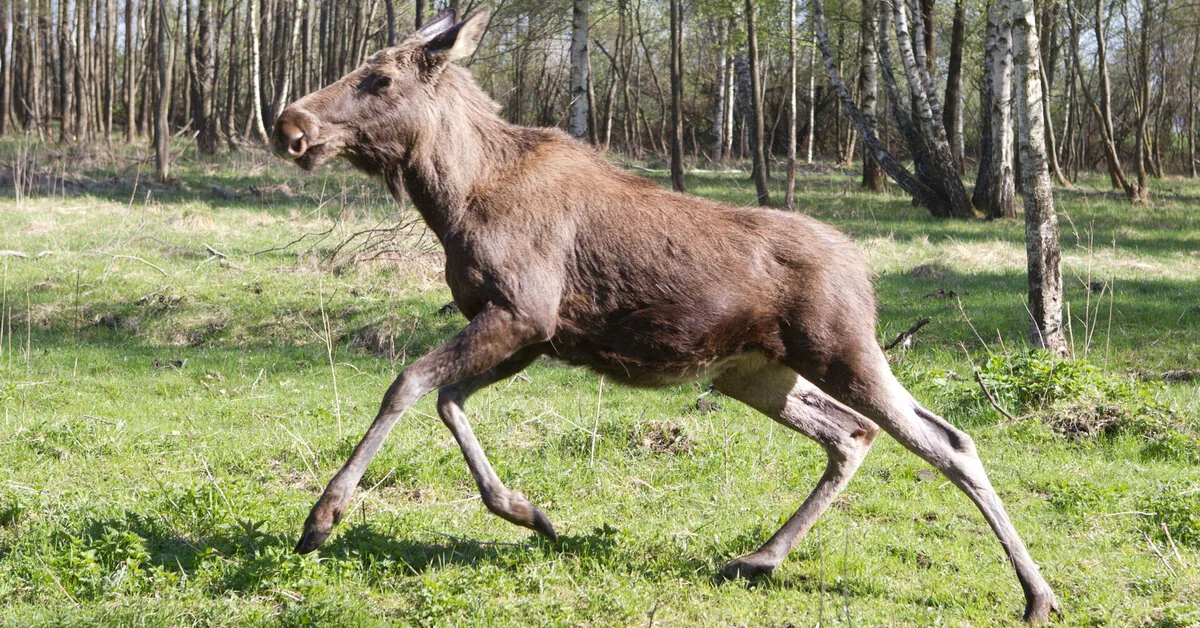
The Ministry of Environment proposes in the updated Hunting Rules to allow hunting bulls from August 15 to December 15 – as before.
Females could be hunted for two weeks longer – from October 1 to December 15. Meanwhile, calves are proposed to be hunted one and a half months shorter – from October 1 to December 15, instead of until January 31 as currently.
As BNS said Darius Stonis, a representative of the Wildlife Resource Management Policy Group of the Ministry of Environment, the adjustments to hunting periods are not related to moose population regulation.
According to him, by changing the hunting periods for moose of different ages, it is proposed to unify the hunting time for all moose to avoid some misunderstandings and disputes.
“There were pre-trial disputes. The hunting rules state that if, while hunting a calf, for example, you shoot a young-looking moose, a spike bull whose antlers are not visible, then there is a legal procedure to report this to the Environmental Protection Department. They will record that it happened, that a calf was hunted, but an older moose was shot – the hunter made a mistake. Next year, the quota will be reduced by one moose,” D. Stonis told BNS.
“But the point is that it reached legal disputes – the Environmental Protection Department says: still, that moose, although (…) by mistake, was shot outside the hunting period. The bull moose hunting period has already ended and it is punishable, and the fine is huge,” said the ministry representative.
“If after December 15 a female, a bull, or a calf is shot, it will be illegal hunting and no one can justify it by saying it was a mistake, that they misjudged the age and shot the wrong one,” he added.
Last hunting season, about 4,000 moose of various ages were allowed to be hunted, but the quota was not used up – just over half was hunted.
“Maybe the conditions did not allow it (last year there was a long winter, a lot of snow – BNS), maybe the hunters themselves did not want to,” said the ministry representative.
According to him, the number of moose in Lithuania fluctuates.
“I looked at several years of counts provided by hunters. There are years showing a decrease compared to the previous year, but then the next year it increased again. And now in recent years, it may be that winter also had an impact, causing a slight decrease in almost all species of game,” D. Stonis stated.
Ramūnas Mažėtis, chairman of the Suduva Hunters’ Union, told BNS that moose numbers in Lithuania are not decreasing.
Read more Confusing woman’s death in Greece: homeless person found body stuffed into a suitcase
He is upset that their hunting period is very short, and the hunting itself is difficult because the animals migrate over a large territory.
“It is difficult to hunt them to reduce damage and regulate the population. They run into a very large territory and, say, if hunters do not hunt at that time, the moose leave and return after two or three months, returning to their territory, and sometimes the hunting periods have already ended,” the hunter said.
“Now the hunting time for calves is shortened, and for females extended. In our opinion, from an ethical point of view, females should be protected, and calves hunted to regulate the population,” added R. Mažėtis.
Among other things, R. Mažėtis misses detailed studies that would show the real situation – the moose population and the scale of damage they cause to agriculture and forestry.
According to the hunter, moose practically do not cause damage to agriculture, except for trampling and nibbling trees in orchards.
The Environmental Protection Department told BNS that for the 2026–2027 hunting season, a limit of 3,935 moose to be hunted has been set: it will be possible to hunt 1,687 bulls and 2,248 females and calves. Currently, three moose have been hunted.
Last hunting season, it was possible to hunt 4,174 moose: 1,706 bulls and 2,468 females and calves. During this season, 2,372 moose were hunted.
For the 2024–2025 hunting season, a limit of 4,184 moose was set, and 2,825 moose were hunted.
Moose are the only cloven-hoofed animals hunted in Lithuania whose hunting is limited.
According to the Lithuanian Hunters’ Society, last year there were almost 18,500 moose in the country’s forests – almost 14% or 2,600 fewer than the year before last.
Read more Hundreds of thousands of people gathered at the annual «Pride» boat parade in Amsterdam