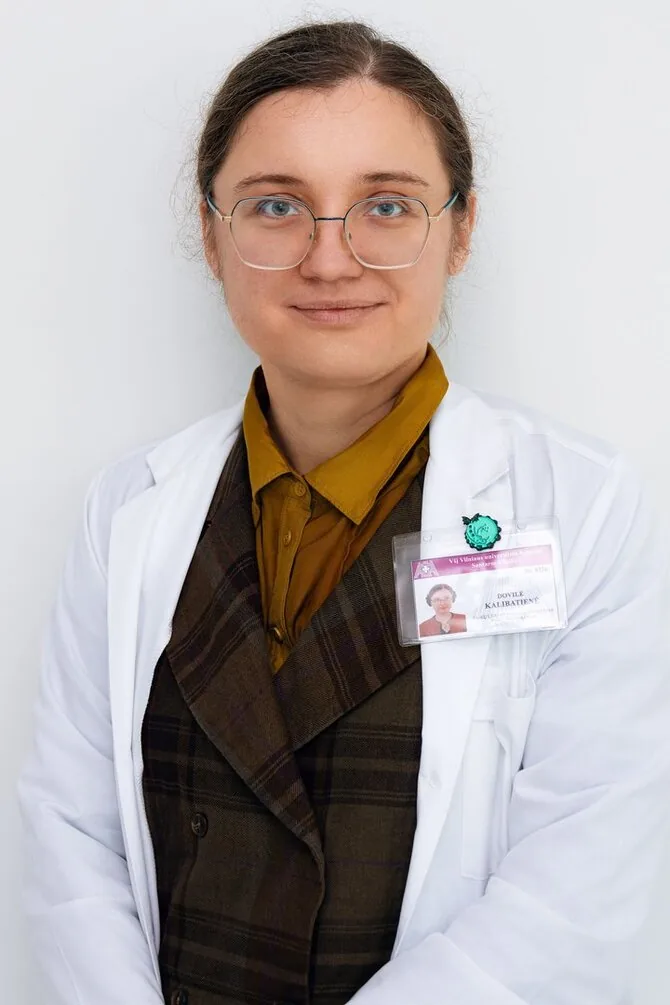
This is explained by Danguolė Ruževičienė, head of the Children’s Pain and Long-term Treatment Department at the Children’s Emergency Medicine, Intensive Care and Anesthesiology Center of Santaros Clinics, anesthesiologist-resuscitator, and Dovilė Kalibatienė, pediatric neurologist at the Children’s Neurology Department of the Pediatrics Center of Santaros Clinics, according to a press release.
Read more „Marių ošas“ – where sung poetry meets the horizon of the lagoon
Most headaches in children are not due to dangerous diseases
According to anesthesiologist-resuscitator Danguolė Ruževičienė, children’s headaches are divided into primary and secondary. Secondary headaches are caused by other diseases or anatomical changes in the brain, so their causes are usually identified through detailed examinations, and treatment depends on specialists from other fields.
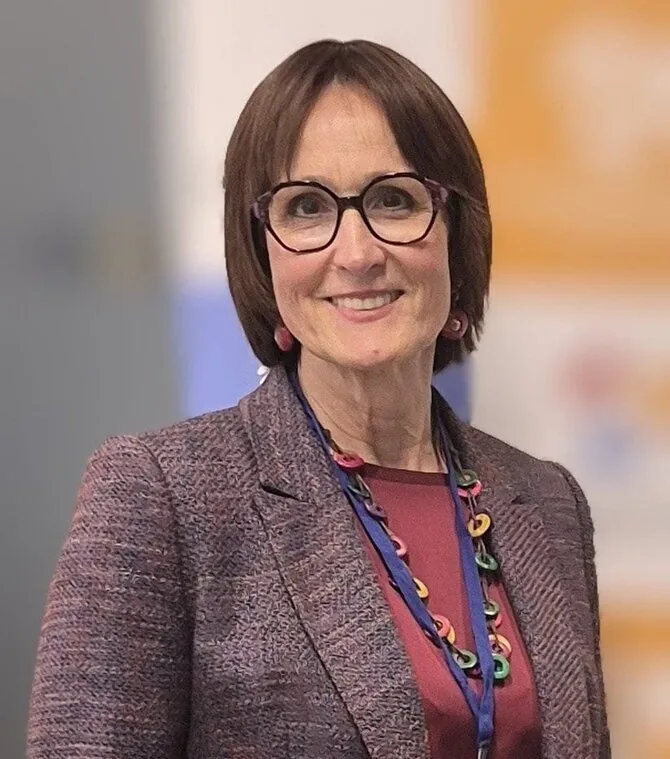
“Primary headaches are already part of our daily life,” says the doctor. “We most often encounter tension-type headaches, migraines, and much less frequently – cluster headaches.”
According to her, the most common headache in children is tension-type headache, while migraine accounts for a smaller portion of all cases. Migraine is diagnosed in about 6% of children before school age, up to 10% during school age, and in adolescence, it can affect up to one-fifth of children complaining of headaches.
“This is one of the diseases that can be treated quite effectively. Patients feel the effect very quickly – if well advised and well agreed upon, their quality of life truly changes,” says pediatric neurologist Dovilė Kalibatienė.
What is migraine?
Migraine is a primary headache characterized by attacks. However, as pediatric neurologist D. Kalibatienė emphasizes, the diagnosis is not made immediately: “It takes time to diagnose migraine. If it is migraine without aura – there must be at least five attacks. If with aura – two attacks are enough,” explains the doctor. Migraine aura consists of short-term neurological symptoms (visual, sensory, or speech disturbances) that appear before or during the headache. They indicate an approaching attack, last from 5 to 60 minutes, and then completely disappear.
Migraine pain is usually one-sided, pulsating, strong, localized in the forehead, temple, or behind the eye. The pain is often accompanied by sensitivity to light and sound, nausea, vomiting, and general weakness.
“Over time, headaches may become more frequent and almost daily – then we talk about chronic migraine,” says pediatric neurologist D. Kalibatienė.
Children’s migraine differs from adults’
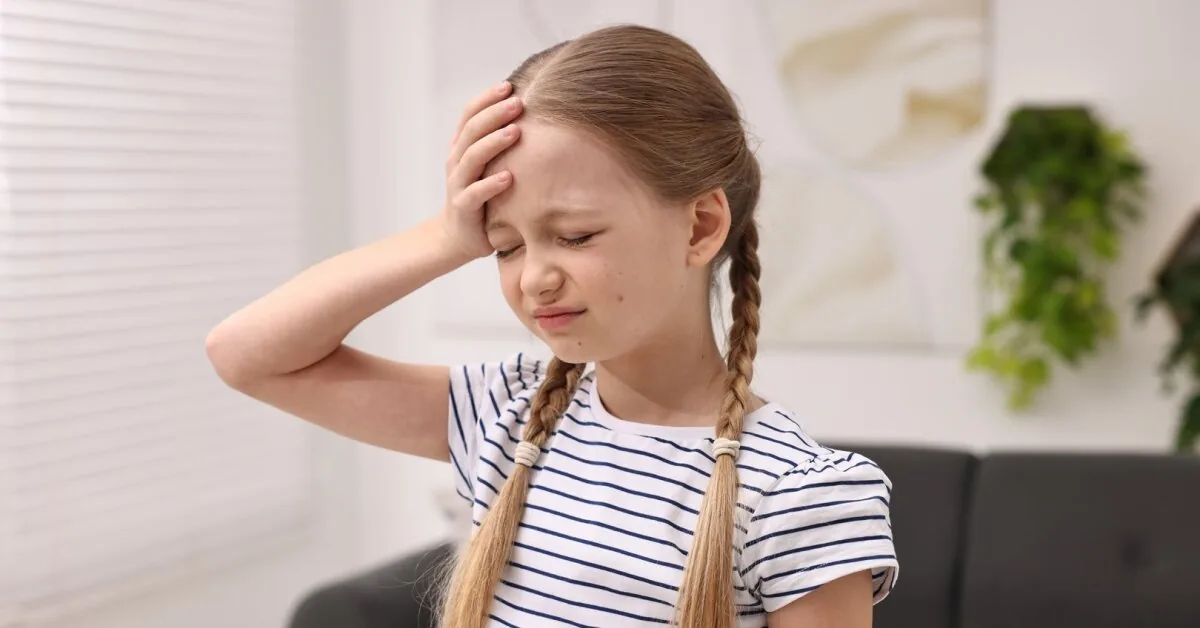
Children’s migraine can look quite different from adults’. “In children, migraine is not necessarily one-sided. The pain can affect both sides of the head, often felt in the forehead and temples, usually of moderate or severe intensity,” explains anesthesiologist-resuscitator D. Ruževičienė.
Migraine attacks are often accompanied by nausea, vomiting, sensitivity to light and sound, and younger children often cannot accurately describe how they feel: “Parents more often notice that the child wants to lie down, becomes lethargic, refuses to play, and seeks a quiet and dark place,” describes the doctor the child’s behavior during migraine.
Pediatric neurologist D. Kalibatienė adds that migraine can start much earlier than typical headaches appear: “Many adolescents diagnosed with migraine recall that they often had stomach pain and nausea before. This may be so-called abdominal migraine, which is more common in younger children.” According to the neurologist, small children cannot yet precisely describe pain, so they complain of stomach pain even if the cause is neurological.
When should you be concerned?
Although most children’s headaches are not dangerous, specialists highlight situations when it is necessary to see a doctor as soon as possible. “If the headache progresses, intensifies, neurological symptoms appear – visual or sensory, orientation and speech disturbances, morning vomiting, pain waking the child from sleep, or changes in the child’s behavior – it is necessary to look for the cause,” says Dr. D. Ruževičienė.
Dr. D. Kalibatienė adds that vision disturbances or body numbness should also cause concern: “If the headache is strong, one-sided, accompanied by sensitivity to light or sound – these are already signs of migraine. Also, if during an attack the eyes flicker, or the hand, face, or tongue numb, it is necessary to inform the family doctor. Morning and nighttime headaches and any newly appearing neurological symptoms are also important.”
Specialists also recommend earlier examination for children under six years old who complain of headaches.
What triggers migraine?
Both doctors emphasize that the most common migraine triggers are related to daily habits.
These include:
- lack of sleep or oversleeping;
- fatigue;
- irregular eating;
- stress and tension at school or home;
- intensive screen use;
- physical and emotional exhaustion;
- hormonal changes during adolescence;
- individual triggers.
For some people, certain foods can also provoke attacks: “For some, it may be chocolate, aged cheese, smoked meat products, cocoa or coffee; for others – sweeteners, spicy spices, or citrus fruits. However, this is very individual, so not everyone needs to avoid these products – the most important thing is to observe what triggers pain for a particular person,” says neurologist D. Kalibatienė.
Diagnosis is usually made through conversation
Although parents often expect various tests, the neurologist emphasizes that migraine is diagnosed primarily based on symptoms: “Migraine is a clinical diagnosis. There is no single test that confirms it. Tests are done to rule out other diseases. Therefore, the most important thing is a detailed conversation with the patient and their parents about attacks, their frequency, nature, accompanying symptoms, and a neurological examination.”
Read more Tourist paradise in Greece ravaged by hellish fires: evacuation declared
Seeking help early is worthwhile
The specialists agree – recurring headaches in a child should not be ignored. “It is worth seeking help because it can greatly improve the child’s quality of life, reduce the frequency of attacks, and help them live a full life,” says neurologist D. Kalibatienė.
Dr. D. Ruževičienė agrees that help for the child exists and it helps the child not to “fall out” of their daily life and social environment due to headaches. “Our goal is not only to reduce pain. It is important to us that the child can attend school, socialize with friends, engage in favorite activities, and live a full life.
In response to the common parental question “can migraine be outgrown,” the neurologist answers that migraine is not a static disease: “Migraine has its course and usually may become less frequent or even disappear completely around 30–40 years of age,” says neurologist D. Kalibatienė.
Pain diary helps establish diagnosis
To clarify the nature of headaches, anesthesiologist-resuscitator D. Ruževičienė recommends keeping a headache diary: “For about a month, one should record pain intensity, frequency, duration, what triggers the pain, and what symptoms accompany it.” This helps distinguish migraine from other headaches. Children are often troubled by mixed headaches. Then the diary helps recognize the type of headache and teach the child how to behave during migraine and tension-type headache attacks. It is necessary to distinguish them because their treatments differ.”
Treatment methods: not only medications matter
Since headaches usually have biopsychosocial causes, treatment must include corrections of all these factors – psychological help, physical activity, sleep, and daily routine adjustments – so the entire team of specialists is involved: “The team includes a pain doctor, nurse, psychologist, physiotherapist. If necessary, a medical rehabilitation doctor joins, and the neurologist usually has already performed diagnostics and prescribed medication, while long-term pain management is the work of the pain specialists’ team,” says Dr. D. Ruževičienė. Psychological help is one of the most important in treating chronic pain in children.
The psychologist’s goal and task is to teach the child to manage their pain with non-medication methods, using various pain management techniques – relaxation, breathing exercises, distraction techniques. Using so-called biofeedback, one learns to recognize and control involuntary bodily reactions occurring during pain, such as pulse rate, muscle tension, or breathing.
According to neurologist D. Kalibatienė, the first topics are sleep routine, daily schedule, and lifestyle. Dr. D. Ruževičienė adds that the goal of children’s pain specialists is not to cure the pain: “The most important thing is to help the child manage it so they can live a full life, attend school, participate in favorite activities, and not “fall out” of the usual life rhythm.”
The doctors emphasize that treatment of different headaches is not the same. “Medically called cluster headache is very specific – extremely severe, recurring, stabbing pain around one eye. Oxygen therapy or certain nerve point blocks are sometimes used for its treatment,” says anesthesiologist-resuscitator D. Ruževičienė.
When migraine starts, it is very important to take prescribed medications as early as possible: “This should be done as soon as the first migraine symptoms appear. Meanwhile, medications for tension-type headaches are often not as effective,” she says.
According to pediatric neurologist D. Kalibatienė, the first recommended medications are common pain relievers – paracetamol or ibuprofen: “If they do not help, specific migraine medications – triptans – are prescribed, which come in various forms – nasal sprays, injections. Some adolescents need them already at 12–14 years of age.”
However, the doctor draws attention to a problem – currently in Lithuania, these medications are not reimbursed for children: “Triptans for children are usually purchased with parents’ funds. Also, there are still fewer scientific studies on treating children’s migraine than adults’.”
Both specialists warn that frequent use of painkillers can become another problem: “If medications are used for a long time and very often, medication-overuse headache can develop. Then it becomes very difficult to distinguish whether the pain is due to migraine or the medications themselves,” explains Dr. D. Ruževičienė.
For parents whose children suffer from headaches, when they have been thoroughly examined and no other diseases or anatomical causes that could cause pain are found, doctors advise not to panic first, as this pain is harmless and does not threaten life, says Dr. D. Ruževičienė. “It is also important to calm the child and teach them not to fear this pain, as it has been proven that fear of pain further intensifies it,” adds the doctor.
The most important thing is not to ignore recurring pain
The specialists emphasize that although most children’s headaches are not related to dangerous diseases, constantly recurring or intensifying pain should not be considered a “normal growth phase.” Early consultation with a family doctor or pediatric neurologist helps not only to more accurately determine the cause of the headache but also to start treatment on time.
Equally important is to understand that treatment of children’s migraine is not limited to medications. Regular sleep, a balanced daily routine, physical activity, stress management, and the help of the entire team of specialists can reduce the frequency of attacks, teach pain management, and help the child maintain a normal life rhythm: attend school, socialize with peers, engage in favorite activities, and not fear that headaches will start to control daily life.
Read more After a powerful series of strikes in Ukraine – «Wildberries» looks towards Russia’s neighbor