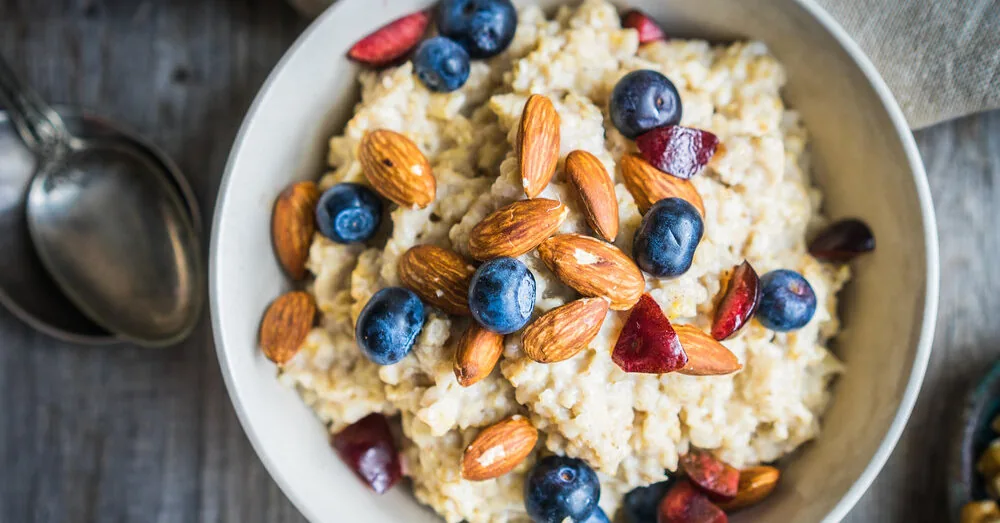
According to the authors of the post, cholesterol is supposedly just a ‘repair material’ used by the body for blood vessels, while the real cause of their damage is said to be glucose and insulin.
Read more While one smokes, the other works: lawyer answered whether a smoking break is an employee’s right
Oatmeal is called a ‘thermonuclear heart attack detonator’ in the text. It is claimed that even minimally processed oats are quickly broken down into glucose, causing an ‘insulin explosion’, damaging the inner lining of blood vessels, and thus supposedly forcing the liver to produce even more cholesterol.

The misleading post also downplays the benefits of beta-glucan and soluble fiber found in oats. They are called merely a ‘crutch’ that supposedly slows down sugar absorption slightly but does not eliminate the allegedly harmful effect of carbohydrates.
It is also claimed that phytic acid in oats supposedly strongly hinders the absorption of iron, zinc, calcium, and magnesium, and that phytoestrogens in them disrupt the hormonal system of men and women.
Based on these arguments, readers are urged to completely give up porridges, choose more animal fats and proteins, switch to a ketogenic or carnovoire (meat-eater) diet, and eat only once a day.
The text concludes with a categorical and frightening statement that porridge is supposedly a ‘slow death, beautifully wrapped in a healthy lifestyle package’. At the same time, a conspiracy theory is spread, claiming that healthy eating recommendations aim to turn people into ‘apathetic and sick patients’.
How does cholesterol differ from cholesterol?
The post talks about so-called ‘bad’ cholesterol. First, it should be explained what it is and how it differs from ‘good’.
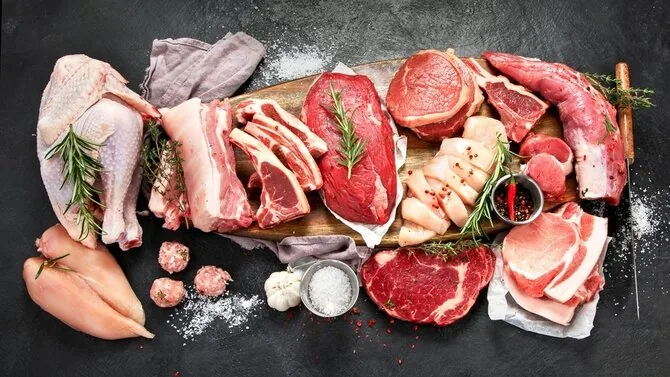
Cholesterol is a lipid – a type of fat that is mainly synthesized in the liver, but also obtained from food, such as fatty meat, butter, egg yolks, and other animal products. Cholesterol is transported in the blood by lipoproteins, which are divided into so-called ‘good’ and ‘bad’ cholesterol.
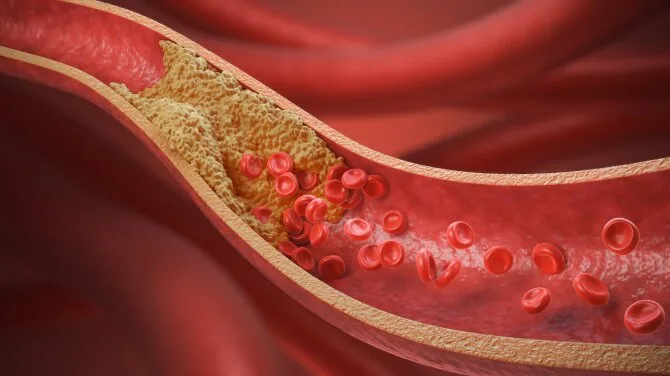
‘Bad’ cholesterol – low-density lipoprotein cholesterol (MTL). The risk of cardiovascular diseases is directly determined by increased MTL levels, as this cholesterol accumulates on the inner walls of blood vessels. This narrows and clogs blood vessels, preventing blood from supplying the body with oxygen and nutrients. It also promotes the formation of atherosclerotic plaques in the arteries, which increases the risk of cardiovascular diseases, including stroke and heart attack.
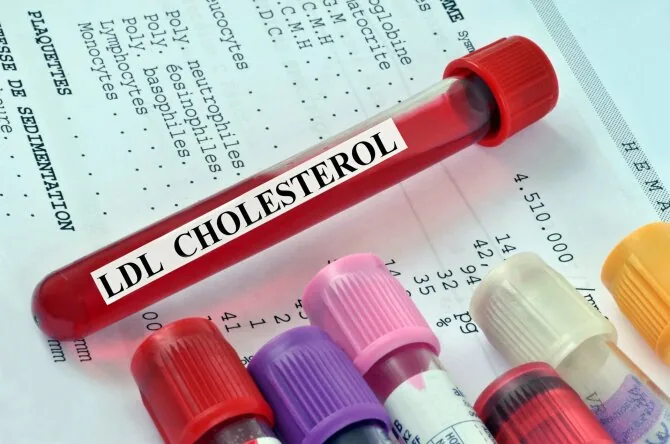
Cholesterol / Shutterstock photo.
‘Good’ cholesterol – high-density lipoprotein cholesterol (DTL). ‘Good’ cholesterol, or DTL, helps get rid of ‘bad’ cholesterol, or MTL, by transporting it from blood cells back to the liver, where it is processed and removed from the body. The balance between ‘good’ and ‘bad’ cholesterol is very important for maintaining optimal health, as cholesterol also performs many beneficial functions in the body – it participates in cell building processes, the synthesis of hormones (e.g., estrogen and testosterone) and vitamin D, and also helps produce bile acids and metabolize fats.
Read more: ‘Good’ and ‘bad’ cholesterol: revealed what happens to your blood vessels
‘The Cholesterol Myth’: it is claimed that MTL cholesterol is not harmful
The post claims that MTL (LDL) cholesterol is not harmful, and the risk it poses is merely a myth created by the pharmaceutical and food industries.
FALSE. In a consensus statement by the European Atherosclerosis Society, published in 2017 in the journal ‘European Heart Journal’, data from genetic, epidemiological, and clinical studies were evaluated. Their totality shows that MTL (LDL) cholesterol is not only an indicator of increased risk but also a direct factor in the development of atherosclerotic cardiovascular disease.
The expert group specifically sought to answer the question of whether the link between elevated MTL cholesterol levels and atherosclerosis is causal. Its conclusion is unequivocal: yes, MTL cholesterol directly contributes to the development of atherosclerosis.
Claim: Oatmeal and beta-glucan increase, not decrease, cholesterol levels
FALSE. The claim that oatmeal or the beta-glucan it contains increases cholesterol levels is false and contradicts scientific research data.
Studies show that consuming at least 3 grams of soluble beta-glucan fiber daily from oats, barley, or a combination thereof, especially when following a diet low in saturated fat and cholesterol, can reduce the risk of heart disease.
The European Food Safety Authority (EFSA) already confirmed in 2011–2012 that such a daily dose of beta-glucan helps reduce blood cholesterol levels.
Subsequent meta-analyses of randomized controlled trials confirmed this effect: in people who consumed about 3 grams of beta-glucan per day, total cholesterol levels decreased by an average of 0.25–0.66 mmol/l, and MTL cholesterol by 0.24–0.6 mmol/l.
This effect was observed in both healthy individuals and those with elevated cholesterol levels.
Beta-glucan acts as a viscous soluble fiber: in the intestine, it binds bile acids, so the liver has to use more cholesterol for their production. As a result, the level of circulating MTL cholesterol in the blood decreases.
Thus, this is a physiologically justified, not an allegedly ‘masking’ effect, as claimed in the social media post.
Read more 220,000 people evacuated in France due to massive fire
Claim: Phytic acid hinders the absorption of iron, zinc, and calcium
PARTIALLY TRUE. Phytic acid can indeed reduce the absorption of some minerals,
Studies show that phytic acid in oats can indeed hinder the absorption of iron and zinc, but this effect usually becomes significant only when products rich in phytates are consumed in very large quantities and are not properly prepared.
This also does not mean that oatmeal itself causes a deficiency of these minerals. A study published in the ‘British Journal of Nutrition’ found that by reducing the amount of phytates in oats, zinc absorption increased from 11.8 to 18.3 percent, and iron from 4.4 to 6 percent.
The effect of phytic acid can be reduced by soaking, sprouting, or fermenting oats, while regular cooking only partially breaks it down.
Nevertheless, as researchers explain, for a healthy person with a varied and balanced diet, the consumption of oats does not usually cause a clinically significant mineral deficiency.
Dangerous advice
The authors of the post urge to completely give up porridge and statins, switch to a ketogenic diet, and the so-called OMAD 23/1 regimen, where one eats only one hour a day.
However, such categorical health advice in the text is not supported by official recommendations or clinical trial data.
Arbitrary discontinuation of doctor-prescribed medications or strict dietary restrictions can pose a health risk, so such decisions should only be made after consulting a doctor.
The World Health Organization and many countries recommend regularly eating whole grain products, including oats, as their consumption is associated with a lower risk of cardiovascular diseases, type 2 diabetes, and bowel cancer.
Meanwhile, OMAD – a regimen where one eats only once a day and fasts for the remaining 23 hours – is one of the extreme forms of intermittent fasting, the long-term effects of which have not yet been sufficiently studied.
Available data are contradictory: in some studies, such or similar eating regimens are associated with increased blood pressure, MTL cholesterol levels, nutrient deficiencies, and fatigue.
An analysis of US population data presented at the American Heart Association conference in 2023 also showed an association between eating within a window shorter than eight hours and a higher risk of death from cardiovascular diseases, although such an observational study does not in itself prove a causal link.
Therefore, the claim that OMAD or a ketogenic diet is inherently healthier than a balanced diet with whole grain products is not supported by reliable scientific evidence and contradicts official dietary recommendations.
15min verdict: false. In the post circulated on social networks, oatmeal is unjustifiably portrayed as a product that damages blood vessels and causes heart attacks.
The totality of scientific research shows the opposite: elevated MTL cholesterol is a direct risk factor for atherosclerosis and cardiovascular diseases, and the soluble beta-glucan fibers in oats can help reduce total and MTL cholesterol levels in the blood.
Phytic acid can somewhat hinder the absorption of some minerals, but normally consumed oats, when the diet is varied and balanced, do not cause mineral deficiencies.
Claims about the harm of oat phytoestrogens to the hormonal system are also not supported by reliable evidence. Even more dangerous are calls to arbitrarily abandon statins, whole grain products, and switch to a strict ketogenic, carnivore, or OMAD diet.
Such regimens are not universally healthier, their long-term effects are not sufficiently studied, and discontinuing doctor-prescribed medications can lead to serious consequences.
The post relies on distorted biological processes, categorical claims, and conspiracy theories, rather than reliable scientific data.
The publication was prepared by 15min in cooperation with ‘Meta’, which aims to stop the spread of misleading news on the social network. More about the program and its rules – here
Read more Musician Juozas Šarkauskas, a member of the ensemble ‘Serbenta’, has died