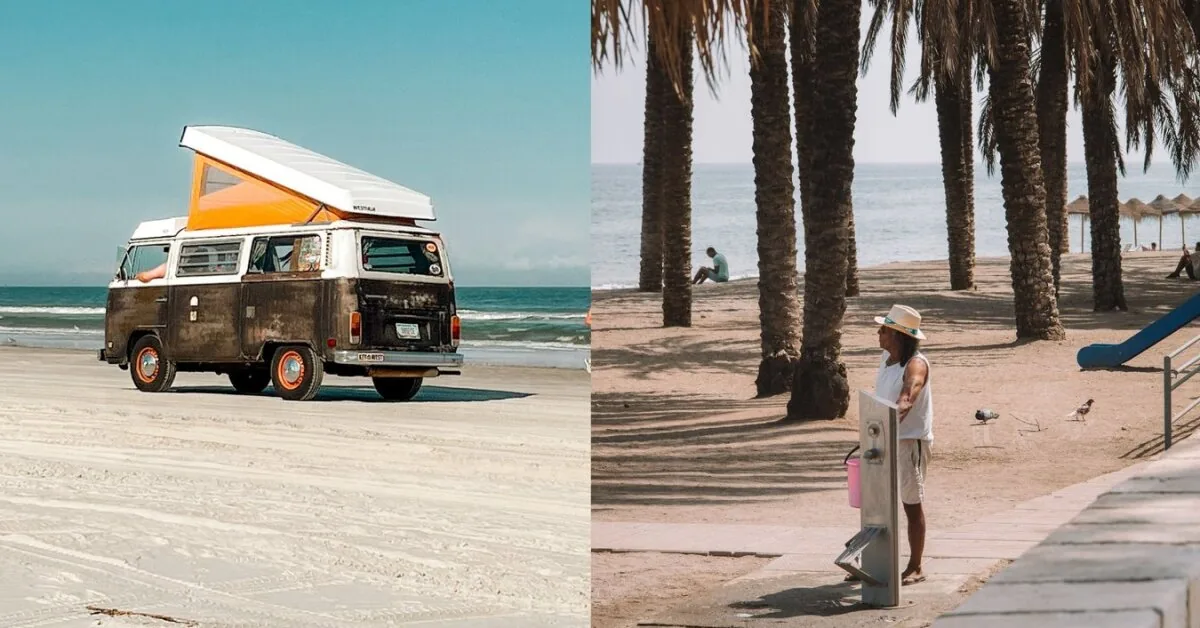
Let’s be honest: anyone who frequently swims in the sea has probably done “it” at least once and hoped no one would notice. In Marbella, Spain, urinating on the beach or even in the sea can cost up to 750 euros. However, this is not the only violation tourists can get caught for if they don’t check the applicable rules before their trip.
Read more „Exceptional, unconventional sport“: Skuodas – motoball fiesta
Across Europe, municipalities consider administrative offenses both the morning “reservation” of a spot with a towel, and a seashell taken as a souvenir, and even the improper use of a beach shower. Sometimes a national law is behind it, sometimes local rules, and the amount of the fine is often determined by the specific municipality. Here are nine, sometimes even curious, situations where a day at the sea can be expensive.
1. Urinating in the sea: 750 euros for a “secret business”
Spanish coastal cities, such as Vigo in Galicia or Marbella on the Costa del Sol, have officially banned urinating in the sea and on the beach. Violations carry a fine of up to 750 euros. The reason is serious: in heavily visited coves, the entry of urine into the water harms water quality and the ecosystem.
However, there’s a catch: how authorities intend to prove or control urination in deeper water is not disclosed by the municipalities. There are no colored control chemicals in seawater. So, in practice, fines are usually imposed when a person is caught directly – on the sand, in the dunes, or right by the water.

2. The expensive “beach towel war”
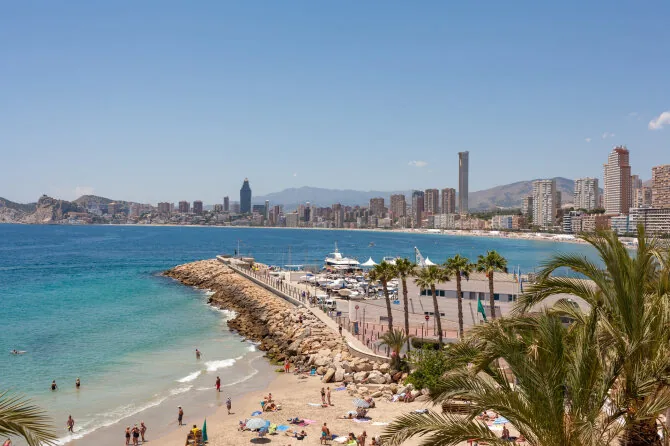
In Spanish tourist resorts, local police are fighting a common habit: occupying the best spots on the beach with umbrellas and towels early in the morning, and then returning to the hotel. According to ADAC, in Benidorm, Costa Blanca, such behavior can cost up to 750 euros, and in Malaga – up to 300 euros.
Some municipalities simply collect abandoned items. In Torrox, Andalusia, in the summer of 2025, police confiscated about 50 unattended beach items over several days and issued eight fines of up to 300 euros. Calpe on the Costa Blanca, starting from the 2025 season, removes anything that lies on the sand without an owner until 9:30 AM or is left unattended for more than three hours during the day. To retrieve items, one must pay 250 euros and an additional storage retrieval fee.
3. Showering with shampoo: foam prohibited
Beach showers are intended only for rinsing off salt and sand with fresh water. Since wastewater often seeps unfiltered into the ground or flows directly into the sea, surfactants and fragrances in shampoos harm the sensitive coastal ecosystem.
For this reason, many Spanish municipalities and Italian resorts, such as Bibione, categorically prohibit the use of soap, shower gel, and shampoo in beach showers. Washing dirty camping dishes there is also forbidden. Those caught with a shampoo bottle near a beach shower face fines – in Benidorm, on the Costa Blanca coastline, they can reach up to 660 euros.
on the Costa Blanca coastline, they can reach up to 660 euros.
Furthermore, many Southern European municipalities are reacting to increasing water scarcity: some turn off showers entirely during hot summers, while others, such as Matalascañas in Andalusia, are already testing paid shower systems where nearly a minute of water is paid for with a coin or QR code.
4. Smoking on the beach: prohibited in Spain and France
In Spain, smoking is already banned on nearly 900 beaches. While many so-called “Playas sin humo,” or smoke-free beaches, such as in the Balearic Islands, initially appeal to people’s awareness, where the municipality has approved a fine system, violations can be expensive – in Barcelona, Lloret de Mar, or the Canary Islands.
In Mogán, Canary Islands, smoking on the sand can result in a fine of up to 400 euros. A cigarette butt thrown into the sea can cost up to 1800 euros. Most often, bans also apply to electronic cigarettes and vaping devices.
From July 1, 2025, a national smoking ban will be in effect on all French beaches. Violations are subject to a 135 euro fine. The government explains this as child protection: according to Health Minister Catherine Vautrin, the freedom to smoke ends where children’s right to healthy air begins. Municipal police strictly enforce this ban. Unlike in Spain, electronic cigarettes are currently still an exception.
5. Sand and shells as souvenirs: an expensive holiday memory
A handful of white sand, a few shells for a shelf – sounds innocent, but in many European beaches, this is considered a serious interference with coastal protection and is punished very strictly. Particularly strict rules apply in Sardinia: a 2017 regional law prohibits taking sand, pebbles, or shells, even in very small quantities. Fines range from 500 to 3000 euros, and officials check ports and airports.
The reason for such strictness is that mass tourism threatens the island’s natural sand balance. When more than 21 million tourists visit the island annually, even individual sand thefts add up to a significant problem. A telling example: in May, a French tourist was stopped by customs officials at Porto Torres port, carrying about 40 kilograms of sand, stones, and shells in her car.
On La Pelosa beach in northern Sardinia, it is specified what one can lie on. A towel alone is not enough, as wet sand sticks to the fabric and is carried away from the beach. Therefore, the municipality requires a flat mat-type underlay to be placed under the towel. This summer, officials are reportedly checking more strictly, and a 100 euro fine is immediately imposed for violations.
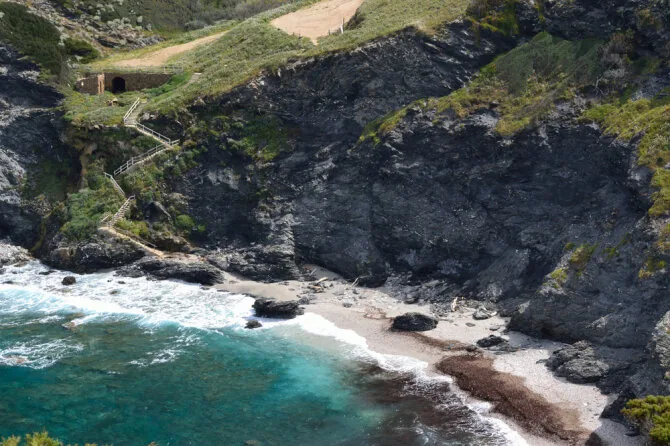
In France, in the famous Étretat cliff town of Normandy, a law protects the distinctive round pebbles. Since they dampen the force of waves and thus slow down coastal erosion, taking a single pebble can legally result in a 90 euro fine.
Read more Spanish Prime Minister: the priority during forest fires is to save lives
In neighboring Spain, under the 1988 national coastal protection law, collecting sand, stones, and shells is also generally prohibited. Stricter fines are particularly imposed in protected areas and national parks.
6. An expensive awakening after a beach party
A short nap on the beach is allowed almost everywhere. It becomes expensive when the line between a nap and an overnight stay or wild camping is crossed. Many European coastal municipalities strictly combat illegal outdoor overnight stays, mainly to prevent littering and bonfires.
In Spain, the national coastal protection law prohibits free camping by the sea. Anyone who spends the night on the beach – in a tent, sleeping bag, or simply on a towel after a party – violates the rules. In regions such as Andalusia, including Malaga, Marbella, and Tarifa, as well as Valencia, fines are set by the municipalities. Theoretically, a night on the sand can result in a fine of up to 1500 euros.

In Greece, from 2025, extremely strict rules apply to wild camping on beaches, coastlines, and protected natural areas. Anyone who sets up a campsite for the night pays a standard fine of 300 euros per person. Campervan drivers should also be aware: even simply parking a motorhome directly by the beach is being controlled more strictly. As soon as camping items, such as chairs or tables, are laid out, it is officially considered illegal camping and is punishable.
7. Up to 4000 euros for overly loud rhythms
A communal beach “disco”? Not anymore in Portugal. The National Maritime Authority (AMN) prohibits the use of portable speakers and sound systems if their sound disturbs other vacationers or residents. According to beach rules, basic fines for private individuals usually range from 55 to 550 euros. However, if an official complaint is filed with the maritime police and general noise control procedures are applied, the fine for an individual can, in extreme cases, increase to 4000 euros.
Spanish coastal municipalities are also no longer turning a blind eye to noise. Local rules determine the music volume limit applicable on a specific beach. Fines, depending on the location, usually range from 100 to 750 euros. The situation is complicated by the fact that a person who ignores a lifeguard’s or police officer’s request to lower the speaker volume or intentionally increases it can be punished even more severely due to obvious defiance.
8. Strict rules on the North and Baltic Seas
Even German beaches are not zones of complete freedom. For example, on the North Sea island of Sylt, there is a strict ban on building sandcastles and digging holes. Anyone who digs large holes or builds embankments commits an administrative offense, which can theoretically be punished with a fine of up to 1000 euros.
The reason is serious: the goal is not to take away children’s buckets and spades. However, extensively dug-up beach foundations weaken, making it much easier for the wind and the next tidal wave to carry away valuable sand. This is related to coastal erosion.

Furthermore, deep holes pose a risk of collapse for playing children and can obstruct rescue vehicles. On the Baltic Sea, for example, in the resort of Binz on Rügen, sandcastle construction is strictly regulated: they cannot be higher than 30 centimeters, and driftwood, stones, or leaves cannot be used.
In Warnemünde and Markgrafenheide, another rule has attracted attention – the official nudity requirement on nudist beaches. With the tightening of Rostock’s city beach rules, only unclothed individuals are allowed in clearly marked FKK zones. This means that lying or swimming in a bikini or swimming trunks there is a violation of the rules.
The reason is this: nudists increasingly complained about clothed beach guests walking through these areas with phones in hand. Beach supervisors or public order services do not issue direct fines here but consistently escort violators out of the area.
9. Picnic on the beach: a strange dispute over a lunchbox
In popular Italian holiday regions, such as Apulia and Campania, private beach club operators are constantly trying to enforce their own rules. Many so-called stabilimenti balneari have put up signs prohibiting bringing in pizza, pasta, sandwiches, or large cool boxes. If food is taken out, staff sometimes ask to put it away again. The official explanation from operators is hygiene and litter prevention.
However, such prohibitions are illegal. In Italy, the beach and the sea belong to the state and are a public good. Operators only have a concession to rent sunbeds and umbrellas. Therefore, consumer organizations and lawyers clearly emphasize: you can always have your own food and drinks on the beach, even in a privately managed beach club.
Antonio Decaro, President of the Apulia region, spoke most clearly about this. He recently wrote on social media that the prices of umbrellas and sunbeds are already “disproportionately high” – should guests now, under the guise of supposed decency, also be required to eat only food from the beach bar or restaurant? The sea is a common good and should not become a luxury.