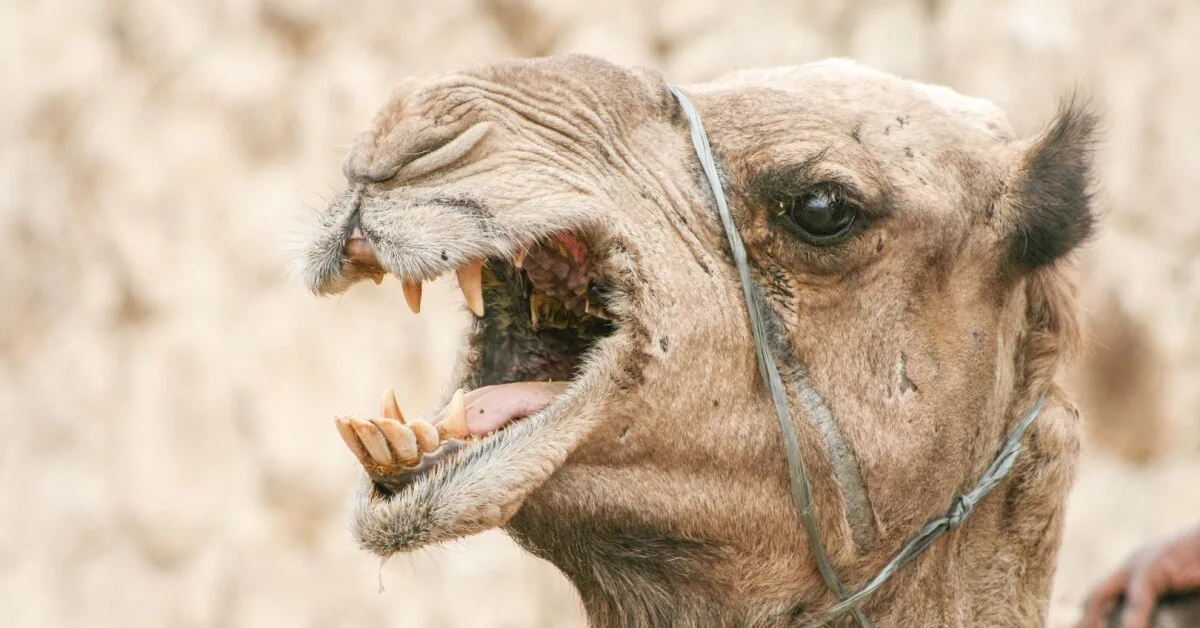
The Afar region in northeastern Ethiopia is one of the hottest and driest places on Earth. Here, nomads often lead caravans of salt-carrying camels across the desert.
Read more The «Silver Crane Nights» festival returns to Klaipėda: will invite to see 9 films
“I see my camels suffering from the unbearable heat,” Ali Umeras, a camel breeder from Semera town in the Afar region, told the BBC.
“Blisters form on their feet, their eyes water, and the hot sand burns their skin and eats away at their fur when they lie down,” said the 40-year-old man, who manages a herd of about 500 camels.
“In the last month, I lost eight young ones due to the scorching heat. The heat has become much more intense, and the conditions unbearable. Even the wind, which used to bring coolness, now blows with heat,” he said, adding that he has noticed drastic temperature changes in recent years.
These observations are not isolated: scientists, animal welfare specialists, and various studies confirm that stress, fatigue, dehydration, and more frequent disease outbreaks are direct consequences of extreme heat.
Rising temperatures also harm camels indirectly: they deplete water reserves, destroy vegetation, and reduce shaded areas, according to the BBC.
About 80% of the world’s dromedary camel population lives in North Africa and the Somali Peninsula.
Read more Back to the 1990s: Japanese yen continues to weaken
Over the years, farmers and livestock breeders in these regions have switched to these animals precisely because of their resistance to high heat and drought.
However, a study published in 2025, based on the experience of camel breeders in southern Ethiopia, showed that high temperatures and climate fluctuations negatively affect the health of camel herds.
“Respondents stated that climate change and its fluctuations affected camel health, productivity, and reproductive rates,” the study noted.
In neighboring Somalia, the situation appears even more serious. A study published in June revealed that drought-related camel mortality is a widespread crisis, affecting nearly 46% of camel-rearing households.
The study involved nearly 6,000 nomadic community households and showed that livestock mortality is concentrated in the northern regions – the Sool region recorded a “staggering mortality rate of nearly 73%.”
Read more Off the coast of Ukraine – burning ships: Russia resorted to a close partner’s tricks