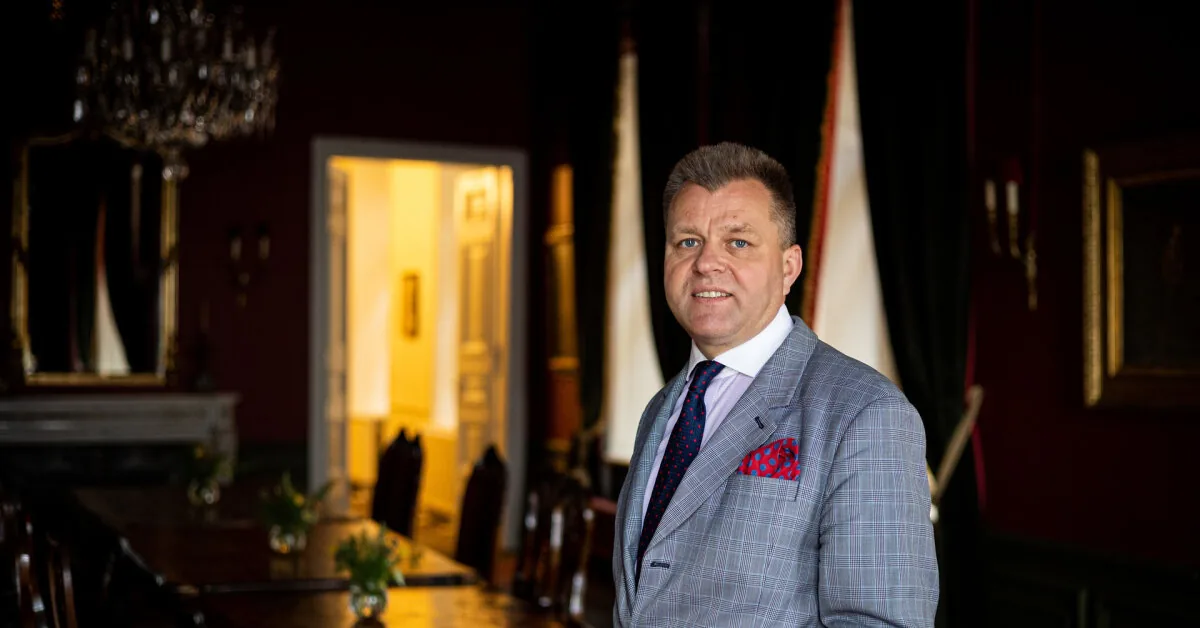
Having found, understood, and properly directed her anger, she insists: when you stop being too hard on yourself, real life begins. The author is interviewed by Ana Treščina, the editor of this book.
Read more Kremlin: relations with the UK will not improve under Andy Burnham’s rule
– What did the day look like in your life when you first clearly told yourself: “I feel a huge anger”?
– The strangest thing is that there was no such day. For many years I was convinced that I had no anger problems. It seemed that others were angry, and I was simply understanding, calm, and responsible. Only later did I realize that calmness often hides unexperienced anger. If a person never gets angry, it is very likely that they simply no longer recognize their anger.
My anger never looked like shouting or slamming doors. It manifested much more subtly – turning into perfectionism, constant self-correction, a desire to understand everyone, please everyone, and control everything. For a long time, I even took pride in these traits, but eventually I had to admit that I had been angry for a long time – just very politely.
– Was anger a taboo in your environment that had to be hidden for a long time under the mask of a “good girl” or a professional?
– In childhood, I was told that anger is bad. That a good person does not get angry. Such messages are often enough for a child for a lifetime. Very early on, I became a person who tried to understand everyone, give in, and not offend. At first glance, this seems like a beautiful trait, but over time I realized that sometimes understanding becomes a way to never ask yourself: “How do I feel?”
Over time, I realized that a mature person is not one who never gets angry.
Later, my profession contributed to this. Leading people, I wanted to be calm, rational, and solution-oriented. Over time, I realized that a mature person is not one who never gets angry. A mature person recognizes and understands their anger and is also able to take responsibility for how they express their irritation.
– You lead the choir “Young Music.” Company leaders often cannot control their anger, but as a choir leader – can he be angry?
– I think a leader does not have to be a person without emotions. The question is not whether a leader gets angry, but how they behave when negative emotions overwhelm them. Does their anger become a weapon against others? Professionalism does not mean the absence of emotions. Moreover, people quickly sense when emotions are hidden.
– How did your body react to suppressed anger, and what physically changed when you allowed it to be?
– Earlier, I thought emotions lived in the head. Now I know they primarily live in the body. Suppressed anger meant constant tension, rushing, inner alertness, and the feeling that I had to control everything. Only much later did I realize that the body was telling the truth all along, which the mind was not yet willing to hear.
The biggest change did not happen when I stopped being angry. It happened when I stopped being afraid of my anger. When you no longer have to constantly fight what you feel, the body gradually relaxes. There is more breathing, more lightness, and more vitality.
– On your search path, there were psychotherapy sessions and spiritual practices. Which experiences were the most painful, and which were the most dead-end-like?
– The most painful was realizing that I had lived for a very long time believing that one day I would finally become a “fixed person.” That if I worked enough on myself – in therapy, spiritual practices, meditations, or breathing – the day would come when I would no longer get angry, irritated, and would always remain calm.
The biggest dead end was realizing that a “fixed” person simply does not exist. Not because psychotherapy or spiritual practices do not work – they gave me a lot. The dead end was my expectation that they would someday eliminate all difficult emotions. When your whole life becomes an endless self-improvement project, there is no room left for life itself. Today, I think true growth is not a path to perfection. It is a path to greater humanity.
– Is it true that music can express what can no longer be expressed in words – have you tried to “sing out” anger?
– I think music can do what sometimes neither speech nor logic can – it allows the emotion to simply be. There is no need to explain, justify, or solve it. I am not one of those people who literally sing out anger. Rather, music helps me to be with it. Not for it to disappear, but so that it is finally heard. Sometimes after a concert, I realize that something inside me has changed, although I could not say at which moment it happened. Maybe that is why music seems so special to me – it does not judge, but sometimes helps to hear what words simply cannot express.
– If the anger you discovered had a musical form, what kind of piece, instrument, or tempo would it be?
– Earlier, I would have said huge drums, noise, and explosion. Today, I think the opposite. True anger is usually not loud. It resembles a long-held low cello sound – one you almost do not hear but feel with your whole body.
Music can do what sometimes neither speech nor logic can – it allows the emotion to simply be.
Maybe that is why I have always been so fascinated by the choir. There are no unnecessary voices in it. Even dissonance sometimes becomes a necessary part of harmony. It is similar with emotions. Anger is not a mistake that needs to be silenced. It is one of our inner voices. Harmony arises not when we throw out one voice, but when they all find their place.
– How did your personal emotional breaks affect relationships with colleagues and, in general, your work style?
– My work style has definitely changed. Earlier, I tried much more often to control everything – myself, situations, people. Today, I more and more often let people be themselves and no longer feel responsible for everything. I have noticed that trust creates more than control. I think the best teams are born not from fear of making mistakes but from the safety of being human.
Read more Due to the attack on a commercial sea vessel, India summoned the Russian envoy
– Could you share a specific, recent situation where instead of exploding, you just smiled inside?
– Such situations now happen almost every day, especially raising two small children. Earlier, I took many little things as a personal challenge – why is everything not going according to plan, why does no one listen, why is there chaos again.
Now I more often catch myself thinking: “Well, life has shown again that it has a great sense of humor.” Of course, it is not always possible to smile immediately. But the difference is that today I remember much faster – it is just a moment. There is no need to create a tragedy from it. Sometimes it is enough to take half a step back and see how absurdly funny we humans sometimes look.
– How did the break happen when you realized that serious spiritual practices lose to simple, light irony?
– I would not say they lose. Spiritual practices gave me a lot. But at one point, I realized that spirituality can also become an ego project. You can start measuring how conscious you were today, how much you meditated, how “correctly” you reacted to life. And you do not even notice that you have started fighting with yourself again.
Irony helped me get out of that fight. It reminds us that we are all a little funny. That life is not an exam we must pass with a perfect score. When you learn to gently laugh at yourself, you no longer need to defend so much. And at the same time, there is more room to accept yourself as you are.
– What is still a catalyst for your anger today, and what is an oasis of calm?
– The biggest catalyst for anger today is not other people but my own expectations. The desire to do more, do better, be more perfect. I notice that anger usually arises not because of what is happening but because of the difference between how I imagined things should be and how they really are.
My calmness today has become surprisingly simple. It is time with children, being in nature, music, breathing, quiet mornings or evenings without any need to prove anything. For a long time, I looked for complicated answers, but I found that they lie in very simple things.
– Has irony in your daily life become a new form of defensive wall protecting you from true sadness or vulnerability?
– Yes, that risk always exists. Irony, like anything in life, can take root as a way to hide, devalue your feelings, or prevent others from getting close to you. For me, irony is not a way to avoid vulnerability. On the contrary – it manifests when there is no need to hide it anymore. Healthy irony is born not from the desire to escape pain but from the ability to accept it. When you no longer have to constantly prove that you are right, strong, or spiritual, there is space to gently smile at yourself.
– What does your experience teach people who take their spiritual growth too seriously and strictly?
– Probably the most important lesson is not to turn spiritual growth into another obligation. Paradoxically, the more we try to become conscious, the more we distance ourselves from ourselves. We start evaluating whether we perform practices well enough, react calmly enough, live “correctly” enough.
Today, I think life is not an exam where we get a grade for spirituality. Maturity begins not when we stop making mistakes but when we stop punishing ourselves for mistakes. Sometimes sincere laughter at yourself can help more than another self-help book read.
– To whom would you most like to dedicate your book – to those who get angry loudly, or to those who do not recognize their anger? Or maybe to those who tend to swallow it?
– If I had to choose one person, I would choose the one who says: “I almost never get angry.” Because for a very long time, my own anger was not gone but hidden. I believe that anger is not our enemy, so I wrote about how to stop being afraid of your emotions. Often, anger is the first to show where we hurt and what we truly long for.
– How would you define inner harmony today, after going through the whole difficult healing path?
– Earlier, I would have said that harmony is a state when there are no inner conflicts. Today, I think quite the opposite. Inner harmony is not a life without anger, fear, or sadness. It is a state when you no longer fight what you feel but also no longer identify with your emotions. Harmony for me today means the ability to hear the voice of every emotion, not to drive any away, but also not to let any control my whole life. And that is when much more lightness appears.
– What would you like the reader to grasp first when they close the last page of your book?
– If my book even slightly reduces the feeling of guilt about their emotions, if it helps even one person look at themselves with more gentleness, then it has already done more than I could have hoped for.
I would like readers to at least briefly stop, smile, and think: “It turns out being human is not a defect.”
On July 28 at 6 p.m., the presentation of Ingrida Alonderė’s book “I am angry, therefore I am” will take place in the Event Space of the Martynas Mažvydas National Library of Lithuania.
Read more The operation of the Registry Center systems was disrupted