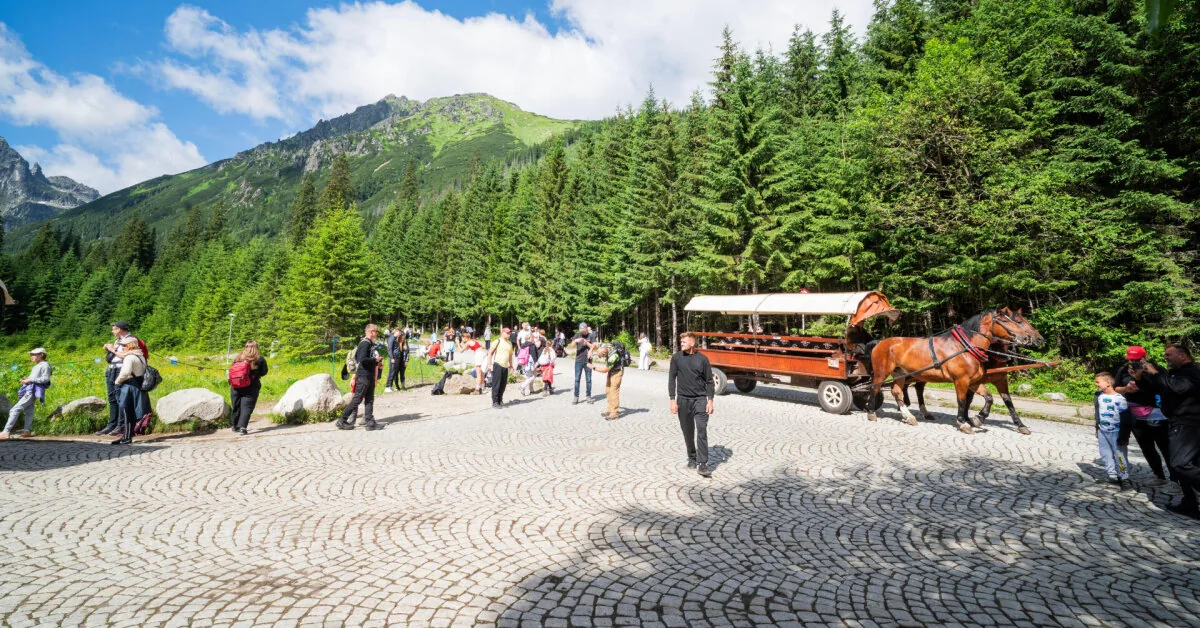
At that time, representatives and experts of the Tatra National Park (TPN) say that these trips are carried out according to strict rules and an agreed model is implemented, combining horse-drawn and electric transport.
Read more Poured conspiracy theories: have cancer drugs really already been invented but carefully hidden?
Protesters demand a complete ban on horse-drawn carriages used as a tourist attraction on the approximately 7 km long mountain road section leading to Lake Morskie Oko.
They claim that animals are exploited in the tourism business and propose using alternative electric-powered transport instead.
They also called for the dismissal of the Minister of Climate and Environment Paulina Hennig-Kloska and the head of TPN Szymon Ziobrowski.
The protest organizers stated that “years of reports about changes, subsequent agreements, and political compromises have not helped to stop the use of horses for transporting tourists,” and added that they expect a complete ban on such transport.
Krystyna Pietruszka from the South Silesia Animal Protection Inspectorate said that protesters do not believe the official medical studies of horses confirming that the animals’ condition is good.
“To me, this is intentional, extremely cruel abuse because the owners see that the horses are in poor condition and exhausted, yet still force them to pull carriages. We, as an animal welfare organization, will not allow this and say: ‘Stop – from today horses will not be used for transport,'” said K. Pietruszka, adding that activists are ready to protest at the European Parliament as well.
However, Dr. Marek Tischner from the University of Agriculture in Krakow, who has been a member of the commission studying horses used on the Morskie Oko route for many years, said that public discussions are often based on emotions rather than reliable research and knowledge about animals.
Read more Signs that it is time for you to take a break from alcohol and as soon as possible
“Symptoms of natural fatigue after exertion, such as faster, deeper breathing or foamy sweat, are presented in media reports as proof of animal suffering. However, for specialists working with horses, these are normal, temporary healthy organism responses to exertion,” said M. Tischner.
On Saturday morning, horse carriage operators reported that they are suspending services and did not depart on the route to Morskie Oko.
“We made a difficult but the only right decision to stop providing services today. Safety is our highest priority. We will not allow the Tatra Mountains to become a theater of conflict,” said the head of the carriers’ association Andrzej Maka.
Before the current summer season, 282 horses were examined, of which two were removed from the route for orthopedic reasons, and one was referred for additional cardiological examinations.
TPN states that long-term monitoring of physiological parameters shows no signs of chronic fatigue or musculoskeletal system damage in horses working on the route.
Four electric buses are already running to Morskie Oko, and a tender is currently underway to purchase 16 more buses.
Read more What can a future employer check in „Sodra“ and how is a lie in the resume revealed?