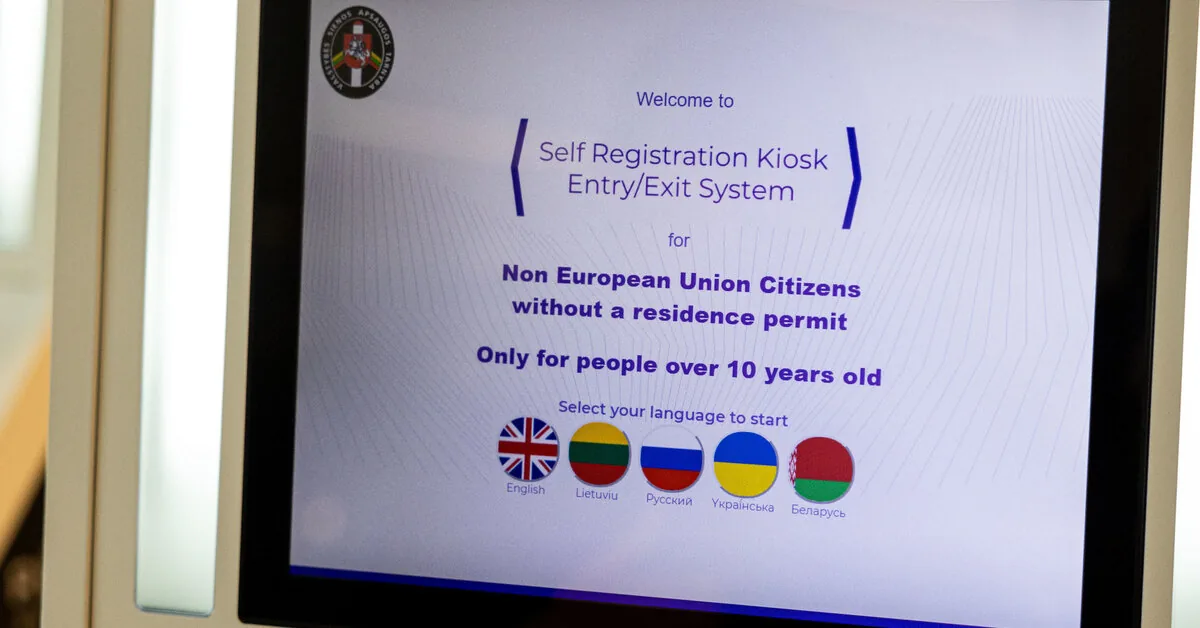
„Both during the system implementation period and since April 10 (when it started operating at full capacity – BNS), there have been no problems such as queues forming, delayed passenger checks, passengers missing flights, and the like,“ said Giedrius Mišutis, a representative of the State Border Guard Service (VSAT), to BNS this week.
Read more Forget Venice: 5 European towns on the water that will charm you more
Lithuanian airports also indicated that the operation of the system, which automatically registers the arrival of non-EU citizens to 29 European countries and stores the received information, does not cause inconvenience.
„The situation at airports is stable. So far, we have not received complaints, the system operates as intended,“ the state-owned company commented to BNS.
The new system replaced manual passport stamping and records travelers’ personal and biometric data to monitor overstays and refusals of entry into the country.
Last week, the European aviation industry warned in a joint letter that the EES caused waiting times to increase by up to five hours.
Having reviewed the letter from nine EU countries, the portal „Politico“ wrote this week that they urge Brussels to continue applying the EES flexibly in emergency situations. It states that the first months of the system’s operation revealed „significant difficulties“ that cannot be underestimated.
At the beginning of July, European Commission President Ursula von der Leyen acknowledged that there are still technical problems in the system’s operation, which will require „a lot of work“ together with member states to resolve.
Meanwhile, the European Commissioner responsible for internal affairs, Magnus Brunner, assured that the Commission „will make additional efforts to assist those countries still facing problems“.
Read more Spanish coach recalling a funny story with Messi: «We assigned him a personal defender»
The EES is used by EU countries except Ireland and Cyprus, and other countries belonging to the Schengen free movement area, including Switzerland, Norway, and Iceland.
Under this scheme, non-EU travelers arriving for a short stay are asked to provide their passport number, fingerprints, and a photograph at automated control points.
Related information is recorded in a digital file, allowing authorities to better share information and know when people arrived in and left the country.
In a letter dated July 3 to the European aviation industry, M. Brunner indicated that since October 2025, 110 million people have arrived in or departed from the EU under this new system, and more than 44,000 individuals were denied entry.
According to VSAT data, from April 10, when the EES began operating at full capacity, until July 15, 627 individuals were denied entry at Lithuanian border control points for various reasons.
In total, during the same period, 822,411 third-country nationals were checked.
Read more Adolfas Grušas. Sunday Gospel. The Blessing of Patience