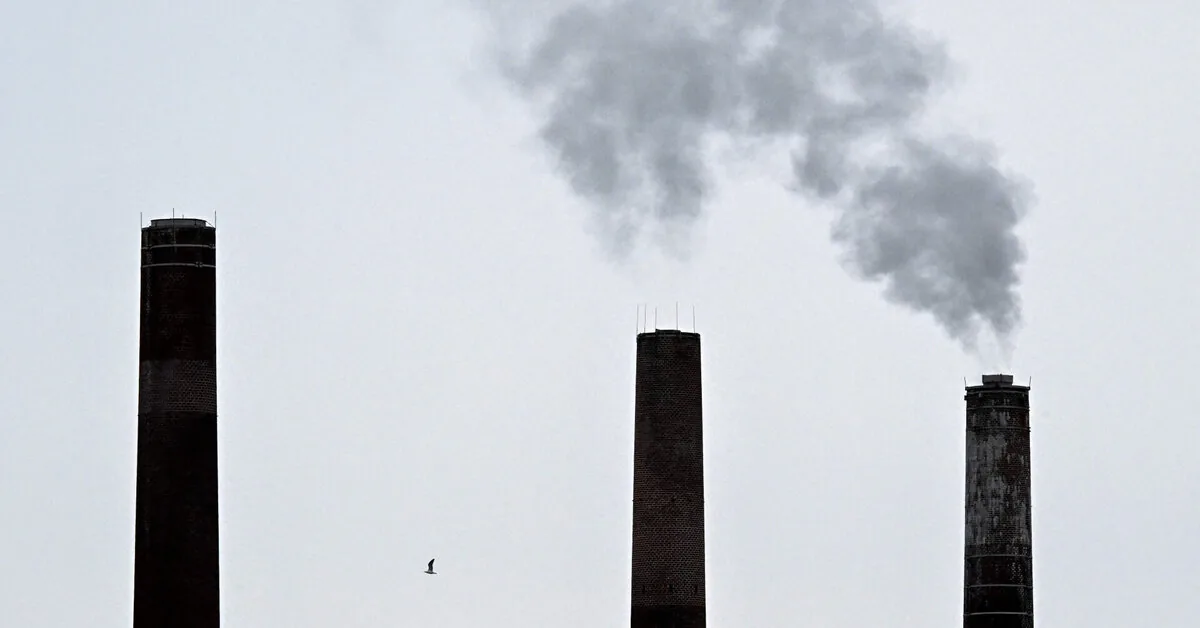
The EC states that due to its dependence on imported fossil fuels, the EU has repeatedly experienced geopolitical shocks. This has led to increased energy prices for both households and businesses and reduced the bloc’s competitiveness. Although 70% of the EU’s electricity is currently generated from local clean energy sources, the pace of electrification in energy-intensive sectors has slowed to 23% over the past decade. Therefore, the EU must accelerate the electrification of energy-using sectors, primarily industry, transport, and buildings.
Read more Andy Burnham elected new Labour leader and will become UK Prime Minister
To support this ambition, the Commission will assess a benchmark electrification target of 46% to be achieved by 2040. Achieving this target could reduce the EU’s fossil fuel import costs by €260 billion per year by 2040.
According to the Commission, electrification is highly beneficial to the EU economy, businesses, and citizens due to lower energy prices and competitiveness, greater energy security, and resilience.
To help European manufacturers benefit and reduce industry’s dependence on fossil fuels, large-scale investments are needed, the EC notes.
“The best way to reduce Europe’s dependence on fossil fuels is to power our economy with electricity from clean local sources. Today we propose that Europe becomes the world’s first electricity-powered continent. From lowering electricity prices to adapting our carbon market to changing global realities – this is also a plan for investment and independence. To ensure a smooth transition to clean energy, improve our industry’s position, and support reducing fossil fuel dependence,” said EC President Ursula von der Leyen.
ETS review
Meanwhile, the ETS, which started in 2005, has delivered results, the EC emphasizes. It has generated over €270 billion in revenues, which have been reinvested in innovation, reducing industry’s fossil fuel dependence, and modernizing Europe’s energy system. All this helps Europe reduce emissions by 50% in the sectors it covers.
However, geopolitical and economic circumstances have changed, and EU industry is under greater pressure, so the EC says it is necessary to modernize the ETS to make it a driver of our competitiveness and independence through innovation and investment.
“The EU ETS has proven that carbon pricing works. It has reduced emissions, strengthened Europe’s energy security, and mobilized investments across our economy. Today’s ETS review proposal sets three main objectives: climate action, competitiveness, and independence. It promotes climate policy, among other things, by turning the ETS into a true driver of innovation and investment,” said Commissioner for Climate, Zero Pollution, and Clean Growth Wopke Hoekstra.
According to the EC, the ETS review will help industry while preserving the essential role of the ETS in delivering the climate-related energy transition in line with the EU Climate Law. It updates the linear reduction factor – 3.7% for 2031–2035 and 1.7% for 2036–2040 – to make the trajectory more gradual and aligned with the level of domestic climate ambition.
Up to 2% of high-quality international credits will allow financing projects to reduce fossil fuel dependence abroad and provide more flexibility for 2036–2040 when emission reductions in Europe become more challenging.
The revised ETS will focus heavily on investments. The proposed Industrial Decarbonisation Bank will be allocated €100 billion to support large-scale industry fossil fuel dependence reduction across Europe. The ETS investment support mechanism will be prepared by 2030 as the first phase of the bank’s operation. The EU ETS Innovation Fund will continue to support the first commercial application of innovative clean technologies in various sectors. Additionally, Member States will have to allocate 50% of their national ETS revenues to investments in reducing fossil fuel dependence in the ETS sectors. This amounts to over €100 billion in investments by 2030.
Solidarity remains the foundation of the ETS, the Commission emphasized. The Modernisation Fund will continue to support lower-income Member States to upgrade energy systems and transform industry.
Free circulating emission allowances for companies will be allocated beyond 2030 and will be more closely linked to investments in reducing fossil fuel dependence in Europe. National ETS revenues should be reinvested in ETS sectors. The principle is clear: the industry contribution should be returned to industry. This approach encourages and rewards those who invest in the clean energy transition and supports those who struggle to catch up.
The proposal also includes permanent carbon dioxide removal in the EU ETS. This will provide additional flexibility to sectors that find it hardest to reduce emissions while helping to scale up these technologies.
A separate proposal on benchmark indices aims to allocate more free circulating emission allowances worth €6 billion to industry for 2026–2030. In sectors covered by the Carbon Border Adjustment Mechanism (CBAM), the free allowance allocation will be reduced more slowly, and the gradual phase-out will be extended until 2038.
The Commission also proposes reforming the Market Stability Reserve (MSR) to further strengthen market stability and investment predictability, maintain liquidity, and reduce excessive price volatility.
The proposal strengthens the EU ETS for the aviation and maritime sectors and expands it to include waste incineration. The review creates new business opportunities in these sectors, removes the risk of circumvention, and establishes a level playing field. It also ensures compatibility with international developments.
Read more Offices, emergency services threatened with bombings, police consider the letters to be false