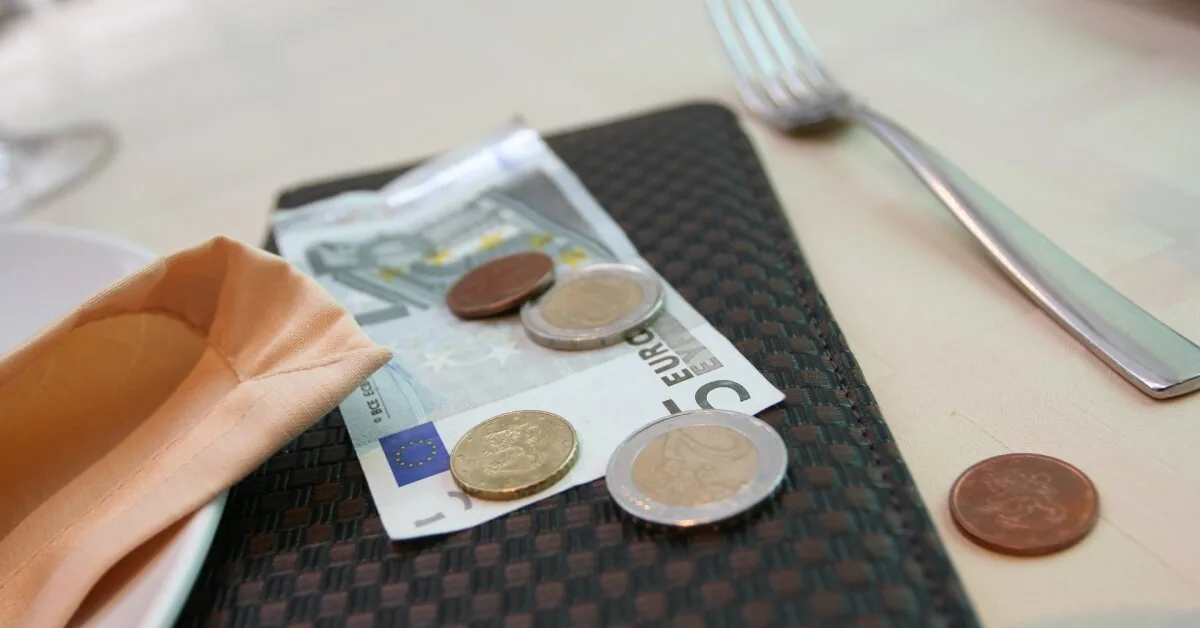
According to a new Tesco Travel Money survey, as many as 31% of Brits leave tips abroad just to avoid awkward situations. Due to cultural differences, travelers often pay extra even where it is not expected at all.
Read more The second part of the exhibition «Jacques Lipchitz. Sculptures-Pilgrims» opens in Druskininkai
So where is a monetary thank you mandatory, and where will the waiter simply get offended?
Tip paradise: countries where you can’t do without them
United States and Canada
The tipping culture in the US is the most deeply rooted in the world. In restaurants, it is customary to leave 15 to 20% of the bill amount.
Bartenders expect $1–2 for each drink (or the same 15–20%).
Taxi drivers are also left about 10%, and if you have a lot of luggage – the amount can jump up to 20%.
In Canada, almost identical rules apply, only in the case of taxis passengers usually just round up the amount to the nearest whole number.
Egypt and Africa
In Egypt, tips are called “bakshish” and are an integral part of the local culture. Waiters, cleaners, drivers, and guides expect them (it is recommended to pay in local currency or US dollars).
A similar practice applies during African safaris – guides are usually left an amount equivalent to 10–20 pounds sterling per day.
In South Africa, Morocco, and Kenya, it is customary to leave 10–15% in restaurants, and hotel staff receive a few pounds for each night of stay.
Central and South America
Rules here vary depending on the country. In Mexico, waiters expect 10–15%, in Argentina – about 10% in cash, even if the bill itself is paid by card.
In Brazil, the service charge is often already automatically included in the check.
Europe: all included, but no one will object to small change
In many European countries (France, Spain, Germany, Italy), tipping is not mandatory because the service charge is usually already included in the final bill. Nevertheless, satisfied customers often leave small change or round up the amount.
Read more Cardiologists warn everyone: here is how to recognize that your cholesterol is too high
In Scandinavian countries (Denmark, Sweden, Finland), service sector workers receive sufficiently high salaries, so additional tips are not considered mandatory here.
A similar situation prevails in Australia and New Zealand – tips are not expected unless the service was exceptionally good.
Asian subtleties: from tolerance to complete prohibition
Southeast Asia
In Thailand, Indonesia, and Vietnam, tips are not mandatory, but due to the large flow of Western tourists, they are becoming more common (if the service charge is not included, 5–10% is left).
In India, restaurants often include a 5–10% service charge themselves.
In Singapore, tipping is not expected at all unless you were particularly impressed by the service.
Red zone: do not leave tips under any circumstances
The biggest mistake can be made in the Far East. In China, Japan, and South Korea, tipping must be handled very carefully:
In China: extra money can be understood as a rude insult or humiliation. In some places, such as airports, they are strictly prohibited altogether.
In Japan: tips are not expected at all. A waiter may chase you down the street just to return the money you left, thinking you simply forgot it. If you really want to show gratitude, experts advise giving a small modest gift instead.
In South Korea: such practice is also not considered the norm and can cause great discomfort to both parties.
Read more How is a new theater season created? Laima Vilimienė shares play recommendations
Source: UNIAN.net