„In clinical practice, disease names rarely change. Even more rarely does this happen when not only the medical term changes, but also the very concept of the condition. This time, such a historic breakthrough has occurred – today we clearly understand that this is not just an ovarian problem. It is a condition determined by neuroendocrine and metabolic changes throughout the entire body, which can affect a woman’s health at various stages of her life,“ says hospital endocrinologist, Vilnius University associate professor, member of the European Endocrinologists Society Clinical Committee Dr. Lina Zabulienė.
Dr. L. Zabulienė participated in this exclusive European Endocrinologists Congress symposium in Prague. She was not only one of the first to hear about the international agreement but also had the special opportunity to sincerely congratulate the leader of this change – Professor Helena J. Teede from Monash University (Australia) and her team.
„Being there, feeling the incredible support of the audience, and seeing this historic transformation with my own eyes was an extraordinary experience. This step is important not only for doctors but also for women worldwide. It took 14 years of intensive work to prepare for it, involving 56 international organizations and more than 22,000 patients and experts from various fields around the world. This shows the great power of women’s unity and their desire to be heard,“ recalls Dr. L. Zabulienė.
This step is important not only for doctors but also for women worldwide. It took 14 years of intensive work to prepare for it.
Why did the old name mislead and confuse women?
The previously used name polycystic ovary syndrome gradually became misleading. Scientific studies have shown that the “string of pearls” image seen in the ovaries during ultrasound is not cysts – these are simply immature follicles. Moreover, such an ovarian structure is not characteristic of all women with this syndrome and is sometimes observed in completely healthy young girls.
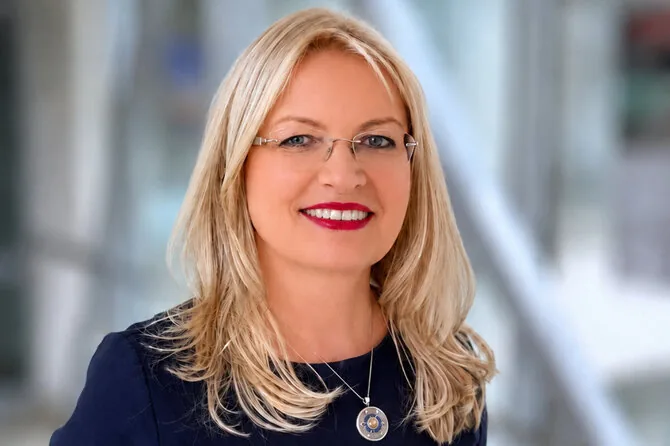
„The old name supported the false notion that women suffer from cystic ovarian disease, caused anxiety about infertility, and most importantly, often led to an unjustified sense of guilt over weight gain and other health problems. A global survey revealed that as many as 86% of patients desired this change. They wanted to show society and doctors that this condition is not just a reproductive system disorder. It is a complex, systemic condition where changes in various hormones and metabolism affect the cardiovascular system, skin condition, and emotional well-being. The new name much more accurately reflects what we know about this condition today and helps to fully understand what is happening in a woman’s body,“ emphasizes associate professor Dr. L. Zabulienė.
The old name supported the false notion that women suffer from cystic ovarian disease, caused anxiety about infertility, and most importantly, often led to an unjustified sense of guilt over weight gain and other health problems.
The endocrinologist encourages abandoning other myths still prevalent in society that women face: „PCOS is not the result of an improper lifestyle, overeating, laziness, or lack of willpower. It is a multifactorial condition whose development is determined by the interaction of genetic, epigenetic, neuroendocrine, metabolic, and environmental factors. It is precisely because of these biological characteristics that it is incomparably harder for women to manage their weight. When a woman understands that she is not to blame for this, a great emotional burden is lifted from her shoulders.“
The new name PCOS – what do the four important words reveal?
Dr. L. Zabulienė explains in detail why the new term is much more accurate:
- “Polycystic” shows that the syndrome’s development is caused by complex neuroendocrine disorders involving the interaction of various organs and systems – hypothalamus, pituitary gland, adrenal glands, ovaries, pancreas, adipose tissue, and liver.
- “Metabolic” confirms that metabolic changes, such as insulin resistance, are not consequences of the disease or lack of willpower but an innate, inseparable part of this condition.
- “Ovarian” reminds us of the dysfunction of ovarian function, not anatomical structure – altered hormone balance and irregular menstrual cycles.
- “Syndrome” emphasizes that the condition is highly heterogeneous. There are no two identical women’s stories – clinical manifestations, risk of possible complications, and treatment needs are very individual in each case.
One of the most common conditions in women of reproductive age
Worldwide, PCOS affects about one in eight women of reproductive age – that is more than 170 million real-life stories. However, about 70% of women with this disorder still do not know about their condition.
Read more Latvian President Edgar Rinkevics – Honorary Doctor of Klaipeda University
According to the endocrinologist, this syndrome accompanies a woman throughout her life, changing its face. The first signs of the syndrome usually appear in adolescence – irregular menstruation, acne, or increased hair growth. Later, during the reproductive period, questions about conception and fertility usually arise, and in older age, the syndrome’s manifestation is complemented by weight gain, metabolic changes, and an increased risk of cardiovascular diseases.
„This condition manifests very differently in each woman’s life. For some, the menstrual cycle is disrupted first; others suffer from difficult-to-treat skin rashes or increased hair growth; the third group learns about this condition only when they start planning pregnancy. For others, the first signs of the syndrome are weight gain, glucose metabolism disorders, or high blood pressure. That is why help for a woman must be comprehensive and tailored personally to her,“ draws attention Dr. Lina Zabulienė.
When is it time to seek help?
Associate professor Dr. L. Zabulienė recommends not delaying until symptoms become troublesome and consulting specialists upon noticing at least several of these signs:
- irregular or absent menstruation for more than three months;
- significant or rapidly increasing hair growth on the face or body;
- persistent skin rashes that do not respond to usual cosmetic or treatment methods;
- unexplained weight gain or difficulty losing weight;
- difficulty conceiving for more than one year (or more than six months if you are over 35 years old).
A timely diagnosis allows not only more effective symptom management but also reduces the long-term risk of type 2 diabetes, cardiovascular diseases, and other complications.
Seeing the woman, not just the test numbers
Although both terms (PCOS and PCO) and diagnostic principles will be used in clinical practice during the transition period until 2028, the approach to treatment and care is already fundamentally changing.
„Our goal is not just to regulate laboratory test results. We aim to help a woman maintain good well-being, quality of life, reduce the risk of long-term complications, and provide a clear understanding of her condition. Treatment is always individual – for some, a health-friendly lifestyle (e.g., Mediterranean diet, aerobic and strength training) helps; others may need combined contraceptive drugs, metformin, or new-generation weight-regulating medications. But most importantly – comprehensive support, including emotional health, because anxiety, deep sadness, or eating disorders are directly related to the same neuroendocrine mechanisms as the syndrome itself,“ explains Dr. L. Zabulienė.
According to the doctor, modern PCOS care is not just strict instructions but an emotionally safe, trust-based partnership between doctor and patient, where not only the syndrome but also the woman herself is seen – her life story, experience, and expectations. It is a space where her voice is respected and heard.
„Today we have more tools to help than ever before, and most importantly – knowledge that dispels fears, restores self-confidence, and the freedom to boldly create one’s future,“ the conversation warmly concludes associate professor Dr. L. Zabulienė.
Read more Warning to Vilnius residents: eleven bus routes change on Thursday