- It becomes clear who organized the explosion in Monaco: the chronology of events has been reconstructed
- Gitanas Nausėda spoke about new threats from Russia: we receive signals from the services
- The truth revealed: what happened to Russia’s military facilities in the Arctic
All news about Russia’s invasion of Ukraine can be found HERE.
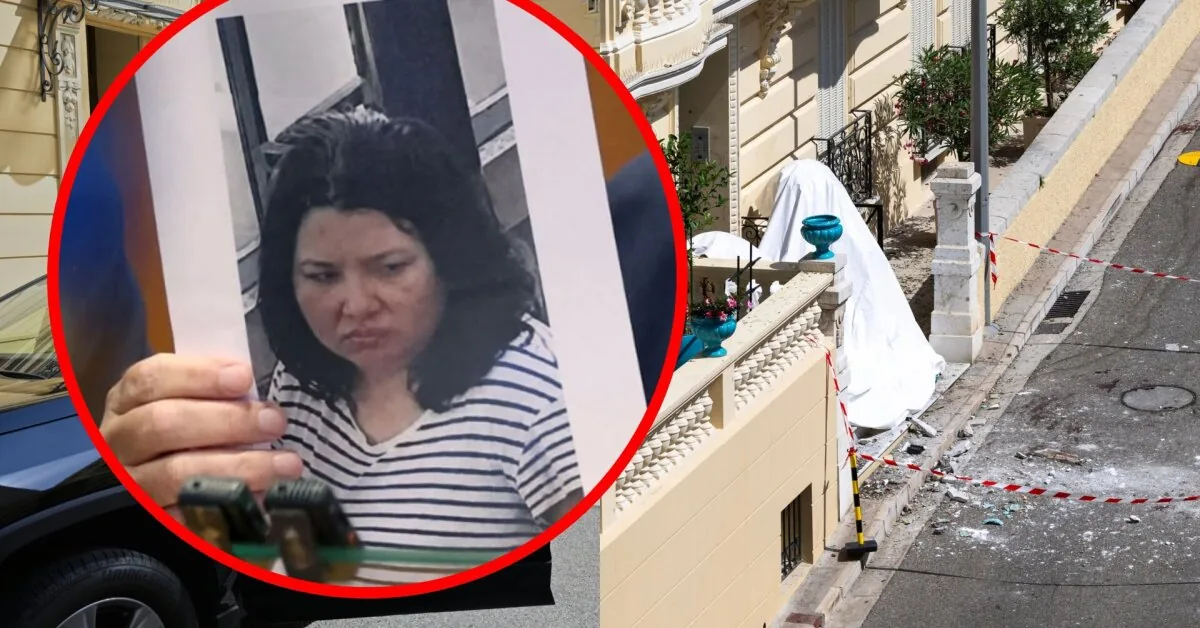
It becomes clear who organized the explosion in Monaco: the chronology of events has been reconstructed
10:36

Investigators believe that the organizers of the terrorist attack in Monaco are precisely the curators of Anastasiya Berezovska, Vitaliy Zhykovyts and Vladyslav Reut, who were previously charged with the woman’s murder. A. Berezovska is suspected of attempting to assassinate businessman Vadym Yermolayev, who is on the sanctions list.
Read more After threats from the elected president, the former Colombian guerrilla leader warns of violence
This is reported by the portal “Ukrainska Pravda” (UP), citing sources close to the investigation.
According to the portal’s sources, both suspects in the A. Berezovska murder case – current Ukrainian military intelligence GUR officer V. Reut and former Ukrainian Security Service SBU officer V. Zhykovyts – have started cooperating with investigators and are giving detailed testimonies.
It is noted that the testimonies of both men regarding the main events coincide, which allows investigators to gradually reconstruct the chronology of events.
The woman was motivated by money
According to the suspects, the woman, whom investigators consider the direct perpetrator of the attempt on V. Yermolayev, lived in Germany for several years with her son, having refugee status.
One of the motives for her participation in the operation, according to V. Reut and V. Zhykovyts, was money – allegedly A. Berezovska hoped to earn money to buy a house in Ukraine.
The suspects said that her travel, accommodation, car rental, and other expenses were paid for.
They also stated that before carrying out the main task (the attempt on V. Yermolayev – editor’s note), A. Berezovska participated in other operations, especially related to blogger Anatoliy Shariy.
One of the most important episodes for investigators is the testimony about the manufacture of the explosive device.
The explosive was disguised as a toy car
According to UP sources, one of the suspects – current GUR officer V. Reut – admitted to manufacturing an electronic initiation node that causes the detonation of the main charge. According to him, this element was disguised as a toy car, then passed through Germany to the executor, who had already assembled the explosive device and prepared it to operate.
However, the other suspect V. Zhykovyts claims that A. Berezovska could not have independently made such a device because it required special knowledge and training.
Initially, the plan was only to kidnap the businessman
According to one of the suspects, the initial operation plan was different: at first, the idea was not assassination but kidnapping of V. Yermolayev, but later the task was allegedly changed.
Investigators are also checking the version that, after French law enforcement identified the executor’s identity, the suspects decided to eliminate her because she could testify about other participants in the operation.
UP sources also said that one of the suspects – current GUR officer V. Reut – is described as a highly qualified specialist in mines and explosives.
Currently, investigators continue to compare the suspects’ testimonies with other evidence. The investigation is ongoing.
Explosion in Monaco and murder in Ukraine
15min reminds that the French police revealed that Anastasiya Berezovska is the woman captured by surveillance cameras leaving a backpack near one of Monaco’s apartment buildings. The bag exploded, injuring Ukrainian businessman Vadym Yermolayev as he left the building with his partner and their 13-year-old son.
Prosecutors said that 39-year-old A. Berezovska, disguised as a man, fled by car with German license plates, crossing into France and later into Italy.
It is reported that on July 1, she left for Ukraine, where she reached her native city of Zhytomyr, west of Kyiv, by bus.
Last week, officials announced that her body was found buried in a forest near the capital with gunshot wounds to the head.
According to the Ukrainian Security Service SBU, A. Berezovska was met by two men who had previously made payments to her bank and cryptocurrency accounts.
Gitanas Nausėda spoke about new threats from Russia: we receive signals from the services
10:52
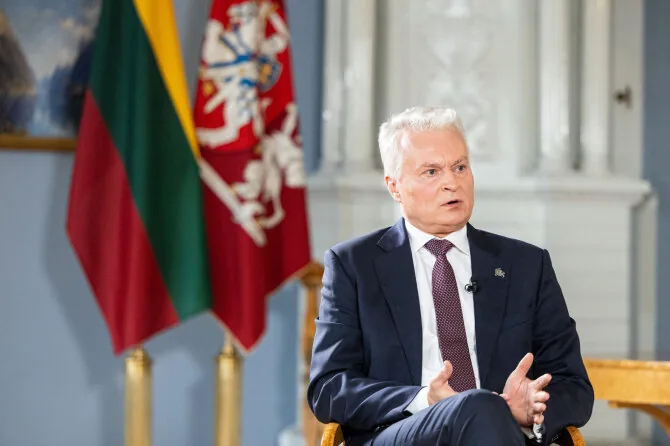
President Gitanas Nausėda confirmed information that appeared in foreign media a few weeks ago that Russia plans provocations in Poland or the Baltic states, which may be aimed at testing NATO unity.
According to the president, this information is based on intelligence data, and it concerns possible Russian strikes on critical infrastructure in the region, which may be carried out by conventional and other means.
“There are such signals, we receive them from our services. They do not clearly identify the place or time, because it is simply impossible to determine, as the other side may not always be at the end of the planning process, and we only know about the planning itself or the goal,” G. Nausėda said in an interview with BNS.
“So yes, I cannot deny that we have such information and that it concerns kinetic, not large-scale, but still targeted kinetic operations, which are very likely to be directed at critical infrastructure objects,” he added.
According to the president, recently Lithuania’s critical transport and energy infrastructure protection has been strengthened.
Read more HERE.
The truth revealed: what happened to Russia’s military facilities in the Arctic
09:56
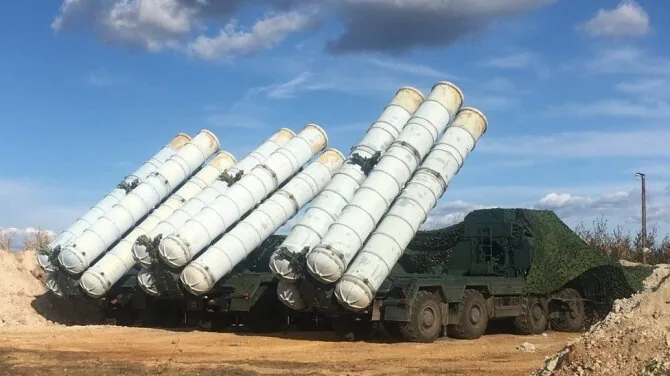
Russia is reducing the number of air defense forces in the Arctic, leaving key military facilities in the far north unprotected, as it tries to protect facilities in other parts of the country from Ukrainian attacks. According to Radio Svoboda, satellite images show that the Kremlin has removed S-300 and S-400 systems from several strategic sites in the region.
As noted by Norwegian Defence Research Institute professor Katarzyna Zysk, such a disappearance of many air defense assets from Russia’s far northern regions indicates “an increasing mismatch between the objectives Russia has to defend and its available launchers, interceptors, and trained personnel.”
This does not mean that Russia’s strategic facilities in the far north now have no air defense protection at all. However, according to her, “this suggests that Russia does not expect a large-scale attack in the region and believes it can reduce protection there without significant risk.”
Thus, according to Radio Svoboda data, about 60 percent of Russia’s S-300 and S-400 air defense systems were removed from locations where they were deployed before the 2022 invasion of Ukraine. Air defense units mostly remained in place around Russia’s nuclear missile silos and strategic bomber airfields.
Read more HERE.
Russia dropped a 3-ton glide bomb on a Ukrainian city
09:40
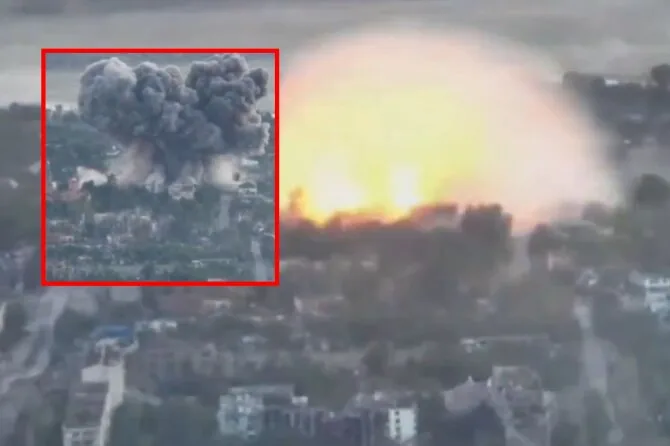
Russia released a video showing the devastating effect a three-ton glide bomb had on a Ukrainian city.
The 20-second video, published Monday by the Russian Ministry of Defense, shows a massive explosion and a clearly visible blast wave, after which black smoke clouds rise over the city of Orikhiv, located above the front line, reports TVP World.
The video features a pilot boasting: “It’s hard to imagine a target that such a large air bomb wouldn’t destroy.”
Watch the video HERE.
Ukraine started a real hunt in the Black Sea: attacked 20 Russian ships
09:25
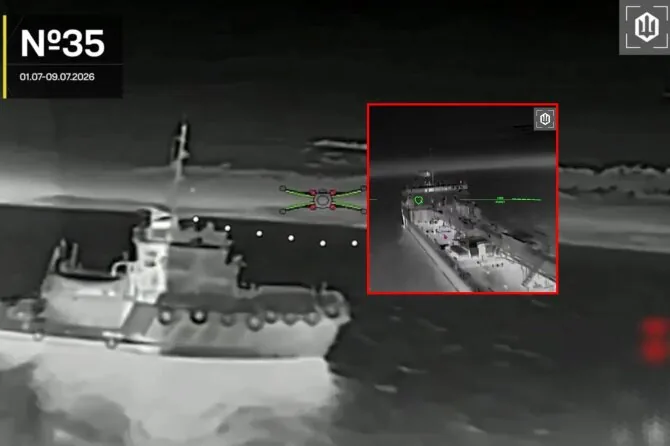
Ukrainian drone forces destroyed 20 Russian ships in the Black Sea during the night to Wednesday, July 15.
This was reported by the commander of the Drone Forces (SBS), Robert Brovdis.
The time has come for the Black Sea
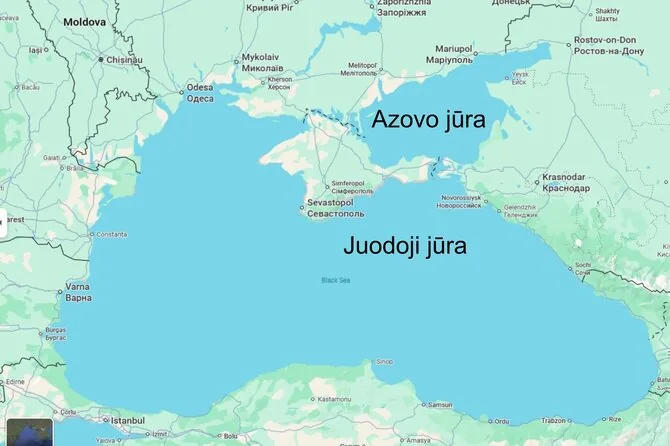
He emphasized that the previous phase of the operation in the Sea of Azov ended with the defeat of 116 Russian shadow fleet ships, and now it is the Black Sea’s turn.
According to him, in the first strike, 20 ships were attacked: 17 oil tankers, two gas tankers, and one tugboat.
15min reminds that on the night of July 14, the Drone Forces shot down another 11 Russian ships in the Sea of Azov, including five tankers, five dry cargo ships, and one tugboat.
How it affected Russia
According to the US-based Institute for the Study of War (ISW), due to Ukrainian strikes, Russian ship activity in the Sea of Azov has sharply decreased. Analysts report that the number of ships with AIS transponders active in this area dropped by 55 percent – from 267 at the end of June to 120 on July 11.
Near Kerch, the number of such ships decreased by 75 percent – from 37 to 9. Some tankers and other vessels sailed into the Black Sea, while others were sent for repair or storage.
Additionally, Russia has suspended navigation through the Azov-Don Canal and stopped accepting applications for passage through the Kerch Strait, which could deprive the country of up to 20 percent of grain exports. On Tuesday, the Transport and Agriculture Ministries of Russia’s Rostov region announced they are seeking alternative routes for exporters whose harvest campaigns have recently begun.
Relentless Russian attacks made June the deadliest month for Ukrainian civilians since 2022
08:46
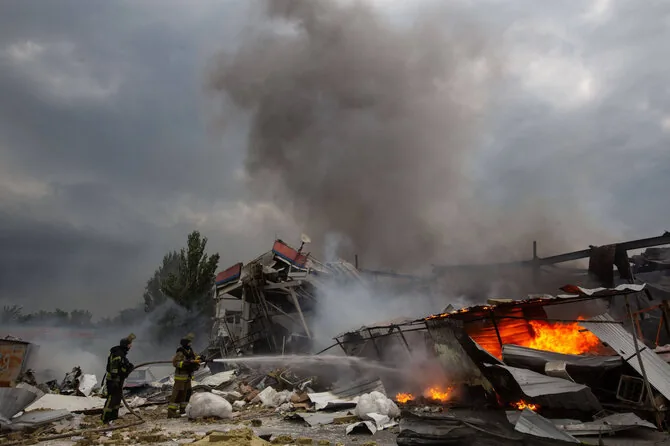
Due to Russian attacks, June became the bloodiest month for Ukrainian civilians since April 2022. This was stated on Tuesday by the United Nations (UN), which assessed the number of civilian casualties from Russian strikes.
According to CNN, based on data from the UN human rights monitoring mission in Ukraine, at least 293 Ukrainian civilians were killed in June, and the number of civilian deaths since the beginning of the year reached nearly 1,400. This is 37 percent more than during the same period last year and more than double the figure for the same period in 2024.
The increase in casualties was mainly due to Russian long-range ballistic missile launches targeting residential buildings in cities such as Dnipro, Odesa, and Kyiv.
According to UN data, from January to June, the number of civilian casualties due to the use of long-range weapons increased by 60 percent compared to the same period in 2025.
In territories closest to the front line, most civilian deaths and injuries in 2026 were related to short-range drones.
As noted by Danielle Bell, head of the Office of Human Rights and Environment, drones pursue people even while they perform daily tasks such as grocery shopping, walking dogs, cycling, or gardening.
Russian attacks have not abated in July. According to CNN calculations based on local government data, at least 240 civilians were killed and 1,904 injured in Ukraine in the first half of July.
Read more Arrived in Italy to see houses for 1 euro: soon surprised by the real price
Three people killed in Russian strike on Ukraine’s Odesa
08:41

Three people were killed and three others injured in a Russian strike on the southern Ukrainian city of Odesa on Wednesday, regional officials reported.
“The enemy attacked the city again,” Odesa military administration head Serhiy Lysak said on the Telegram platform, adding that residential buildings were damaged during the attack.
“According to current data, three people were killed in the enemy attack,” Lysak later clarified, adding that three others were hospitalized.
Europe rushing to buy record amounts of Russian gas – this will end soon
07:36
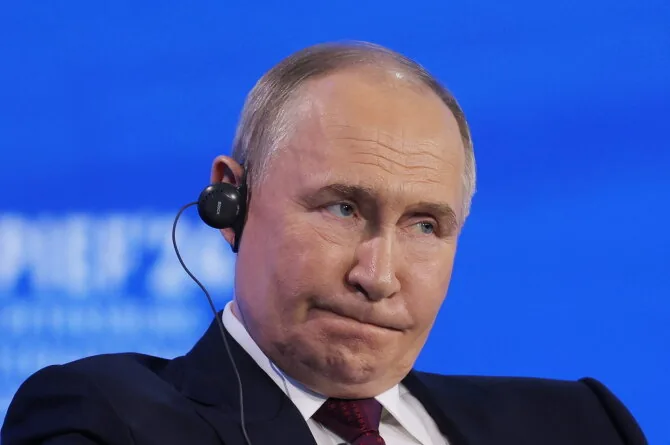
European countries have increased their purchases of liquefied natural gas from Russia to a record high level this year. This is happening as a complete ban on Russian liquefied natural gas imports will soon take effect in the European Union (EU). The publication TVNET analyzes how European countries are still buying Russian gas.
In the first six months of this year, European countries purchased liquefied natural gas produced at Russia’s largest liquefied natural gas production complex, Jamal LNG.
The largest shareholder of this company is the Russian gas company Novatek.
This was reported by The Financial Times, based on information collected by the data, analysis, and market research company Kpler.
Kpler indicates that in the first six months of this year, European countries purchased a record amount of liquefied natural gas from Jamal LNG – 9.89 million tons.
Read more here.
Graham’s legacy: US introduces bill for crushing sanctions on Russia
07:16
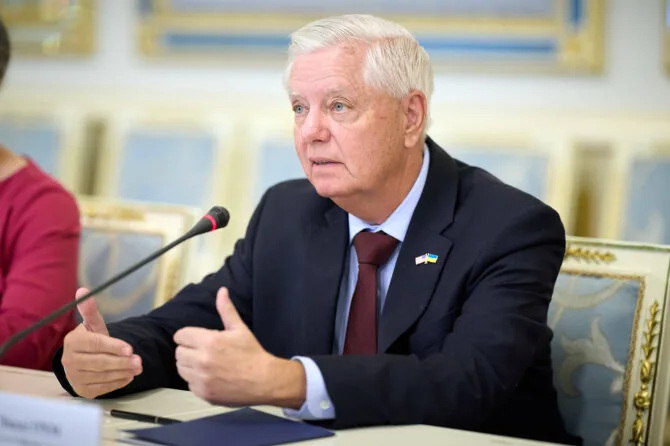
A bipartisan group of US senators on Tuesday introduced the latest version of a sanctions bill aimed at countries buying Russian oil and gas to cut Moscow’s revenues for its war against Ukraine.
The updated bill emerged after negotiations between the White House and Republican Senator Lindsey Graham, who said he secured administration support before his death from a sudden illness.
US lawmakers backing this bill seek its swift passage in Congress, arguing it would give the Donald Trump administration a tool to force Russia to end the war.
Unlike the original long-stalled bill version, the new bill reduces the overall 500 percent tariff on imports from countries buying Russian oil or gas to a maximum 100 percent tariff applied to the five largest buyers.
The same tariff applies to the five countries most helping to circumvent Russian oil sanctions.
Under the bill, the five largest buyers would be reassessed every 180 days. Countries importing less than 15 percent of Russia’s total natural gas exports and actively working to reduce this import are exempt from this provision.
China, India, and Turkey are the world’s largest buyers of Russian oil, while the EU, China, and Turkey lead in natural gas purchases.
However, the bill would give the US president the authority to waive any sanctions “upon providing Congress with justification and certification that such waiver is in the national interests of the United States.”
This bill has been stalled in Congress since April 2025, as US President Donald Trump changed his stance on the Russia-Ukraine war and due to bipartisan disagreements.
However, there appears to be new momentum as Ukraine slowed Russia’s advance with medium-range drone strikes and hit Russian oil refineries deep behind the front line, and Trump’s position seems to be shifting in Kyiv’s favor.
In recent days and weeks, Trump agreed to license Ukraine to produce Patriot interceptor missiles and personally urged President Volodymyr Zelensky to act “more boldly” against Russia.
“I know Lindsey really wanted this,” Trump told reporters on Tuesday when asked about the sanctions bill.
“There is a good chance it will happen,” he said.
A US official told Kyiv Independent on Monday that “Trump supports Graham’s sanctions bill against Russia as a tribute to him.”
The sanctions bill would also impose mandatory sanctions on Russian President Vladimir Putin and other senior officials, Russian banks – including the Central Bank, Sberbank, and Gazprombank – state-owned companies, foreign entities supporting Russia’s defense industrial base, and state energy projects such as Yamal LNG and Arctic LNG 1, 2, and 3.
The bill also includes bipartisan measures targeting Russia’s “shadow fleet” and China’s support for Russia’s defense industry, as well as strengthening financial and export restrictions.
“Ukraine is at a critical crossroads – and we must meet this decisive moment with a powerful sanctions bill,” said Democratic Senator Richard Blumenthal, one of the bill’s main supporters.
“Now is the time to push Russia toward peace. Ukraine is reclaiming territory in pure form and reaching deep into Russia with its drones and missiles,” he said.
Russia struck commercial ships in Ukraine – 3 killed
06:53
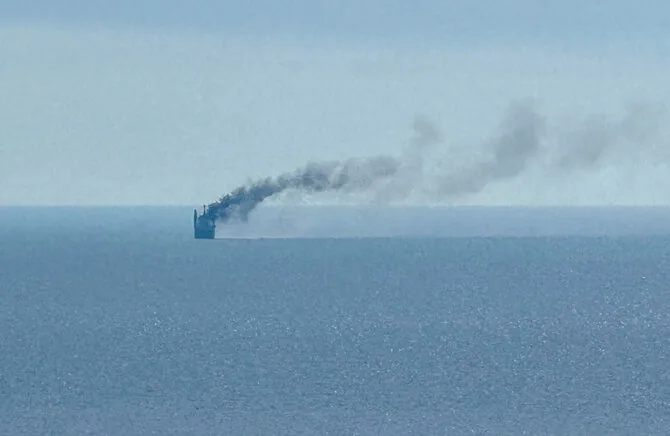
Three people, including a ship captain, were killed in Russian attacks on a commercial vessel in southern Ukraine and two other ships in the Black Sea on Tuesday, a senior Ukrainian official said.
“In the evening, the enemy launched a new attack on port infrastructure in the Odesa region. During the attack, an enemy drone hit a civilian ship flying the Marshall Islands flag,” said Oleg Kiper, head of the regional military administration, on the Telegram social network.
“A fire broke out on the ship. Unfortunately, two people died,” he said.
Earlier, O. Kiper reported that two commercial ships flying Tanzanian and Liberian flags in the Black Sea were also hit.
“As a result (…) the captain of one of the ships died,” he said, adding that the remaining 11 crew members were evacuated, three of whom were injured.
O. Kiper said the attacked ships in the Black Sea were sailing corridors designated for Ukrainian grain exports.
“Each of these cynical enemy strikes is a war crime against peaceful civilians, civil shipping, and global food security,” he said.
The Russian military regularly targets Ukraine’s port infrastructure, especially in the Odesa region.
Ukrainian forces, in turn, have intensified attacks on ships in the Sea of Azov, an important channel for transporting Russian agricultural products and supplying annexed Crimea.
“Kyiv is reached in 2-4 minutes”: Ukrainian cities face a critical problem
06:42
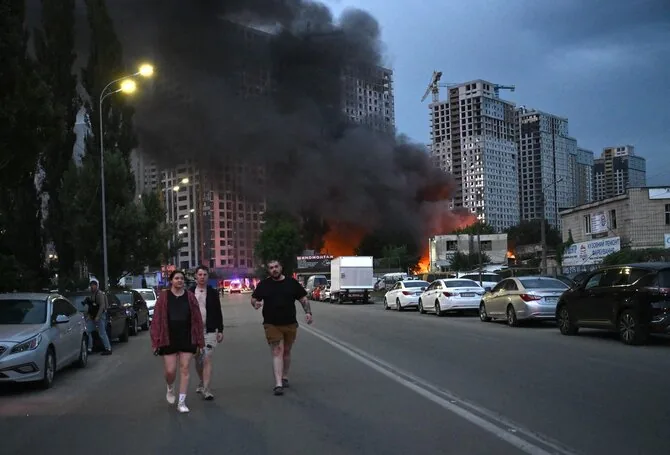
Advisor to Ukraine’s Defense Minister Mykhailo Fedorov, Serhiy Beskrestnov, publicly explained on Tuesday why air raid warning systems have recently been delayed during Russian ballistic missile attacks on Kyiv, writes Kyiv Independent.
In recent months, Russia has intensified strikes on the capital, sometimes launching several ballistic missile attacks on Kyiv per week. This new air attack strategy has depleted Ukraine’s Patriot interceptor missile stocks – the only air defense weapon capable of reliably shooting down ballistic missiles – making the city vulnerable to Russian Zircon, Kinzhal, and Iskander missiles.
Kyiv residents regularly wake up in the middle of the night or early morning to the sound of air raid sirens.
However, sometimes there is no warning at all. During the Russian strike on July 11, Kyiv Independent journalists on site first heard explosions – the air raid sirens sounded only two minutes later.
Beskrestnov tried to explain this problem: “Why does the ballistic warning sometimes activate only after the missile reaches the target?”
“All information about launches or preparations for them comes to us from our partners. None of us knows – and should not know – how they get this information, but you don’t have to be a genius to understand that the main sources of information are satellite monitoring of launch sites and systems recording launch data,” he wrote on social media.
According to Beskrestnov, due to data transmission delays and the high speed of missiles, the warning system may not activate in time.
“A missile reaches Kyiv in 2-4 minutes, so time is very limited. Any system malfunction causes delays in receiving information. No system can be perfect, so failures occur, and the warning signal may be delayed,” he explained.
Beskrestnov said satellite monitoring can also cause false alarms when sirens sound but no attack occurs.
“This happens because satellites detect activity at launch sites before missile launches, but the launches themselves may not occur for some reason. Intelligence satellites visually detect activity at the launch site, but it is unclear whether the launch will actually happen or not,” he said.
The use of Russian ballistic missiles in attacks on city centers has already made June 2026 one of the deadliest months for Ukrainian civilians since the full-scale invasion began.
Besides Patriot systems capable of intercepting these faster and more powerful weapons, warning systems are one of the last lines of defense between civilians and Russian air terror, notes Kyiv Independent.
Read more Traffic rules change in Palanga: “Aurum 1006 km race” begins