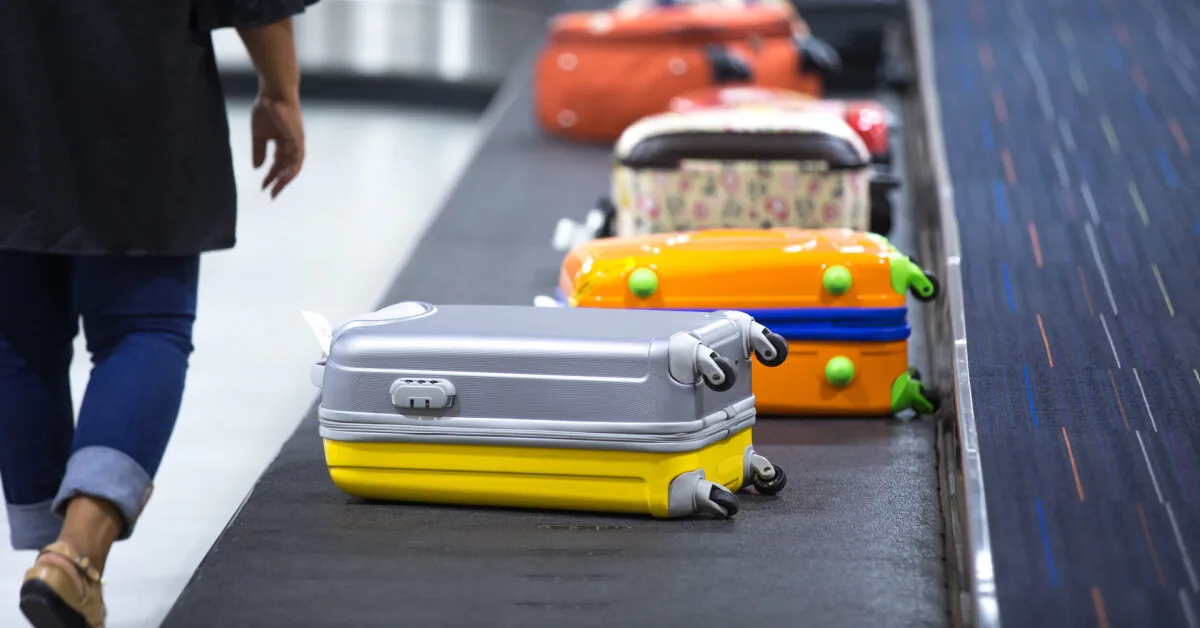
As SITA data shows, on average about 6-7 lost suitcases occur per 1,000 airplane passengers. Looking more closely, it is clear that the situation is best in the Asia-Pacific region, where this indicator is only about 3 lost suitcases per 1,000 travelers. Unfortunately, the worst situation is in our continent Europe – where the most suitcases go missing, according to a press release from “Lietuvos draudimas”.
Read more In summer, thefts increase at the seaside: what pickpockets most often target
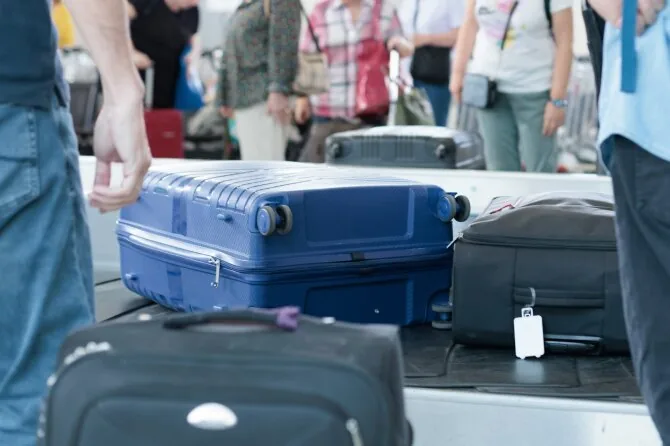
“The average number of lost suitcases in Europe significantly exceeds the global average. This can partly be explained by complex passenger transfer schemes, short intervals between connecting flights at large transit airports, such as London Heathrow, Frankfurt, Amsterdam, or Paris international air transport hubs,” comments Artūras Juodeikis, director of the claims department at “Lietuvos draudimas”.
According to the expert, other “hot” spots, based on complaint or published suitcase search statistics, are India and Egypt. Meanwhile, Asian countries, such as Japan or Singapore, generally have low suitcase loss rates. US airlines lose about 2 million suitcases per year, but most of them, although delayed, return to their owners. The most problematic airports in this regard are Miami, Chicago, and Denver.
“The numbers of lost suitcases also vary depending on the situation. For example, after the pandemic, as the tourism industry recovered, there was a lot of chaos at airports. However, now with improving technologies that allow tracking the suitcase’s journey, the number of losses has significantly decreased,” emphasizes A. Juodeikis.
Read more The Spaniards who noisily advanced to the final: «We feel invincible»
Still, as the expert notes, when preparing for a long-awaited vacation trip, the last thing travelers expect is that their belongings will not arrive with them, will be delayed, or will disappear altogether.
Based on airline recommendations and traveler experience, the main tips that can help reduce the risk of losing a suitcase when traveling by plane can be highlighted:
Read more A person got stuck in the public toilet of Kaunas Santaka Park
- If possible, travel only with hand luggage. If you need checked baggage, place a tracking device (AirTag, SmartTag, etc.) inside to monitor its location in real time.
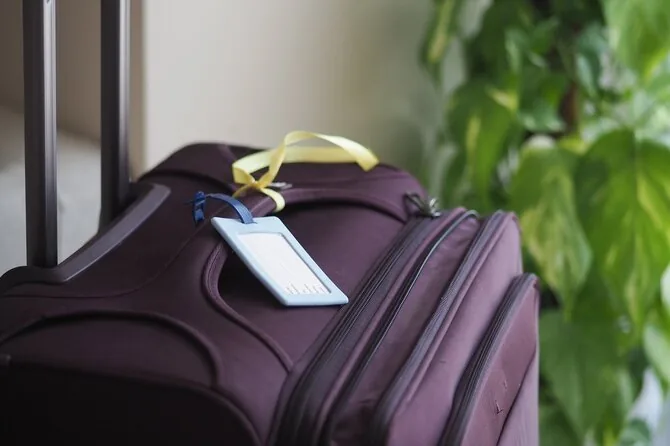
- Properly label your suitcase, using a sturdy external tag with the owner’s name, phone number, and email address. Also place your contacts inside the suitcase. However, for security reasons, do not disclose your home address.
- Remove all old stickers and labels left from previous trips – the airport’s automatic baggage sorting system may direct your suitcase to the wrong destination based on old codes.
- Make your suitcase noticeable – a bright color, ribbon, sticker, or unique tape will help you recognize it more easily on the baggage conveyor. The distinctiveness of the suitcase will also help avoid confusion when someone mistakenly takes the wrong suitcase without any ill intent.
- Suitcases very rarely go missing during direct flights, so if you can reach your final destination without transfers – choose that option without hesitation. If a transfer is necessary, there should be at least a minimal 1.5–2 hour interval between flights, as most suitcases go missing during transfers.
- Pack smartly for the trip. Divide clothes between two suitcases, so if one gets lost, you will still have some necessary items. It is advisable to have a change of clothes, medicines, and other important items in your hand luggage for at least the first few days.
- Before the trip, photograph your suitcase and its contents; you will have proof if disputes arise later or if you need to prove the value of lost items. It is also worth purchasing baggage insurance, which has become an integral part of safe travel.