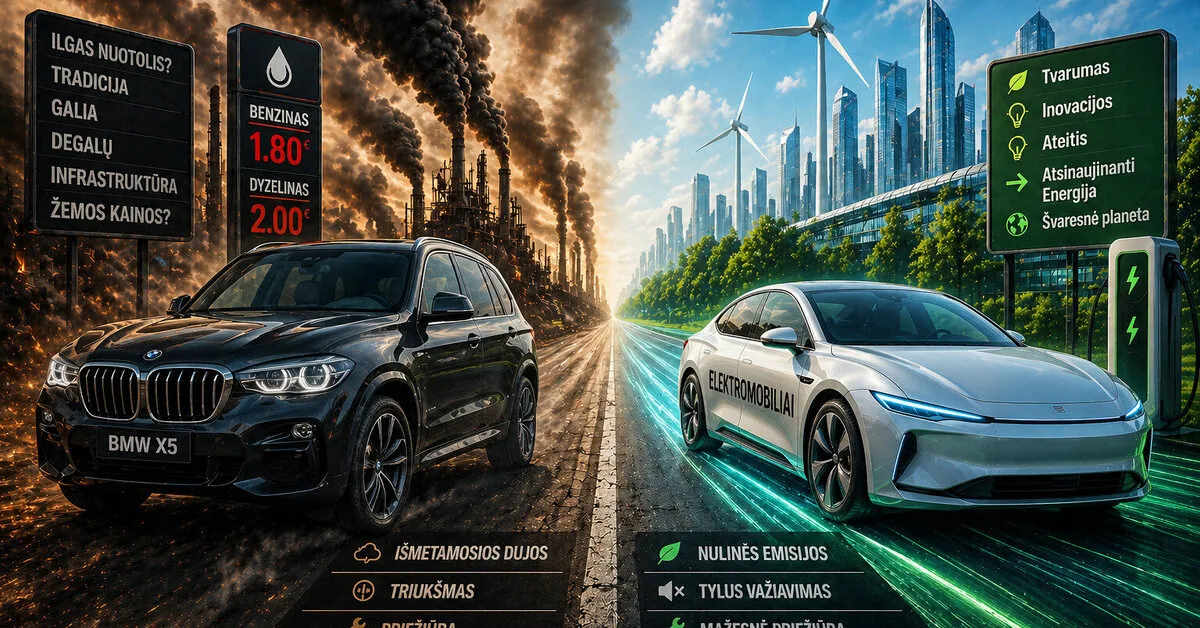
Electricity as a type of energy was chosen by 56% more drivers than in the first half of last year. As Tautvydas Paliulis, Director of the Service Management and Development Department at Regitra, says, it is likely that this statistic was influenced by fuel price surges, tax incentives, geopolitics, and withdrawal from the second pension pillar.
Read more Dreams about Kyiv: after the strike, the impoverished uranium shells allegedly exploded
What is the profile of an electric car driver?
In 2026, the choice of hybrid cars increased by almost 67%, and nearly 48% more pure electric cars were purchased than in the same period in 2025.
Regitra’s statistics show that most often in the first half of this year, electric cars were chosen by residents of Lithuania’s major cities, among which Vilnius stands out, with more than 20 thousand electrically powered passenger vehicles. Next in popularity are Kaunas city (7,839), Vilnius district (3,288), and Kaunas district (3,092).
This distribution is logical: in big cities and their suburbs, the public charging infrastructure is best developed, and residents of individual housing estates often have the conditions to charge cars at home. Meanwhile, the fewest electric and hybrid cars are registered in Pagėgiai, Kalvarija, and Rietavas, where infrastructure development and regional purchasing power still lag behind.
The average share of electric cars in the total European car fleet is 2.5–3%. Lithuanian drivers do not stand out here, and considering the overall car fleet data, electric cars in our country already make up 3%. Last year, they were 1.95%, so this is a significant change. It can be said that this was influenced by sharply increased prices of other fuel types, geopolitical instability, and, of course, financial incentives to purchase electrically powered vehicles, which are especially actively used by businesses.
Interestingly, in the first half of this year, drivers more often chose pure electric cars (48% more), but overall interest in hybrids, which drivers chose 66% more often last year at the same time, has significantly increased,” shared T. Paliulis, adding that statistics most often highlight Generation Y drivers born between 1980-1989. These residents are most inclined to choose electricity as a fuel type.
Most frequently chosen colors and brands
As more residents switch to pure electric cars and hybrids, one choice remains unchanged for years – the most popular passenger car colors on Lithuanian streets remain gray, black, and white. Meanwhile, when choosing brands, Volkswagen and Tesla maintain their top positions. Last year, BMW, which was in the top three most popular brands, gave way to Škoda electric cars.
“Although, compared to the first half of last year, sales of new electric and hybrid cars increased significantly (65%), residents still more often choose cars in the secondary market. This signals that the price of new electric cars for private individuals is still relatively high, so the used vehicle market remains the main driver of the electric car fleet for now.
Read more Football miracles in Lithuania – sold the coach just after signing the contract
It is also noticeable that more and more companies are choosing new electric cars. Compared to last year’s data, the number of such vehicles increased by more than 60%. Meanwhile, private individuals chose these vehicles 39% more often than last year at the same time,” pondered the Director of Regitra’s Service Management and Development Department. The business sector’s leadership is easy to explain – companies benefit from more attractive tax incentives.
Jump in light quadricycles
Observing Regitra’s statistical data, L6 category light quadricycles stand out, whose weight without batteries does not exceed 350 kg, and maximum speed is up to 45 km/h. The popularity of these electric vehicles increased by 96% compared to the first half of last year. Meanwhile, in the truck (N1 category) class, electric cars were chosen 77% more often in the first half of this year. Most electric cars registered by Lithuanian residents in the first half of this year were manufactured in Germany (38%), Japan (15%), and the USA (15%).
According to T. Paliulis, although it is difficult to predict the overall economic situation, it is clear that the popularity of electric cars will only increase, and in the coming years we will see many more of them on the country’s streets.
How to register an electric car?
When purchasing an electric or hybrid car previously registered in Lithuania, ownership transfer must be performed, which can be conveniently done online via Regitra’s self-service. However, it is important to remember that car declaration takes place in two stages. First, you need to specify who the new car owner is, declare the car in their name, and receive a new owner declaration code (SDK). Then the seller confirms everything.
The second step is registration in the new owner’s name. “This step is necessary so that you can participate in traffic safely and legally. The owner should register the car in their name no later than 10 calendar days, as later the car will be automatically deregistered. Before registering the vehicle, do not forget to arrange technical inspection and insurance,” shared T. Paliulis with advice.
It is important to mention that when purchasing a car not yet registered in Lithuania, you will need to visit a branch, as in this case a vehicle identity check must be performed. It is most convenient to do this in advance by booking a time online at the branch.