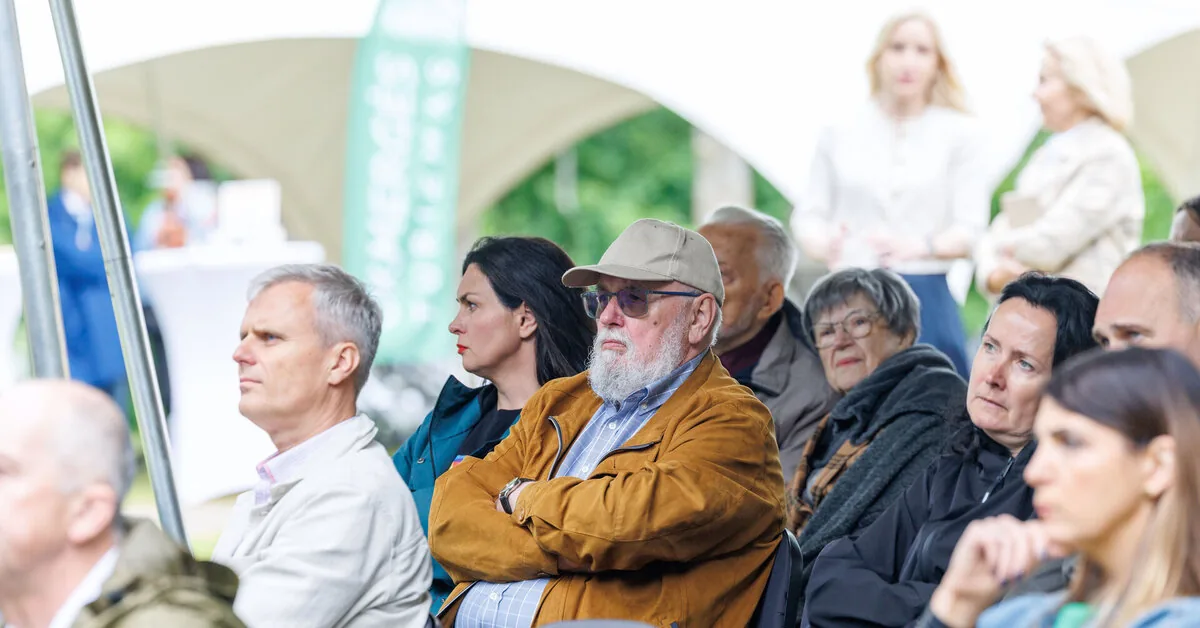
The conversation was moderated by Giedrius Masalskis, head of the LRT Radio Department and member of the EBU Radio Committee, according to the organizers’ press release.
Read more Watch the National Stadium rise: construction will be broadcast around the clock
Starting the conversation, G. Masalskis noted that everyone understands citizenship a little differently. However, in his opinion, the most important thing is that citizenship can be nurtured – both in ourselves and in other people.
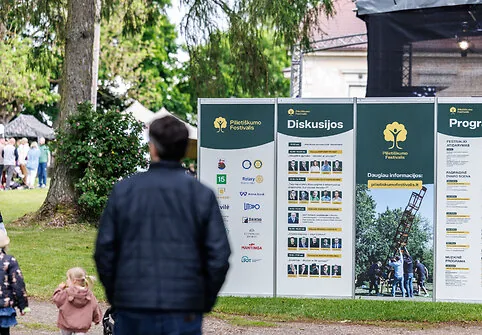
The moderator admitted that the scouting movement, which he joined together with his son, helped him discover a new relationship with citizenship.
“Citizenship should not be a one-day action. It is what a person does every day – whether you help another person, leave a place better than you found it, or think about how you can do better here,” said G. Masalskis.
The strength of regions – people’s willingness to help each other
The first question from the moderator was addressed to Darius Varnas, mayor of Ukmergė district municipality – is citizenship in the regions different from that in big cities?
According to the mayor, the most important form of citizenship remains the ability to help another person and act together.
“For me, citizenship primarily means helping a person, helping the community, supporting each other. I believe there are many such people in the regions,” said D. Varnas.
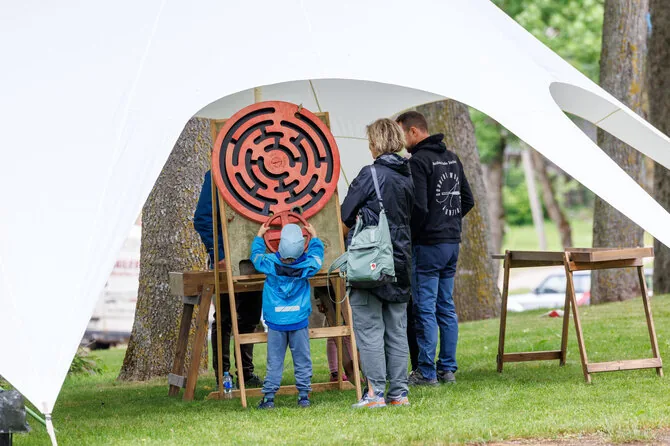
He said he grew up in a village, witnessed both the Soviet era and the restoration of independence, and participated in the Baltic Way. According to him, the desire to help others was a value passed down by his family.
However, good people alone are not enough. Regions also need a clear vision.
In recent years, Ukmergė has been consistently striving to become a city where people not only come to work but also choose to build their lives. The municipality implements programs to attract residents, returns a portion of the personal income tax to those who newly declare their residence, encourages the construction of new housing and infrastructure for youth.
According to the mayor, all this is part of a long-term strategy – to create an environment where people would want to stay. Infrastructure is also being developed – new housing is planned because large companies such as “Narbutas” or “Systemair” already face challenges in accommodating employees.
Is Lithuania making enough use of the potential of its regions?
Although the discussion focused a lot on specific regional examples, the idea was repeatedly expressed that the question is actually broader – what kind of Lithuania do we want in the future?
Elijus Čivilis, head of “Invest Lithuania,” reminded that global investment trends in recent years have not been favorable. Foreign direct investment flows in Europe are decreasing, but Lithuania remains one of the few countries managing to maintain growth.
About forty new investment projects come to the country each year. They create thousands of jobs and investments worth hundreds of millions of euros.
However, according to E. Čivilis, attracting investments alone is not enough.
“We need to agree on what kind of Lithuania we want to build. Is our goal to be the European average, or to strive for leadership?” he asked rhetorically.
In his opinion, Lithuania still does not sufficiently utilize the potential of high value-added industry, especially in the regions. This is where one of the greatest growth opportunities for the country lies.
On the other hand, investors usually do not see Lithuania as a collection of separate cities. For them, the whole country is one region. Therefore, it is equally important how Lithuania presents itself to the world.
“Lithuania still lacks consistent strategic communication that would help shape the country’s image as an attractive destination for investment,” noted E. Čivilis.
What matters is not where you are, but what you create
Replacing the ill actor Giedrius Savickas in the discussion, Romualda Stragienė, co-owner of “Biok Laboratories” and “Leonpolis Manor,” urged abandoning stereotypes that quality of life depends only on the place of residence.
“For me, it does not matter where you are. What matters is what you do. You can be a very civic-minded person in the region and a very uncivic person in Vilnius. The essence is the person,” said R. Stragienė.
She admitted that the decision to nurture “Leonpolis Manor” together with her husband initially seemed unexpected to many. Their children even joked that their parents would become “villagers.” However, it was the activity in Leonpolis that once again confirmed how much initiative, creativity, and community spirit lie in Lithuania’s regions.
According to her, changes often start with small ideas that inspire others to join. One of them is the self-service shop established at Leonpolis Manor, where visitors can purchase local products. This idea, according to R. Stragienė, not only proved successful but also became an example of trust in people – buyers honestly pay for the products they purchase.
Another initiative was born from organizing events at the manor. During these, local residents were invited to sell their own products. According to R. Stragienė, the first attempts quickly turned into a beautiful tradition.
“In the first years, we were alone, but after a few years, the whole village came with their products. People said: we sold everything, we will participate again next year. Such examples are contagious,” she said.
She believes that the strength of regions lies not in large projects but in the ability to unite people, build trust, and create conditions for local communities to grow together.
One decision can change the lives of thousands of people
In the discussion, Linas Kukuraitis recalled the so-called butterfly effect – the belief that even a small good deed can eventually have a huge impact.
He said that his own values were formed in his youth, working with children experiencing social exclusion. According to him, this experience later influenced decisions in public policy.
Speaking about one of the most important decisions, L. Kukuraitis highlighted the introduction of child benefits. According to him, this measure helped reduce child poverty in Lithuania from 27% to 17% over two years.
The politician emphasized that reducing child poverty is not just a social policy issue. Research shows that if this problem is not addressed in time, poverty often becomes a long-term phenomenon – children who grew up in deprivation face it as adults as well. Therefore, investments in children’s welfare today determine not only their future but also the social and economic development of the entire society.
More trust in the regions is needed
At the end of the discussion, much attention was given to what Lithuanian regions lack most today.
According to L. Kukuraitis, one of the most important changes would be greater trust in the communities themselves.
“There needs to be less decision-making from Vilnius and more allowing people to act on their own,” he said.
As an example, the politician cited the education system. According to him, Lithuania still has a highly centralized model where the same decisions apply to all schools, although the needs and possibilities of communities differ. Meanwhile, countries like Finland or Estonia trust local communities more and give them more autonomy.
Another global trend is the concentration of people in big cities. However, according to L. Kukuraitis, more and more people are also starting to look for what the city cannot offer: closer communities, nature, and closer interpersonal connections.
This idea was echoed by other discussion participants, who emphasized that the future of regions depends not only on investments or infrastructure. It is equally important to create an environment where people feel needed, can implement their ideas, and see a reason to stay.
Perhaps strong regions start precisely from such small, everyday decisions. And together – a strong Lithuania.
Read more New drama in Kyiv: brigade commander detained, accused of kidnapping and killing civilians