








The European Union (EU) is considering banning social networks in some EU countries, including Greece and France, following calls to restrict access and increasing pressure to introduce a bloc-wide ban similar to Australia’s.
Read more Lithuanian youth rugby-7 team remained in the top ten in Europe
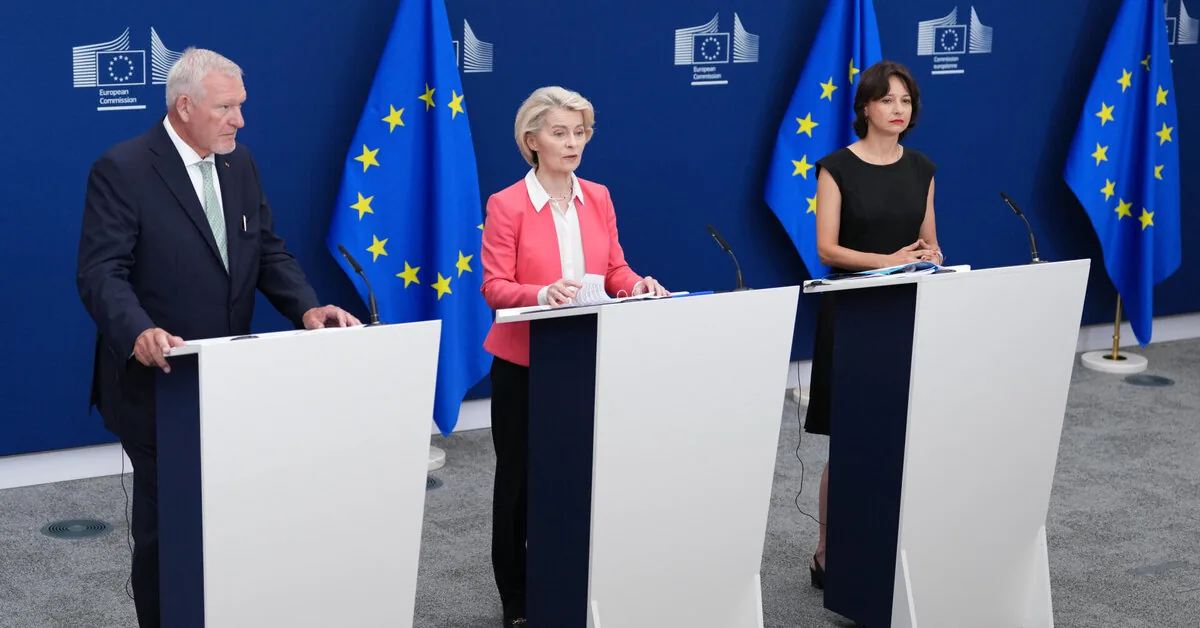
To help the EU make evidence-based decisions, U. von der Leyen tasked a group of experts including doctors, academics, youth representatives, and parents to prepare recommendations. They presented these on Monday.
“We already agree that a start date must be set from which children can join social networks,” said U. von der Leyen, urging the application of “age-appropriate restrictions.” “The question is not whether children can use social networks. The question is whether and when social networks can reach our children.”
The legislative proposal will be presented in the second half of the year, added U. von der Leyen.
“We need to consider phased and gradual access for different age groups,” she said.
The experts’ report provides a vision of how this could look, recommending: no screen use at all for babies and young children; 3-12 year olds to use “age-appropriate social networks” and devices only under supervision; 13-18 year old adolescents to be allowed to “gradually independently use” social networks and other digital platforms with “basic safety features.”
Platforms “must prove that their services do no harm. In Europe, the creator of a product is responsible for its safety,” said U. von der Leyen.
“The entire ecosystem around children must change. But we do not have time. Children and adolescents are already facing serious danger,” said one of the expert group chairs, Jorg Fegert, alongside U. von der Leyen.
The report does not recommend a complete ban on digital platforms, including social networks, and U. von der Leyen did not support such a step.
Read more Not all swimming spots in Panevėžys are safe: pollution detected in one location
In recent months, the EU has increased pressure on social network platforms to change, on Friday instructing Facebook and Instagram to remove their “addictive” features, following a similar warning to TikTok in February.
Fight against harmful design
The EU faces a dilemma on how to avoid different age limits in 27 countries. For example, Spain wants to ban social network use for those under 16, while France proposes banning it for children 15 and under. There are also EU countries like Estonia that oppose a ban.
U. von der Leyen said the Commission will “carefully examine” the countries’ proposals. The EU will “integrate” their work, she said, and later prepare its own proposal to “harmonize the approach and find a common solution.”
The EU already has a strengthened toolkit to rein in big tech companies and protect consumers online. The Commission has stated that more rules are being prepared.
Commissioner Michael McGrath, responsible for EU consumer protection, promised that a new law expected later this year will provide children with stronger protection against addictive design.
“Digital markets are designed to capture attention and influence behavior. New rules will help ensure that consumers can make informed decisions without manipulation,” McGrath said in a statement to AFP.
Read more Local media: two people killed in US strikes in southwestern Iran