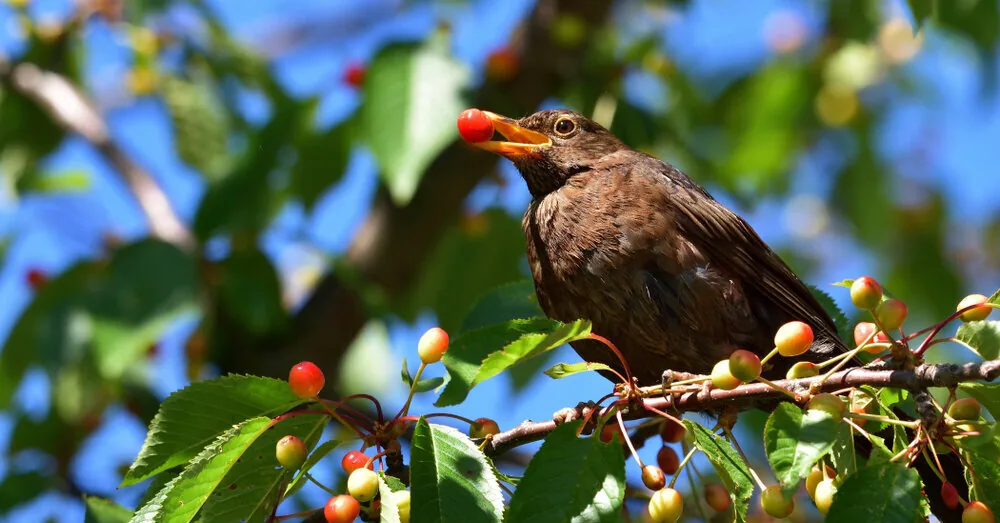
The peak of bird activity coincides with the ripening of berries, when they especially need high-calorie food to feed their young.
Read more Klaipėda officers conducted a raid closer to Palanga: 8 drunk drivers caught
How to protect your harvest without harming nature? We present several effective methods – from impenetrable physical barriers to clever folk tricks that will help save every berry.
To achieve maximum results, it is recommended to start applying protective measures 1–2 weeks before the berries begin to ripen, while the birds have not yet gotten used to considering your garden their permanent feeding ground.
1. Physical barrier (protective net)
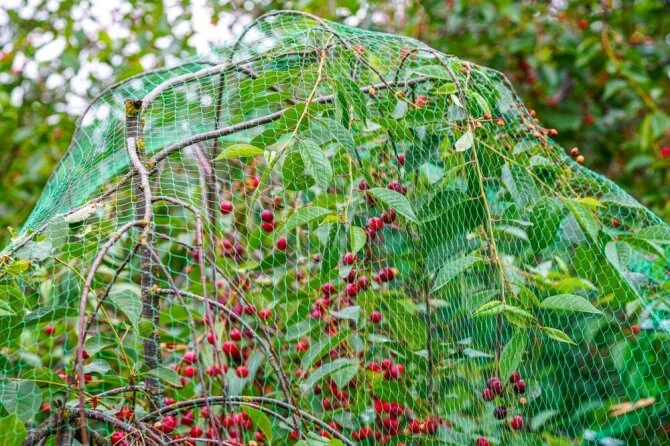
This is the most reliable and effective method, guaranteeing up to 90–100% crop safety. A fine-mesh polymer net (10–20 mm mesh) creates an impenetrable barrier but does not block light or air.
How to use: The most important rule is not to throw the net directly onto the bush, as birds can easily reach the berries through gaps or get tangled themselves. The net should be stretched over a specially prepared frame (made of hoops, stakes, or wooden frames), leaving a 15–30 cm gap from the plant.
The edges of the net at the ground must be carefully and tightly secured so that birds cannot slip underneath.
Suitable for: Strawberries, blueberries, currants, blueberries, and low cherries.
2. Visual scarecrows and glitter
Birds are scared by bright, moving, and shiny objects in the sun that imitate predators.
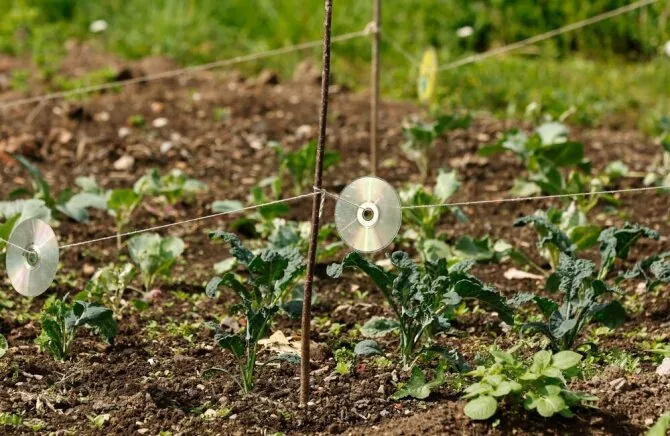
Tools: Old CDs/DVDs hung on branches, foil strips, or special holographic tapes create dazzling flashes.
Kites raised above fruit trees that imitate predatory birds, or plastic models of owls and hawks, also work well.
Disadvantage: Ordinary stationary straw scarecrows stop working after a few days because birds realize they do not move.
For the scarecrow to work, it must be dynamic – dressed in shiny clothes, surrounded by tin cans that clang in the wind.
Read more The Kremlin named the «biggest mistake of Europe»
3. Sound repellents
Birds are very sensitive to sudden and loud noises, which they perceive as danger signals.
DIY: You can manually make wind-spun weather vanes from plastic bottles or cans, into which small stones or peas are poured. They rattle and crackle in the wind. Wind chimes or rattles also help.
Electronics: In larger plots, bioacoustic devices (broadcasting predator bird screams or danger signals) and ultrasonic devices are effective. It is best to choose models with motion sensors and variable sound.
Important: Constant noise may annoy neighbors, so it is recommended to combine sound devices with other methods.
4. Folk methods and tricks
If you do not want to invest in expensive nets, you can try several alternative methods:
Fishing line labyrinth: Thin fishing line is stretched crosswise at several levels above beds or bushes. It becomes difficult for birds to land and approach the berries.
Aromatic agents: Special eco-friendly gels with a strong smell (for example, based on methyl anthranilate). They are unpleasant to birds but safe for plants. Their downside is short-term effect, depending on rain.
Feeders placed away: Sometimes it is easier to simply redirect birds to another food source. Setting up a feeder with grains at the back of the plot will cause some birds to leave the berry bushes alone.
5. Combined strategy
A single method rarely works one hundred percent because birds quickly adapt. Ideally, combine a physical barrier with scare elements. For example, cover the berries with a net and hang shiny strips and place wind vanes around the perimeter of the plot.
Most important recommendation: To prevent birds from getting used to static objects, visual and sound scarecrows must be rearranged or moved every 3–5 days.
Read more Khalil al-Hayya elected as the new head of the Hamas political bureau
After harvesting, hide all protective measures immediately until next year.