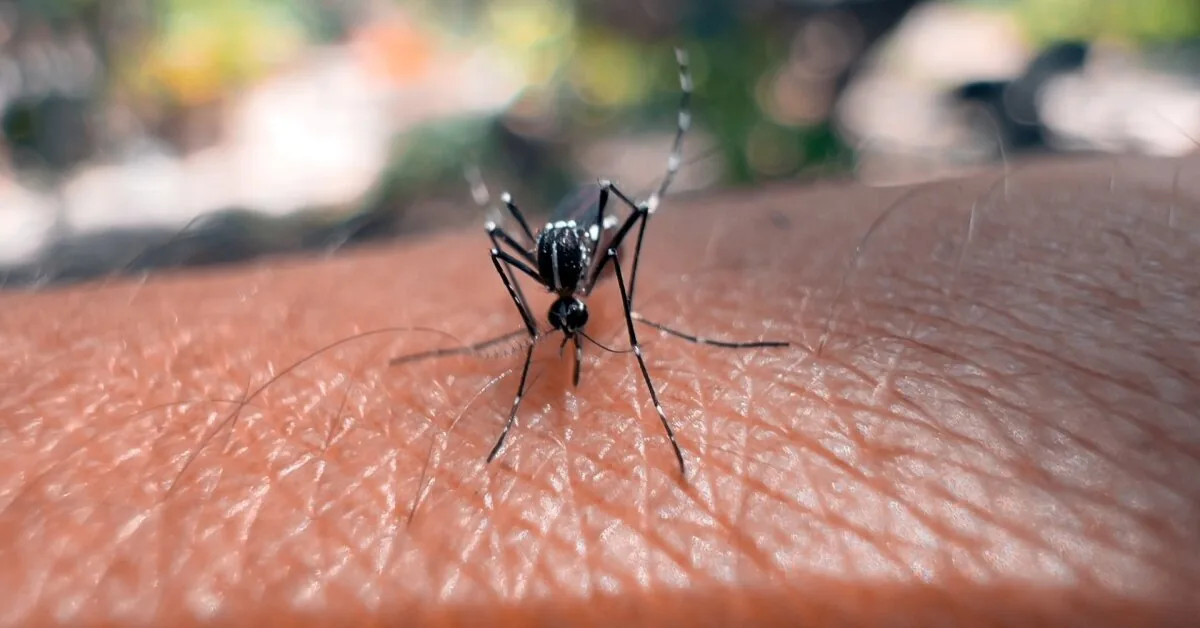
For many of us, mosquitoes are just a source of annoying bites and unpleasant buzzing. If they cause you only this much discomfort, you can consider yourself lucky.
In fact, the mosquito is the deadliest animal in the world because it spreads many dangerous diseases with unmatched efficiency, including malaria, dengue fever, West Nile virus, and others.
It is estimated that more than a million people die each year from diseases transmitted by mosquitoes, so understanding how and why mosquitoes choose their victims is a very important area of scientific research.
In a study published in the journal iScience, scientists came closer to solving this mystery and are investigating why some people attract mosquitoes much more than others.
The experiment conducted by scientists from Florida International University involved 119 volunteers from Miami. Each was asked to put their hand into a long tube called an olfactometer.
At the other end of the tube, scientists released three different species of mosquitoes – Aedes aegypti, Aedes albopictus, and Culex quinquefasciatus – to find out which people they were most attracted to.
It has long been known that mosquitoes are attracted by human odors and other signals, but why even small differences in body odor make some people appear more attractive to mosquitoes than others was not clear until now.
This is partly because human body odor is very complex. Odorless substances secreted on the skin interact with the skin microbiome bacteria to become volatile organic compounds (VOCs), which make up the scent we perceive.
It is believed that human skin emits more than 1,000 different volatile organic compounds, many of which have not yet been thoroughly studied. Therefore, precisely determining how these substances relate to specific odors is not simple.
The situation is further complicated by the fact that about 3,600 mosquito species are known worldwide, each likely having developed slightly different scent preferences. Because of this, scientists still have much to learn about how mosquitoes choose their victims.
“Increasing evidence shows that there is a connection between the human skin microbiome and/or body odor and how mosquitoes select specific people,” writes the team of scientists led by Florida International University (FIU) neurogeneticist Matthew DeGennaro in their study.
“Although previous studies compared how different mosquito species are attracted to different people, to our knowledge, no study has yet simultaneously compared the attraction of several mosquito species to the full range of volatile compounds emitted by individuals and their skin microbiome,” the researchers state.
In the olfactometer experiment, the team led by M. DeGennaro found that Aedes aegypti mosquitoes were slightly more attracted to men than women. Meanwhile, the other two mosquito species studied did not show this difference.
The researchers also noticed that some participants were more attractive to certain mosquito species, but this did not mean they attracted all three species equally.
Similarly, some volunteers appeared less attractive to one or more mosquito species, but none were consistently unattractive to all three mosquito species involved in the experiment.
Scientists found a weak correlation between people most attracted to Aedes aegypti and Aedes albopictus mosquitoes. However, the overall findings indicate that each mosquito species tended to select a different group of people.
Read more Heat wave in Europe: Heat record reached in Austria, highest danger level in Italy