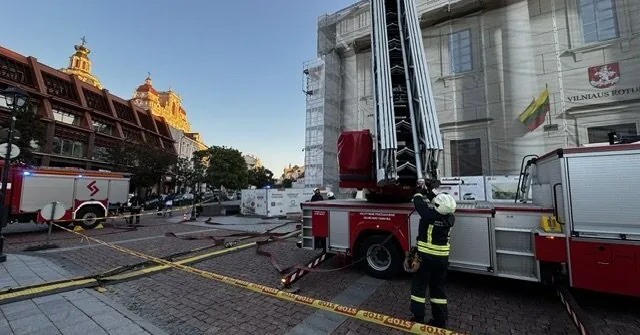
Firefighter rescuers wish farmers safe work and that fire does not spoil the harvest.
Read more Police: Iceland ordered the expulsion of 21 whale hunting opponents
Harvest time is hot and restless for farmers due to weather conditions, and for firefighter rescuers – due to the danger of fires that arise during this busy work period: combines, tractors, presses catch fire, and the fire often spreads from them to grain fields or stubble fields. Such fires not only destroy equipment and crops but also pose a threat to people’s safety.
State fire supervision specialists note – many of these accidents can be avoided by following basic equipment maintenance and fire safety requirements.
In July alone, during the harvest season, 447 fires have already been recorded.
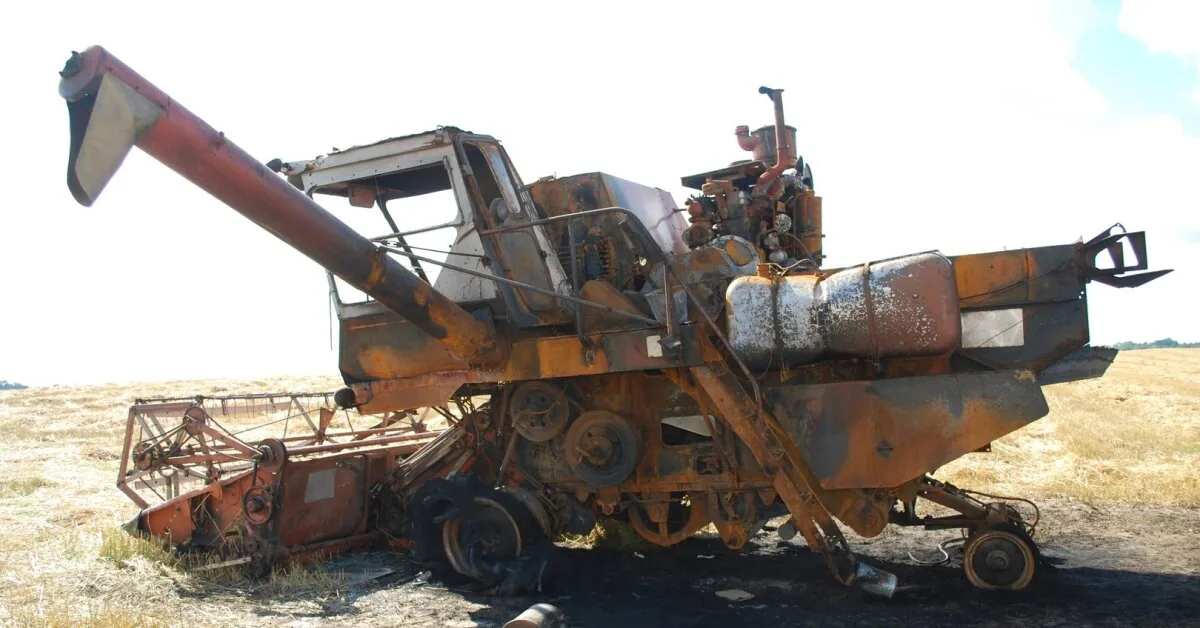
According to the Fire Protection and Rescue Department (PAGD), during last year’s harvest period, 573 fires were registered, of which 148 were in open areas, damaging 17 combines, and one was completely burned.
This year, in July during the harvest season, 447 fires have already been recorded, of which 63 were in open areas, damaging two combines. And in the first days of August, two combines have already burned.
On August 3, in the Šakiai district, Kriūkai eldership, Žeimys village, an “Ideal T9 Fendt” combine and 1 are of stubble nearby caught fire.
On August 4, in the Lazdijai district, Seirijai eldership, Pošniai village, a “John Deere Revermatic” combine burned down.
Most often, such fires occur due to insufficient equipment maintenance and untimely removal of faults. Therefore, State fire supervision specialists urge agricultural machinery users to pay special attention to the fuel, lubrication, exhaust, and electrical installation systems of this equipment.
One of the most common causes of such fires is leaking fuel supply and lubrication systems. Dust, small straw, ash, and straw residues quickly accumulate on spilled oil or fuel, which, when coming into contact with heated engine parts, can ignite.
Worn bearings, slipping belts, and improperly adjusted mechanisms also pose dangers. Due to increased friction, they heat up strongly and can ignite straw wrapped around them. Therefore, it is very important to check the condition of bearings, belts, and rotating mechanisms.
“This is especially unsafe”
A fire can also be caused by damaged vehicle electrical wire insulation, often causing short circuits, or hot sparks and burning residues flying out of the exhaust system, which can ignite dry vegetation. This is especially unsafe, especially if the combine has faulty or unused spark arresters.
To avoid such fires or reduce their danger, it is advised to carefully inspect the equipment before starting work, ensure there are no fuel or oil leaks, that the vehicle’s electrical installation is in order, warning systems work, and all moving mechanisms are properly lubricated.
Read more Madrid is upset about Latvia’s letter: our soldiers defend Latvia, and it chooses to attack Spain
It is equally important to remove dust, ash, and straw accumulated on the engine and other heated mechanisms daily. Specialists recommend doing this with an air blower every time before starting work in the fields.
Combines must use functional spark arresters, and engine collectors, if necessary, should be protected with metal shields or screens.
It is recommended to repair or store equipment away from grain fields, and refuel only with the engine off.
Each combine must have at least two fire extinguishers, each containing at least 2 kg of extinguishing agent, or one 4 kg extinguisher, and a non-flammable cloth. It is recommended to keep extinguishers in different, easily accessible places so they can be used immediately if needed.
Other agricultural machinery must have at least 2 extinguishers of 2 kg each or 1 extinguisher with 4 kg of extinguishing agent.
Before going to the fields, it is recommended to check the condition of the extinguisher. If the extinguisher has a pressure gauge, its needle must be in the green zone. Even unused extinguishers can lose pressure over time, so it is important to regularly check their condition and perform maintenance if necessary.
State fire supervision specialists also recommend having a shovel in the combine – it can be used to quickly cover the fire with soil.
It is also advised to have several water containers in the combine, placed in different easily accessible locations.
How to act upon noticing the first signs of fire?
Farmers often notice the first signs of malfunction – unusual sounds, overheating, or the smell of burning – but continue working hoping to finish. Such decisions can result in loss of equipment or a large-scale field fire. Upon smelling burning, seeing smoke or flames, it is necessary to immediately stop the equipment, turn off the engine, and call emergency number 112 as soon as possible, providing the exact location of the fire.
Agricultural machinery usually burns in the fields. Therefore, reaching the fire site quickly is often difficult – access for firefighters is often hindered by drainage ditches or long distances. And time is a critical factor in extinguishing fires.
Therefore, upon noticing the first signs of fire and while waiting for firefighters, if it is safe, one should immediately start extinguishing the fire with available means. If possible, additionally smother the fire with soil or use a non-flammable cloth. The earlier the extinguishing starts, the higher the chance to save the equipment and, if safe, prevent the fire from spreading to the grain field.
Read more China threatened the US with retaliation over trade sanctions