The post emphasizes that “many neuroblastoma tumors contained a lot of ferritin and iron,” and a higher amount was reportedly more often found in advanced disease cases.
Read more Tuesday test: can you answer at least 8 out of 10 general knowledge questions?
This data is linked to popular iron supplements and people on social networks who boast about “raising” their ferritin levels. This creates the impression that treating iron deficiency or anemia with supplements may contribute to the development or growth of neuroblastoma.
However, the scientific study cited in the “Facebook” post did not examine such a causal relationship and did not study the effect of iron supplements on the risk of childhood cancer at all.
What is the study about?
The study mentioned on social networks is the 1988 study published in the journal “Cancer” by Theodore C. Iancu, Hanna Shiloh, and Amos Kedar.
Iancu, Shiloh, and Kedar’s study indeed examined the presence of iron – ferritin and hemosiderin – in neuroblastoma tumors.
However, it was a small descriptive, correlational study that did not investigate iron supplement use or its possible connection to cancer development at all.
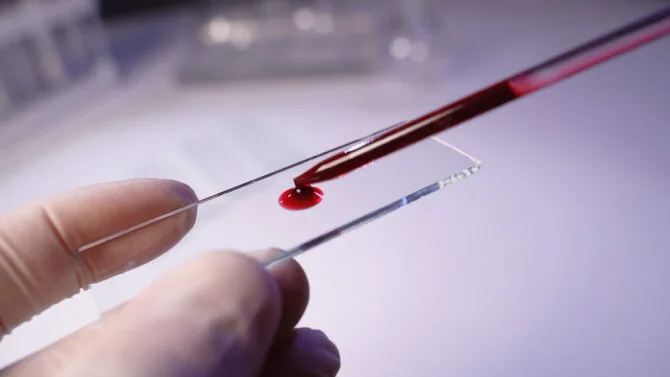
The scientists analyzed tissue samples of neuroblastoma from 31 children aged from 2 days to 6 years using an electron microscope.
The patients were divided into two groups – one with 11 and the other with 20 children. Iron-rich ferritin and hemosiderin were found in 10 out of 11 and 12 out of 20 samples, respectively.
The researchers noticed a trend that later-stage tumors – III and especially IV – contained more iron. Most stage IV patients also had elevated ferritin levels in their blood.
However, even the authors of this correlation study did not consider it absolute. They stated that based on the available data, a clear relationship between patient age, disease stage, iron in the tumor, and ferritin concentration in the blood could not be established.
Some stage IV patients did not have elevated ferritin in the blood or iron in the tumor tissue.
Iron in the tumor does not mean iron caused the tumor
The most important circumstance missing from the study interpretation presented on social networks is that the scientists examined already formed neuroblastoma tumors.
The study was not designed to determine whether higher iron intake could cause neuroblastoma, and oral or injectable iron preparations were not studied.
The study authors themselves considered several possible explanations for why more iron might have accumulated in the tumor tissue. One is bleeding into the tumor itself and the breakdown of erythrocytes present there. Another possible source is blood transfusions performed during treatment.
Another explanation relates to the properties of the tumor cells themselves. They may have more transferrin receptors on their surface, so rapidly dividing cells absorb more iron from the blood. Iron is necessary for cell growth and metabolism, including DNA synthesis and mitochondrial function.
Thus, the iron found in the tumor tissue in the study may be a consequence of ongoing biological processes and rapid tumor growth, not proof that iron caused its development.
Moreover, the authors noted that increased iron or ferritin levels are not characteristic of all tumors, and in some cases, iron accumulates around the tumor rather than inside it. Therefore, these results cannot be turned into a universal conclusion about the role of iron in cancer development.
The study says nothing about anemia treatment
The limitations of the study itself are also important. Only 31 patients participated, one specific and rare pediatric cancer – neuroblastoma – was examined, and some patients had already been treated with chemotherapy before tissue sampling, which could have influenced the results. Additionally, the study was conducted in 1988, well before many modern molecular biology research methods emerged.
Therefore, the 1988 publication allows discussion of an observed association between disease stage and iron and ferritin levels in an already formed neuroblastoma tumor, but not about the effect of iron supplements on cancer risk.
The study did not investigate whether children took iron supplements, whether their use increased the likelihood of developing neuroblastoma, or promoted the growth of an existing tumor. Thus, using this study to claim that iron used to treat anemia contributes to childhood cancer means confusing correlation with causation and applying the results of one small, disease-specific study to a completely different context.
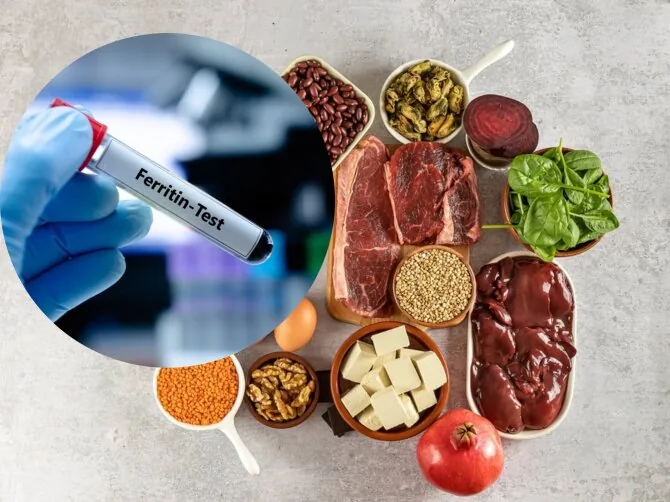
There is no consensus, and children have not been studied at all
Iron indeed participates in various processes important for tumor cell biology, but this does not mean that its intake causes cancer.
Most data on a possible link between high dietary iron, especially heme iron, and cancer risk come from studies on adult cancers, such as colorectal or breast cancer.
However, even these study results are not unequivocal: some show a possible increased risk, others do not confirm such a link. In the case of childhood neuroblastoma, scientific sources do not confirm a direct causal relationship between iron supplement use and disease development.
Unnecessary scare
The claim that childhood cancer cases have “increased greatly and will increase even more” also oversimplifies the statistics. Previous global data showed that from 2001 to 2010, childhood cancer cases were about 13% higher than in the 1980s.
However, the latest 2026 analysis shows a different trend: from 2000 to 2021, both age-standardized childhood cancer incidence and mortality rates decreased worldwide – on average by 0.88% and 2.13% per year, respectively.
Projections for 2020–2040 predict only a slight increase in incidence. Therefore, the claim about a very sharp increase in childhood cancer and an even greater increase in the future is not precisely supported by the latest data.
15min verdict: lack of context. The 1988 study showed that some already formed neuroblastoma tumors contained more iron and ferritin, but it did not study iron supplement use or their link to cancer development or growth. Therefore, using this study to claim that anemia treatment with iron preparations contributes to childhood cancer means confusing correlation with causation.
The claim that childhood cancer cases have “increased greatly and will increase even more” is also misleading – the latest global data do not show such a scale of increase.
Publication prepared by 15min in cooperation with Meta, aiming to stop the spread of misleading news on social networks. More about the program and its rules – here.
Read more In Jonavos district, an Opel ended up at the bottom of a pond