









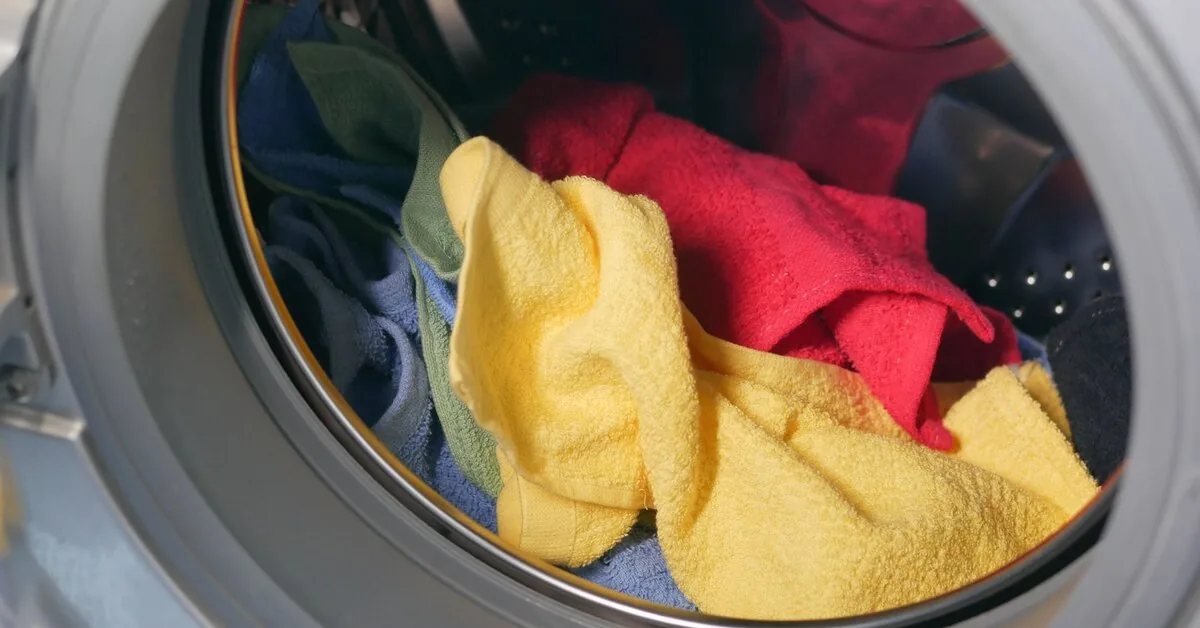
We often only worry about household appliance maintenance when the first malfunctions appear. However, this does not necessarily mean a serious breakdown – sometimes the device starts to “strike” due to improper maintenance.
Read more Opposition and ruling parties agree that Laura Matjošaitytė should resign from the VRK herself
As explained by Eglė Tamelytė, Head of Communications at the technology company Samsung in Lithuania, many factors affect the service life of household appliances – from usage intensity to maintenance and the conditions under which the device operates. “Two identical devices in different homes do not necessarily last the same amount of time,” she says. For example, in some homes, the washing machine is turned on twice a week, in others – daily. Although the same number of years have passed since purchase, the workload of the devices can differ significantly.
Adjust the amount of laundry to the selected program
When purchasing a 9 kg capacity washing machine, one might think that this amount of laundry can be put in each time it is used. However, the maximum allowed amount depends on the selected program: short cycles are usually intended for a much smaller amount of lightly soiled clothes. For example, some washing machines’ 15-minute program is designed for less than 2 kg of laundry, so it is worth checking the limits of specific programs in your device’s manual.
The desire to wash as much as possible and as quickly as possible at once can be costly. If a full drum load is not enough to properly wash clothes in a short cycle, the work will have to be repeated. At the same time, water, electricity, and detergent will be used again – so hoping to save money can lead to additional expenses.
Use detergent sparingly – excess can increase costs
An extra splash of detergent may seem like a guarantee that clothes will be cleaner, but excess detergent can cause excessive foaming and leave detergent residues that require additional rinsing. This means paying twice: first for the unnecessarily used detergent, then for the extra water and electricity.
It is recommended to follow the dosing chart on the packaging, considering the amount of laundry, its dirtiness, and water hardness.
If the device operates poorly, first check the filters
When a vacuum cleaner sucks less well or a washing machine has difficulty draining water, it may seem that repair is needed, but one possible cause could be a clogged filter. Dirt accumulated there prevents air circulation or water drainage.
However, trying to repeatedly turn on the device is not always beneficial. For example, some vacuum cleaners automatically shut off when overheated. In such cases, first turn off the device, let it cool down, and only then check if the filters, airways, or brush are clogged with hair.
Filter maintenance depends on the specific model: only filters designed for washing can be washed, and vacuum cleaner filters that are washed must be completely dried before reinserting. The dryer lint filter usually needs to be cleaned after each cycle.
Read more Eurostat: job vacancies in Lithuania – more than the EU average
Do not cover refrigerator air vents and leave space around it
The electricity consumption of a refrigerator depends not only on the selected temperature but also on the conditions under which it operates. If the door seals do not fit well, warm air enters inside, and the device has to work harder. Air circulation can also be hindered by internal vents covered with products or too small gaps around the refrigerator.
Trying to speed up refrigerator defrosting can also be costly. Melting accumulated ice with a hairdryer or other heat source can damage the device. It is worth checking the installation and defrosting conditions in the specific model’s manual.
Do not wait for the first signs of malfunction
It is worth taking care of appliance maintenance before unpleasant odors, deposits, or malfunctions appear. Often, simple habits are enough: wiping water left in the door seal after washing and letting the washing machine dry, not letting food residues accumulate in the oven or microwave, and running dishwasher cleaning programs at the frequency recommended by the manufacturer.
It is worth noting that specific maintenance methods should first be checked in the manual – some cleaning programs work without additional agents, so it is not always necessary to spend money on them.
Repair or replace: when is it worth considering a new device?
An expired warranty does not necessarily mean that a broken device should be replaced with a new one. If it worked reliably until then and the malfunction can be fixed by replacing one part, repair can help avoid much higher costs. Therefore, before making a decision, it is worth consulting a specialist for diagnostics and repair estimates.
“It is worth thinking about a new household appliance when malfunctions recur, several important parts are worn out, necessary parts for repair are no longer available, or the repair cost approaches the price of a similar new device. It is also useful to compare electricity and water consumption. However, a better energy class of a new model alone does not mean the purchase will quickly pay off – it depends on the difference in costs, frequency of use, and purchase price,” comments E. Tamelytė, a representative of the technology company.
If you decide to replace the device, it is important to take care of the old one: if it is still safe to use, it can be passed on to another person, and if not, it should be given to electrical and electronic equipment waste handlers.
Read more Estonia will open airspace to French nuclear aviation