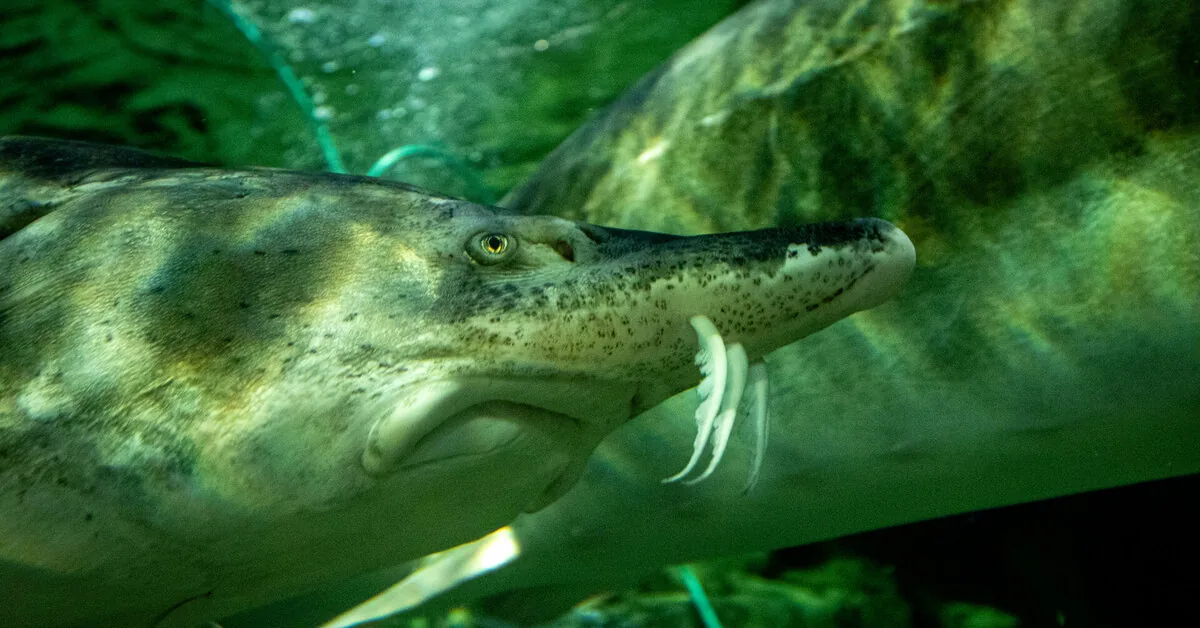
Lake sturgeons (lake sturgeon) in North America have long been called “living dinosaurs” – their ancestors are found in fossil imprints dating back about 150 million years.
Read more Packed in the Mountain Park – the legendary Moby «mass»: thousands of longing fans gathered
However, as “The Independent” writes, a new study by scientists from Michigan and Wisconsin suggests that not only the age of this species is remarkable, but also the lifespan of individual fish.
Until now, it was believed that lake sturgeons could live up to about 150 years. The authors of the new study calculated that large females could potentially live up to 427 years, and males’ lifespan could also reach several centuries.
However, scientists did not catch a 400-year-old fish. The conclusion was reached by mathematically analyzing data collected over 44 years about five different sturgeon populations.
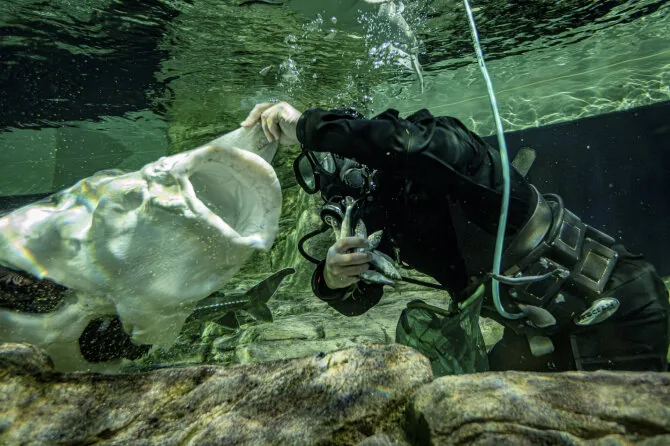
Researchers caught fish for many years, measured them, determined their sex, tagged them, and released them. Later, when the same fish were caught again, their growth rate could be assessed.
“Simply put, we used this data to calculate the lifespan of sturgeons by asking: if a sturgeon grows X centimeters per year, how many years would it take to reach a certain size?” explained the Michigan Department of Natural Resources.
Calculations showed that males about 160 centimeters long could live from 90 to 279 years, and females about 180 centimeters long – from 99 to 427 years.
Edward Baker, head of the Marquette research station of the Michigan Department of Natural Resources, said the results fundamentally changed the previous understanding of the age of these fish.

“We concluded that sturgeons live much longer than previously thought based on growth rings and fin ray cross-section studies,” he said.
Read more Hungary’s ruling party wants to see a critic of Viktor Orbán in the president’s post
Huge but highly vulnerable fish
Lake sturgeons are among the largest freshwater fish in North America. According to the U.S. Fish and Wildlife Service, their weight can reach about 90–135 kilograms, and some individuals grow more than 1.8 meters long.
However, their population has drastically declined over the past centuries – from more than 2 million once living in the Great Lakes, less than 1% of the historical population remains.
By the end of the 19th century, this species was almost wiped out by intensive fishing. Now, very strict restrictions apply to their fishing.
Long life – and a problem for species recovery
The study results are important not only because of the record possible age of the fish.
Lake sturgeons mature much later than most other fish. Females may start reproducing only at 15–25 years old, so even a small increase in adult fish mortality can have long-term consequences for the entire population.
Scientists say that a better understanding of their lifespan will help more accurately plan species protection and habitat restoration.
Lake sturgeons are threatened not only by fishing but also by water pollution, dams and other infrastructure, as well as climate change.
If the new calculations are confirmed, some fish living today in the Great Lakes could theoretically have been born as early as the beginning of the 17th century.
Read more Crushed 18-year-olds face a decisive battle for a ticket to the elite group