They are likely to play a decisive role in the European security architecture in the near future.
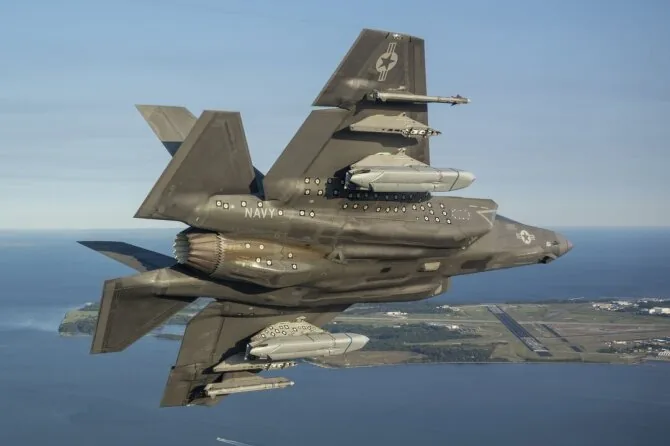
Western governments have been ordering military equipment such as tanks, fighter jets, and submarines from well-known contractors like Lockheed Martin or Northrop Grumman for decades. However, their delivery takes several years, and the cost is extraordinarily high. One F-35 fighter jet can cost more than 100 million dollars.
Similar long-term government contracts still make up a large part of military spending. However, the current trend is clear: defense technologies are becoming cheaper and much more maneuverable, and breakthroughs are achieved by privately funded companies, not governments.
“There are changes happening in the defense economy,” said Alexander Blanchard, a senior researcher at the Stockholm International Peace Research Institute, specializing in artificial intelligence governance.
The Pentagon is requesting a budget of 1.5 trillion US dollars for next year, of which about 55 billion is planned for the development of a new arsenal of AI-controlled unmanned weapons.
Meanwhile, the European Union is running a pilot program worth 115 million euros to fund defense sector companies working with artificial intelligence. Budgets allocated for this are expected to grow. Defense technologies have already become a rapidly expanding area for venture capital investors.
“Helsing,” like other much smaller defense startups, has already broken the rules related to sluggish governments. They have leveraged revolutionary innovations more commonly found in Silicon Valley, attracting billions from venture capital and hiring the best technology specialists.
The company, which has some top executives coming from technology giants like Palantir, Tesla, Apple, and Meta, has started mass-producing war machines costing just 17,500 euros. These AI-controlled devices require minimal military personnel involvement. Mastering them takes only a week of training. Moreover, these drones have already been tested in combat conditions in Ukraine.
Only a few other companies illustrate the deep changes in military spending structures as clearly as Helsing – a startup founded 5 years ago in Munich.
This month, the company agreed to allow The New York Times DealBook journalists to become the first American reporters to enter this drone factory.
Secret factory
The factory, located in an industrial zone in a quiet suburb, operates under the strictest security requirements. It is so secret that even other tenants in this building complex are unaware of its existence. Journalists also agreed not to disclose its location.
The name “Helsing” is not mentioned anywhere here. This reflects the fear that the factory could become a primary target for sabotage or strikes. This is especially likely considering that thousands of drones assembled there have been used against Russian forces in Ukraine.
In case of threat, the factory can be dismantled and relocated to another place within just one day. About 100 factory employees, many of whom were recently laid off from struggling major German car manufacturers’ factories, must undergo thorough security checks and sign confidentiality agreements. A motivational slogan painted on one wall reads: “We defend our democracies.”
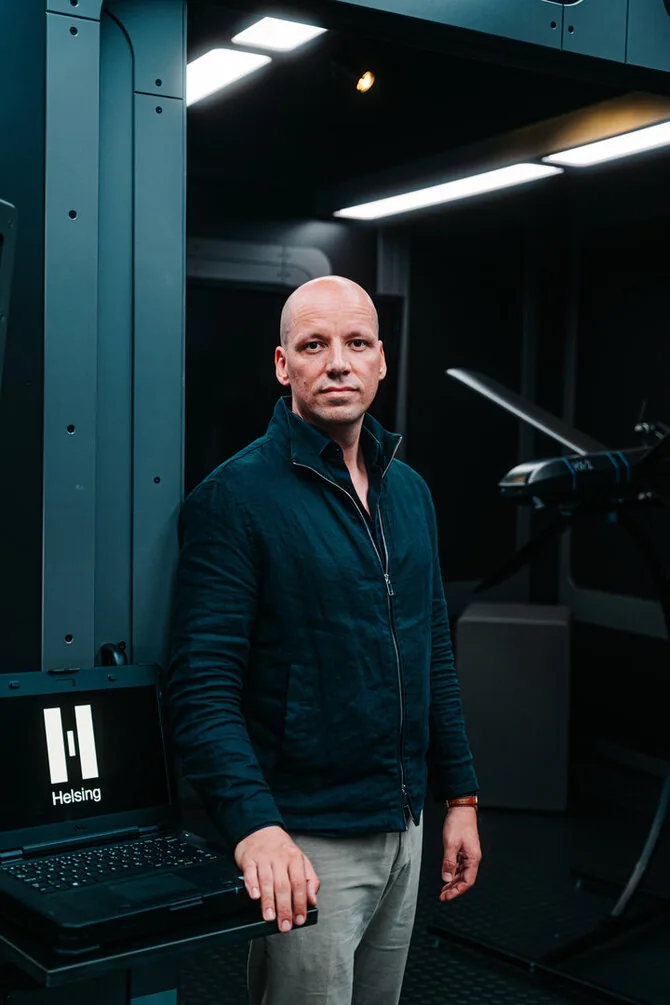
When the three Helsing founders, who received initial funding from Spotify founder Daniel Ek’s venture capital firm, established the startup in 2021, they had one mission – to counter Russian threats as quickly as possible.
“The urgency was obvious, at least to us,” noted the company’s founder and one of the CEOs, Gundbert Scherf, formerly an advisor to the German Ministry of Defense and a partner at consulting firm McKinsey.
“Much more needed to be done in defense and to provide Europe with a stronger foundation,” he emphasized.
There was still a year left before the full-scale Russian invasion of Ukraine, so investors were not convinced.
“At that time, raising funds for defense in Europe was practically impossible,” recalled G. Scherf.
Investment surge
The changes since then have been enormous. And not only because of the war in Ukraine. President Donald Trump’s demands for Europe to increase military spending and his repeated threats to take control of Greenland significantly contributed to defense budgets skyrocketing.
This sparked a wave of investments in defense technology startups. According to DealBook, investors rushed to participate in Helsing’s latest funding round, valued at about 1.2 billion US dollars, according to the Financial Times. Meanwhile, the startup itself is currently valued at around 18 billion dollars.
Read more Impressive victory by «Sūduva» puts them on the heels of «Kauno Žalgiris»
“The opportunities in the market are limitless, and there is no single company that can exploit them all,” said venture capital group Lightspeed partner Raviraj Jain, noting that his firm has invested more than 100 million US dollars in Helsing so far.
Helsing’s main advantage for investors is the startup’s role in real combat in Ukraine, where since the end of 2024 the company has deployed thousands of drones.
Such missions provide Helsing with a wealth of data, allowing regular software updates. Among other things, Ukrainian soldiers record many attacks on video, which later allows analyzing mission success.
“Much more is at stake here,” believes G. Scherf. “These technologies are developing very rapidly.”
Cat and mouse game
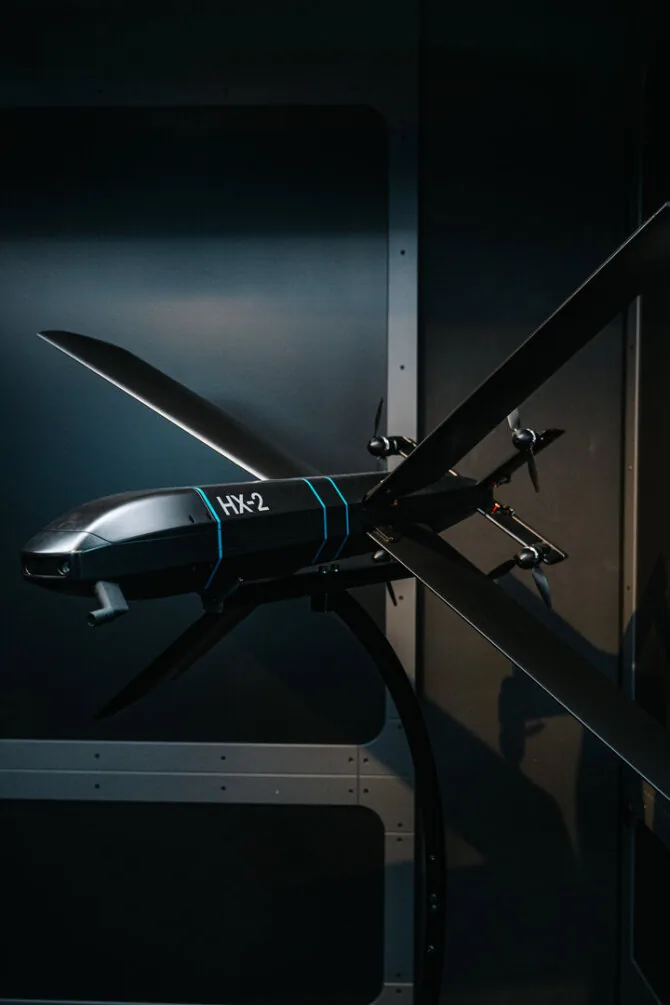
Videos from Ukraine show a cat and mouse game. The so-called “loitering weapons” or kamikaze drones (“HX-2” – “X” refers to the wing shape) fly over the battlefield searching for small Russian force targets hidden in forests, such as battery systems or armored vehicles.
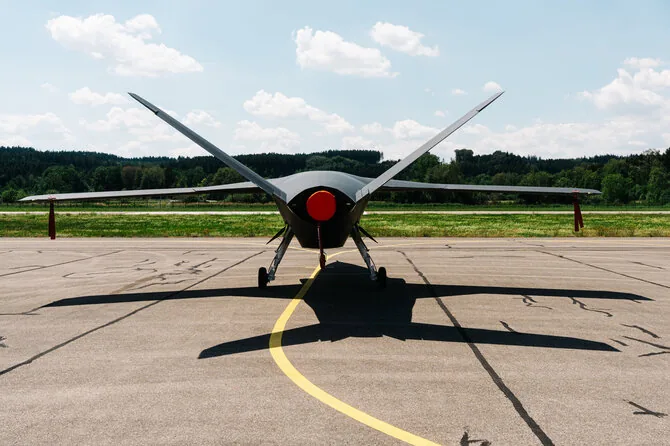
When Ukrainian soldiers controlling the drone from many kilometers away give permission, it dives down and destroys the threatening object, often at the same time as the enemy returns fire.
G. Scherf indicated that the mission success rate in Ukraine is about 70%: “We are very proud of that.” AI-controlled software allows drones to continue operating even in situations where their communication systems and GPS sensors are disabled by well-coordinated Russian electronic jamming devices.
“I don’t know of any other company in the West that has the autonomy that Helsing has,” noted Khaled Helloui, partner at London-based venture capital firm Plural. According to the entrepreneur, he has invested about 800 million US dollars in defense sector companies, including Helsing.
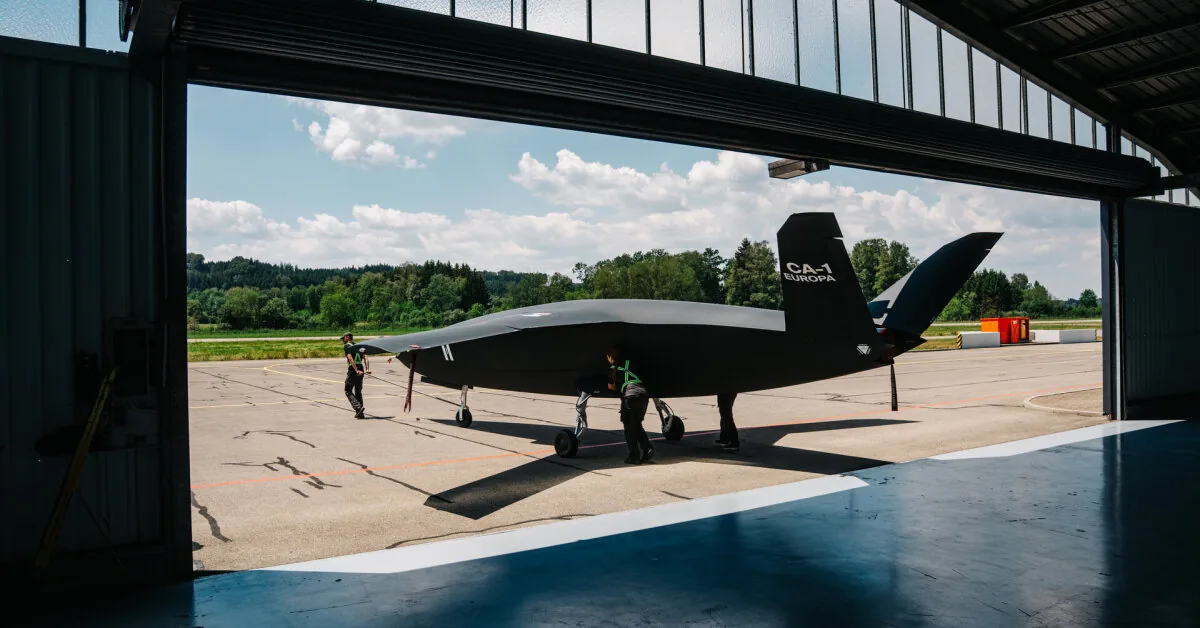
The latest Helsing creation can be found at a sun-drenched airfield, a 90-minute drive west of Munich. There, aviation engineers are building the company’s first unmanned fighter, the CA-1 Europa. Made from lightweight carbon fiber, the aircraft is expected to be deployed in 2029 and capable of strikes deep into the rear of an adversary like Russia.
The goal is simple: for a fraction of the cost of a conventional fighter, the startup Helsing can theoretically produce hundreds of Europa models. This would allow sending one fighter in advance to disable the enemy’s electronic warfare network, followed by several more equipped with precision-guided weapons similar to those armed on F-35 warplanes.
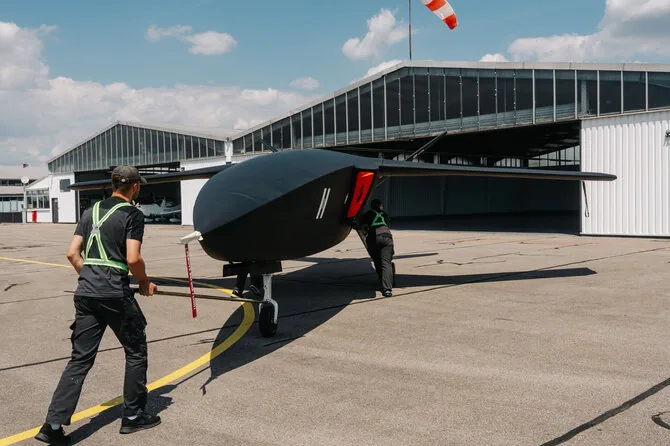
“When you no longer need a pilot, you can undertake completely different, more dangerous missions,” noted Helsing’s vice president of air defense programs Stephanie Lingemann. “You don’t have to worry about a human life that must be protected.”
This calculation is well understood by the United States as well. Pentagon press officer Sean Parnellis, speaking this month at the US Naval Institute, stated that “drones and autonomous systems are the most significant innovation of this generation on the battlefield.”
Overcrowded market
Despite Helsing’s impressive achievements in artificial intelligence, there are now so many defense startups that this may confuse or even deter investors.
“Due to high interest, the defense technology sector has become very noisy,” assessed G. Scherf. “There are many new players, which makes it difficult for investors, the public, and governments to assess the situation.”
However, few believe that demand for unmanned systems will decrease anytime soon. Helsing’s drone factory already reveals the outlines of another possible conflict in Europe.
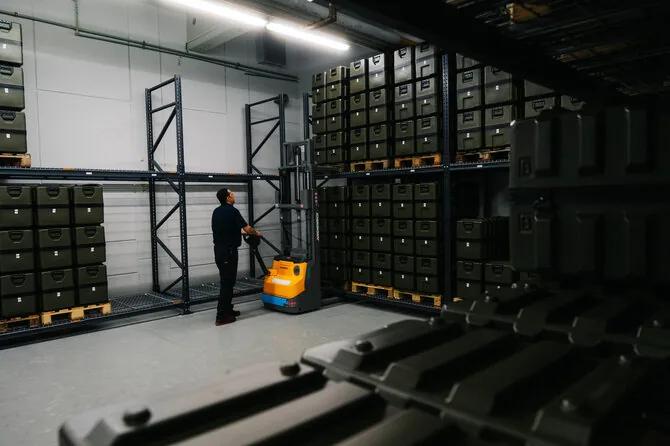
In large storage facilities, boxes stacked several meters high can be seen. Most contain drones waiting to be sent not to Ukraine, but to a combat-ready German brigade in Lithuania.
Last week, the German parliament approved a military contract worth 220 million euros with Helsing, under which the company must develop a wide range of artificial intelligence systems.
Although rapidly rising military spending may benefit investors, it could mean hard times for the world.
“All of this is heavily based on the assessment that we are approaching a larger conflict in Europe,” summarized A. Blanchard. “After all, no one develops the arms industry when expecting peace.”
This article was published in The New York Times.
© 2026 The New York Times Company