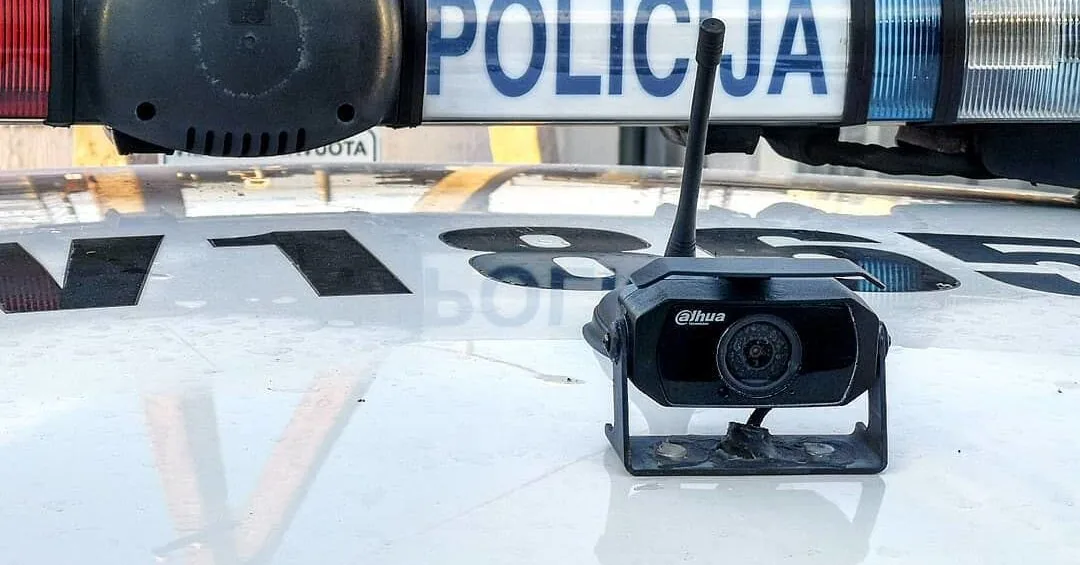
From privacy to national security: why is it necessary to protect video surveillance cameras? This question is raised in a police-released statement to the public.
Read more For the last summer evenings: stewed peppers and tomatoes
These threats are warned about by the National Cyber Security Center under the Ministry of National Defence (NKSC), together with the Second Operational Services Department under the Ministry of National Defence (AOTD) and the State Security Department of the Republic of Lithuania (VSD), who have prepared recommendations for the safe use of video surveillance cameras. The institutions point out that even one unprotected camera can provide an opportunity not only to collect valuable information but also to become an access point to the entire home, company, or organization network.
The institutions provide basic recommendations regarding video surveillance cameras used in households and organizations:
1. Change the factory administrator password to a new, strong, and unique one (not repeated across multiple devices) and remember to change it periodically;
2. Regularly install manufacturer software updates, avoid using vulnerable security settings (UPnP, SSH, Bonjour, FTP, and Telnet) and insecure protocols (HTTP and RTSP);
3. Ensure there are no abandoned, unattended cameras, do not use devices no longer supported by the manufacturer, and replace them with newer equipment from reliable manufacturers.
Read more After the rains – an invisible threat in well water: specialists warn residents
4. If not necessary, do not allow direct internet access to the camera; use only manufacturer-recommended solutions or VPN for remote access;
5. Disable unused functions and accounts;
6. Enable multi-factor authentication if supported (MFA);
7. Do not choose to install or update video surveillance equipment from unreliable manufacturers producing devices in China, Russia, or Iran;
8. Use features such as partial video blurring when there is a possibility of revealing sensitive information (e.g., GPS location);
9. Limit the camera’s surveillance field due to excessive (e.g., revealing exact address) and confidential (e.g., high-resolution cameras capturing images of computer monitors, documents, etc.) details;
10. Monitor whether there are video cameras in your property or directed at your property that do not belong to you.
Read more Sales of electric generators in Latvia jumped nearly 40 times after the storm