








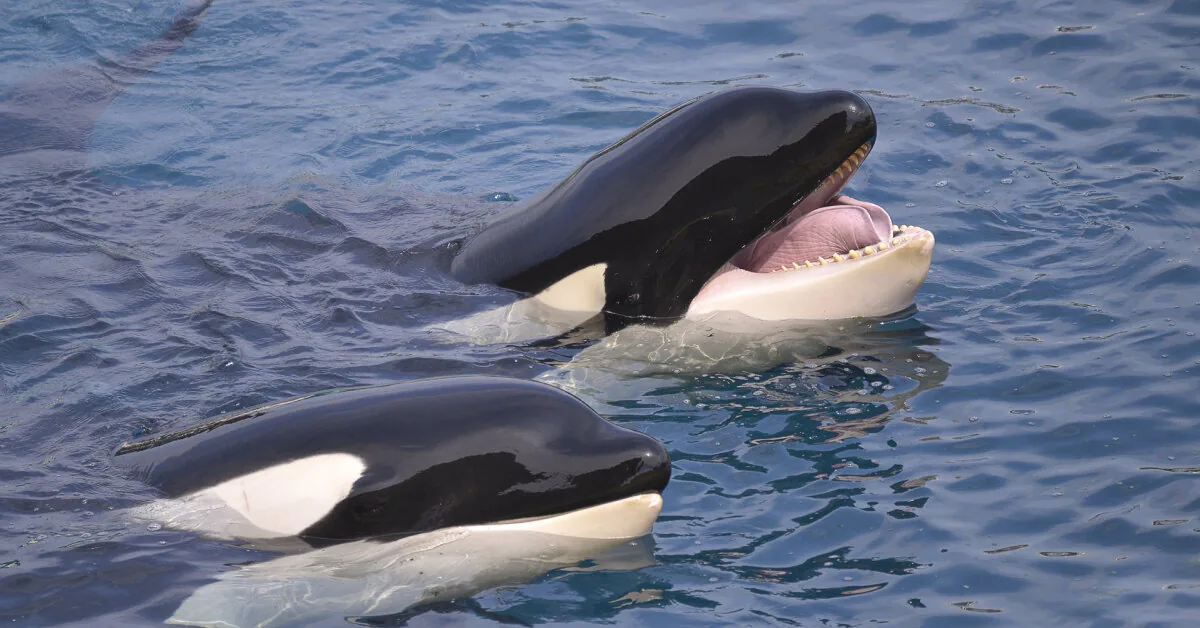
Scientists have discovered that the clicking of a pod of long-finned pilot whales (Globicephala melas) is enough to make orcas get out of the way.
Read more „Šiauliai“ invited a Lithuanian who played abroad: „His ceiling could be even higher“
And the most interesting thing is that no one knows exactly why this happens.
“Orcas respond to the signals of long-finned pilot whales and apparently perceive their presence as a threat,” wrote a team of scientists led by marine biologist Anna Selbmann from the Sudurnes Science and Learning Center in Iceland in a study published in January 2026 in the journal Scientific Reports.
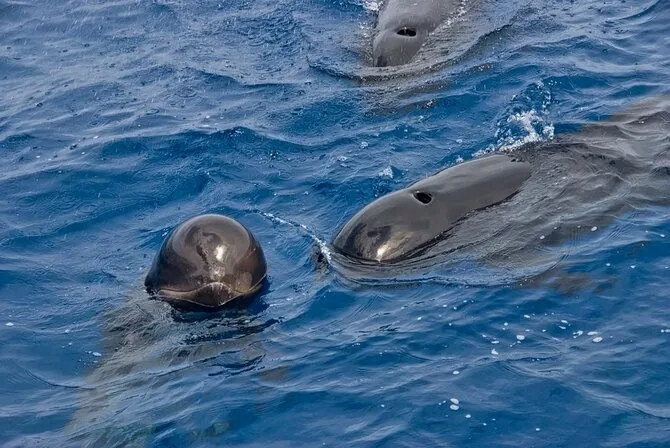
“However, it is still unclear why this predator avoids a smaller, seemingly weaker opponent,” they added.
As Science Alert writes, scientists became interested in this phenomenon when a group led by marine biologist Charlotte Curé published unexpected observations of these animals in 2012. When wild long-finned pilot whales were played orca sounds, they swam towards the sound.
Later, another group led by marine scientist Renaud de Stephanis from the Spanish National Research Council recorded an even stranger phenomenon. In a study published in 2014, scientists noted that in all cases of pilot whale and orca encounters recorded in the wild since 2004, the orcas retreated. As soon as the pilot whales appeared in orca territory, the orcas no longer wanted to stay there.
This phenomenon is strange because there is no clear explanation for it. After conducting research in the Strait of Gibraltar, R. de Stephanis and his team found that these two species do not compete for food and do not hunt each other. Moreover, the long-finned pilot whale is much smaller than the orca and should not pose a serious threat to it.
A. Selbmann and her colleagues were stunned but also fascinated. They wanted to study the interaction between these two species in more detail. In a study published in 2022, they analyzed data from scientific platforms and whale-watching tours from six regions of Iceland from 2007 to 2020, recording when each species appeared in the area. The pilot whales were seen only in the summer months but often visited the orcas’ favorite spots.
Read more In the northwestern USA, a man suspected of arson has been detained amid forest fires
The strangest thing is that out of 24 recorded encounters, in 68% of cases the orcas simply avoided meeting the long-finned pilot whales, retreating before these marine mammals approached. However, in 28% of cases, a rapid chase began — both species leapt out of the water, increasing their speed up to 25 km/h.
But one question remained unanswered: did the orcas really react to the presence of the long-finned pilot whales themselves, or to something else happening during these encounters? In previous studies, recorded orca sounds were played to the pilot whales. A. Selbmann and her colleagues decided to test the reverse — instead of waiting for a natural encounter between the two species in the wild, they played recordings of long-finned pilot whale sounds to the orcas.
Their reaction was impressive – upon hearing these sounds, the orcas clustered into a tighter group, turned around, and increased their swimming speed. The sounds of the long-finned pilot whales alone were enough to make the orcas try to avoid the encounter.
It is still not exactly known why the long-finned pilot whales so persistently swim towards the orcas or why the orcas flee from them — as scientists note, there has never been a recorded case of pilot whales attacking orcas.
One possible explanation is so-called mobbing behavior. Instead of fleeing from a dangerous predator, some animal species unite to attack it together and force it to leave the territory. This phenomenon is most often observed among birds. It is often easier for the predator to simply retreat than to fight a flock of attacking birds.
However, this is only a theory so far. Other explanations, such as competition for resources or protection of offspring, cannot be ruled out.
Read more „Bayer“ profit increased due to successful operations and lower legal expenses