







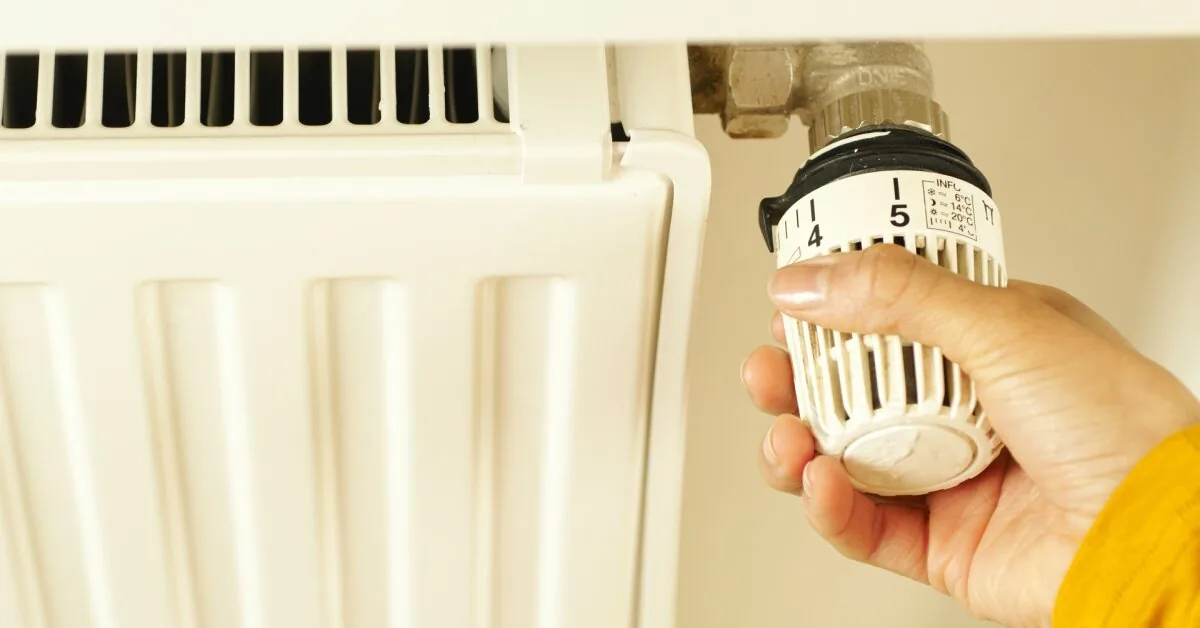
Although the start and end of the heating season are still linked to actual weather conditions, residents can now make decisions about heating their own buildings.
Read more Country leaders thank Italian soldiers for downing a drone, emphasize the importance of air defense
The decision is in the hands of the residents
Until now, the decision on the start of the heating season was made by city municipalities, taking into account the actual outdoor temperature. Amendments to the law introduce more clarity and predictability while maintaining flexibility to adapt to real weather conditions. The aim of these changes is to provide residents with greater choice, clearer regulation for heat suppliers, and even more reliable preparation for the heating season.
The date set by the law’s regulation is not fixed – it is linked to actual weather conditions. When the average outdoor temperature does not reach 10 °C for three consecutive days, the heating season will begin, and it will end when the average outdoor temperature is above 10 °C for three days. All heat suppliers, including “Gijos,” must ensure heat supply to the building heat points by the specified date, while the heating will be turned on by the building administrator or community as before.
“Each person’s heat demand is individual, so building communities that do not want to wait for the set date and endure discomfort have more options to decide themselves when to start the heating season in their homes. This option is available to residents living in buildings with independent connection or modernized heat points. Currently, 95% of the heat points supplied by “Gijos” are modernized,” says Andrius Agintas, head of the “Gijos” infrastructure team.
In fact, most modernized heat points already had the option to decide when to start the heating season, but residents did not actively use this function. It is hoped that the new regulation will encourage homeowners to be more involved and decide for themselves when to start or end the heating season in their homes. If no such decision is made, heating will be supplied according to the law, i.e., at the same time as in other city buildings.
Residents who want to decide on the start and end of the heating season themselves are advised by “Gijos” to contact their housing administrator. Such a decision requires the approval of 50% + 1 of the apartment owners.
“It is important to emphasize that this legal provision is not about a longer or shorter heating season. The change can be seen as setting clearer rules and providing greater incentives for residents to decide when heating should start or end in their homes. At the same time, we aim for the whole system to operate more efficiently and be better adapted to real weather conditions,” explains A. Agintas.
Meanwhile, in buildings with dependent connection (non-modernized) heat points, the start and end of the heating season will be determined by the municipality. It is reminded that residents of apartment buildings in the capital can apply to Vilnius city municipality and use support for heat point modernization.
Responsibilities of building administrators remain unchanged
It is reminded that heating in a specific building is turned on by the building administrator or community. The head of the “Gijos” infrastructure team explains that every year by September 15, building managers, administrators, or communities must carry out necessary preparation, periodic flushing, and repair works on the heat points and internal systems installed in the buildings to ensure their reliable operation during the cold season.
“Building managers must ensure, within their competence, that the building’s heating system is properly prepared for the heating season and that all actions necessary to start heat supply to the building’s heating system are completed, including submitting readiness acts,” notes A. Agintas.
The manager must provide a copy of the building’s heating season readiness act to the heat supplier no later than 5 working days from the date of signing the act. If the building’s heating season readiness act is not signed, using heat in the building is prohibited, and the heat supplier, not having received this act, has the right not to supply heat for heating such a building.
This information is important not only for administrators but also for residents. If necessary, homeowners should be informed about their building’s heat point and its connection type, as this determines who will decide on the start and end of the heating season.
Read more «Telegram» channel – sounds of a drone recorded by residents in Lithuania
What work should be done before the heating season?
Responsibilities of heat suppliers | Responsibilities of building administrators | Recommendations for residents |
Ensure diagnostics of the heat supply pipeline – perform hydraulic tests and reconstructions | Prepare internal heating systems of buildings for the cold season | It is recommended to seal windows with silicone or other insulating materials if needed (these works are usually done by specialists) |
Perform necessary preventive works (e.g., boiler repair, etc.) | Prepare in advance for resident surveys or voting processes (if the heat point is modernized) | Before and during the heating season, regularly clean dust from heating devices’ surfaces |
Continuously supply heat to building heat points during the heating season | Ensure proper recording of voting or survey results and communicate the decision to the heat supplier. | Do not block radiators with furniture, do not cover with curtains, do not dry laundry on them. |
Provide clear information to residents about the option to choose the start and end of the heating season and the consequences of such a decision | Attach heat-reflective foil to the wall behind radiators. | |
If the building’s heat point is not modernized, wait for the municipality’s decision and ensure heating is turned on | Inform your building administrator about drafty windows or doors in common areas | |
Initiate a decision on the start and end of the heating season if the housing administrator does not do so Read more Question on the «Emmy» red carpet threw the actress off guard: captured an awkward moment |