Financial fraudsters use various methods to extort residents’ online banking login details or money.
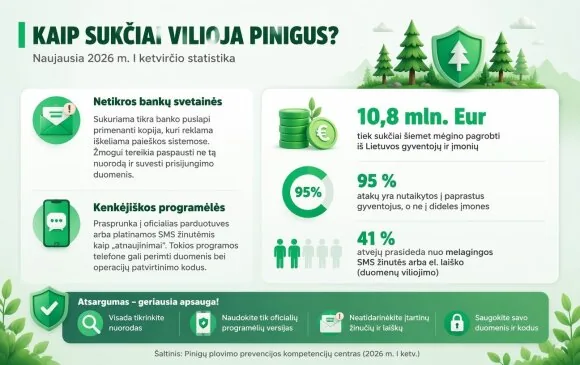
One of the most common is fake online banking websites.
Criminals create a copy resembling a real bank page and, using advertising in search engines, ensure that it appears among the first search results. All a person has to do is click the wrong link and enter their login details.
Another risk is malicious apps. Although official app stores apply strict checks, experts warn that sometimes fraudsters manage to publish malicious programs in them or distribute links to supposedly updated banking apps via SMS messages.
Such programs can give fraudsters access to data on the phone or even allow them to intercept transaction confirmation codes.
Statistics also show that the problem remains relevant. According to the Money Laundering Prevention Competence Centre, in the first quarter of 2026, financial fraudsters attempted to extort 10.8 million euros from residents and businesses.
Read more Valeika, who made it to the World Youth Championship final: «With the last of his strength»
About 95% of all registered fraud cases were directed at residents, and the most common form of fraud remained phishing – fake SMS messages and emails, accounting for about 41% of all cases.
Although both the browser-based online bank and the official mobile app are developed in compliance with high security standards, banking specialists warn that the risk does not completely disappear.
Therefore, it is worth knowing a few important differences that can help avoid painful mistakes.
Read more People born in these months are misunderstood by others: could it be you?