









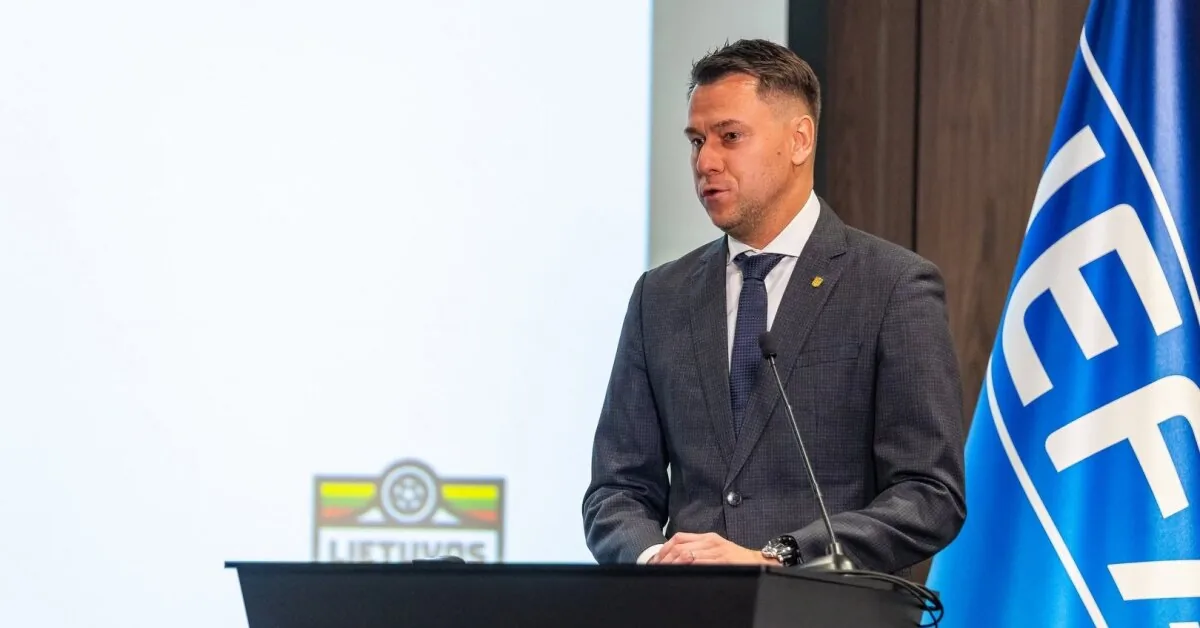
In the 2020–2021 season, 6,319 licensed players registered in the Lithuanian Football Federation’s COMET system participated in the boys’ and youth U8–U19 age group competitions. In the 2025–2026 season, their number had already reached 9,339. This is 47.8% more than five years ago.
During the same period, the number of teams increased from 349 to 512, or 46.7%. The number of matches played also increased – from 3,734 to 4,267 per season.
Even faster growth is recorded in girls’ football. Over five years, the number of girls participating in competitions nearly doubled, and the number of teams more than doubled.
According to Edgaras Stankevičius, President of the Lithuanian Football Federation, the growing number of young footballers is one of the most important foundations for the long-term strengthening of the country’s football.
“The long-term results of Lithuanian football start from a broad and solid foundation. Today we see that it is expanding – more children are playing, more teams, and growth in girls’ football is especially noticeable. But numbers alone are not enough. Our task is to turn the growing mass into quality training, a stronger football development system, and a clear player pathway from the first training session to high-level football mastery. Only in this way are stronger clubs and national teams consistently created,” says E. Stankevičius.
According to Algirdas Kvalkauskas, Director of the Lithuanian Children’s and Youth Football Development Association, the growing numbers reflect not only increasing children’s interest in football but also the consistent work of clubs, coaches, parents, and the entire football community.
“The last five years clearly show that Lithuanian youth football is growing. The number of teams increased by almost 47%, and registered players by nearly 48%. Behind these numbers are thousands of children who represent their teams and regularly participate in competitions. This is the result of the joint work of clubs, coaches, parents, and the entire football community,” says A. Kvalkauskas.
522 teams already registered for the new season
The growth trend continues as the new season approaches, which will start on August 8. Currently, 522 teams are already registered for boys’ and youth football competitions – ten more than last season.
Along with the growing number of participants, the youth football competition system continues to be improved. In recent seasons, the Elite Youth League B group was created, providing more competitive matches for growing clubs and players, and the pitch format was reduced in the U13 age group to create more favorable conditions for the technical and tactical development of young footballers.
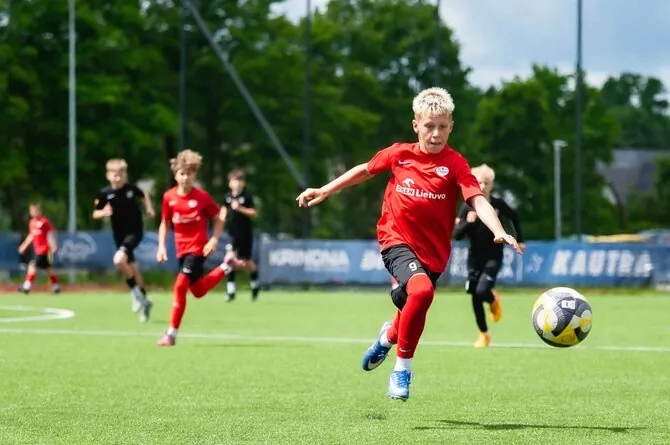
“It is important for us not only how many children play football but also the environment in which they grow. The creation of the Elite Youth League B group has provided more opportunities to play competitive matches, and the changed
U13 competition format allows more focus on individual player development. We evaluate every innovation practically, listen to clubs and coaches, and make necessary changes when we see the need,” says A. Kvalkauskas.
According to him, the youth football system cannot be static – as players’ needs, training methodologies, and the football environment change, the principles of competition organization must also change.
“We want to maintain an open dialogue with the entire youth football community. Only by talking, sharing experiences, and seeking solutions together can we create a stronger system and better conditions for young footballers to grow,” says the LVJUFA director.
Read more Water would have protected: a man who fell to the dry pool bottom was seriously injured
The number of girls’ teams has more than doubled
Especially rapid growth has been recorded in Lithuanian girls’ football over the past five years.
The 2020–2021 season girls’ football competition system consisted of three age groups – U15 Girls’ Elite League, U13 Girls’ Championship, and U11 Girls’ Championship.
In the 2025–2026 season, the competition structure already included four age groups. Alongside U15, U13, and U11 competitions, the U17 Girls’ Elite League was also started, helping to ensure a more consistent player pathway from children’s and youth football to adult football.
Over five years, the number of girls’ teams increased from 25 to 54, or 116%. The number of registered players actively participating in championships increased from 436 to 860 – 97%.
According to Milda Liužinaitė, Director of the Women’s Football Association and captain of the Lithuanian women’s national team, these changes show not only growing interest in football among girls but also a clearer pathway from the first training sessions to the highest level competitions.
“Over five years, the number of girls’ teams has more than doubled, and the number of playing girls has nearly doubled. This is a very clear signal that more and more girls are choosing football, and clubs are increasingly creating teams for them and providing opportunities to compete regularly.
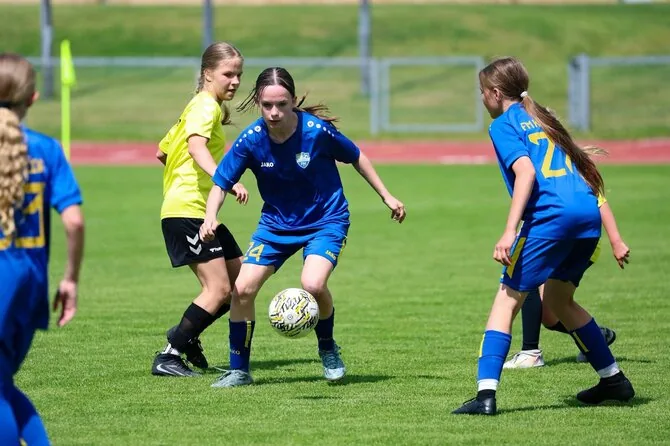
Equally important is that we have expanded the competition system itself. The newly introduced U17 Girls’ Elite League helps retain older players in football and creates a more consistent pathway from children’s football to women’s teams and national teams. We must continue to strive to ensure that a girl who wants to play football has that opportunity regardless of which Lithuanian city or region she lives in,” says M. Liužinaitė.
More data and consistent monitoring for the development process
As the number of young footballers grows, it is important to strengthen not only the competition system but also the planning, evaluation, and monitoring of the daily development process.
For the 2026–2027 season, the Lithuanian Football Federation provides the “ProSoccerData” platform to 27 football development organizations participating in the LFF certification process.
“ProSoccerData” is a football data analysis and management platform that allows coaches and representatives of football development organizations to collect and analyze information about players, training sessions, and matches in one place, monitor player progress, and make data-driven decisions.
Centralized information collection allows player development to be evaluated not by individual training sessions or matches but by monitoring their progress over a longer period. The platform helps football development organizations plan their work more consistently, and the LFF objectively monitor and evaluate the development processes of organizations participating in the certification process.
In modern football, intuition alone is not enough – decisions must be based on reliable data and consistent analysis. This allows clearer insight into what works in the development system, timely identification of areas for improvement, and more targeted investment in the growth of players and football development organizations. This is exactly how increasing mass participation can be turned into higher quality development, stronger clubs, and long-term national team results.
Read more Decisions about US soldiers in Lithuania – at the beginning of autumn, says Laurynas Kasčiūnas