





Now 29-year-old Roberta says that at that time her kidney condition was already very poor, diagnosed at an advanced stage, and the kidneys themselves, according to her, were scarred, hardened, and barely the size of a grape. Roberta does not hide that ten years ago there was much less information about organ donation and transplantation.
Read more Ukraine introduced the FP-7.x anti-ballistic missiles for the Freya air defense system
The only sign was blood pressure
“Actually, the main symptom was high blood pressure, which started to become noticeable at 14–15 years old. The upper number was 170 and above. Since there was valve insufficiency, my heart was constantly examined to find the exact cause of the high blood pressure. Cardiologists found nothing, thinking maybe it was all because of the valve.
They decided to wait another year. We came back after another year, and so it continued and extended until she was 17. Then, since nothing was found from the cardiological side, she was referred to nephrologists, and after a simple ultrasound, they immediately saw that there were almost no kidneys,” Roberta recalled.
When the doctors understood Roberta’s condition, they urgently created a fistula and started dialysis. The first sessions took place at the Santaros Clinics Children’s Hospital.
The woman said she was frightened by how quickly everything changed – she came for tests, then everything happened very quickly, and then dialysis and the news that she would have to wait for an organ transplant – a kidney.
The family, of course, reacted sensitively, the woman does not hide – naturally, there were tears and shock. Roberta says that she herself did not fully understand how serious everything was at that time. Despite that, there was anxiety for everyone, but Roberta insists that she always tried to focus on having many plans to fulfill – it could not be otherwise.
“At first, dialysis was done for me in Vilnius, but later we moved to Utena. At that time, I was still studying, so after dialysis, I would still go to school, to classes. I would miss one or two classes and then come,” Roberta spoke about the routine while waiting for the transplant.
According to her, both the family and she lived on suitcases at that time. When you wait for a transplant, you never know when you will get a call saying – a donor has been found. It can happen at night, during the day – anytime. But even after receiving the call, it is not the last step – upon arrival at the hospital, tests are performed to decide who is the most suitable recipient for the transplant.
Roberta received three such hopeful calls; in the first two cases, the operation was performed on others, but the third did not lie. There was only one “but”: Roberta received the fateful third call during her final exam session. She had already taken three out of seven exams, and the others were still ahead, but both she and her family understood – such a chance could not be missed. “Somehow, I already felt inside that this time it could really succeed. And it did,” Roberta recalls. The operation went smoothly, and after three weeks she was already back home.
Regarding the exams, the woman from Utena remembers she was really worried but was glad she managed to pass at least three out of the planned seven. That was the requirement at the time to enter somewhere.
Read more Wrote a mark for Valančiūnas’ stage in Denver – powerful opponents highlighted the drawbacks
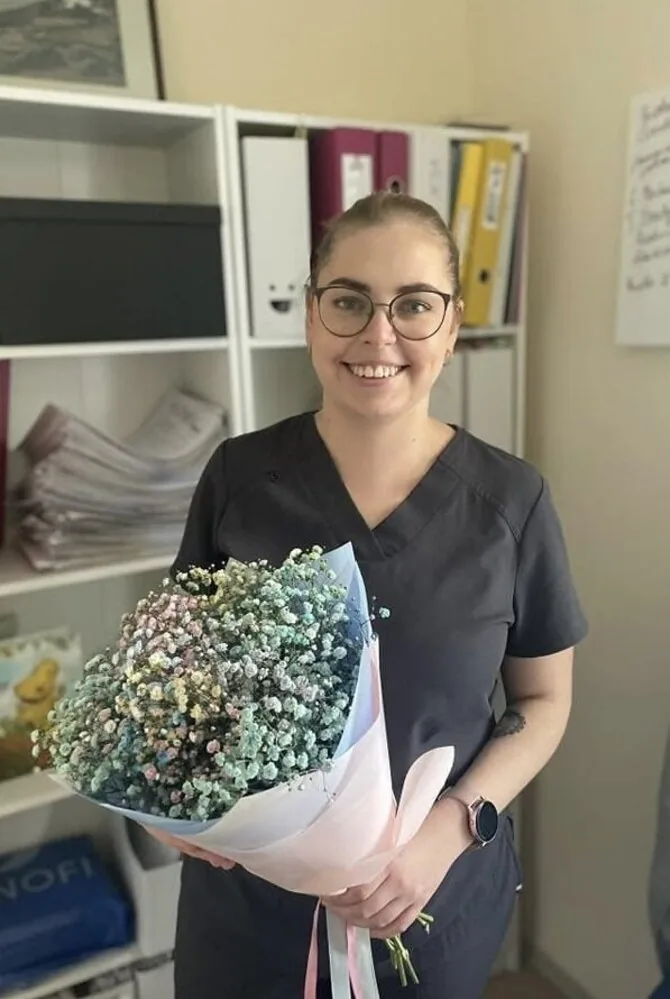
Roberta says that even then she knew she would connect her future with medicine. Perhaps, she now thinks, taking more exams would have changed her choice, but she is happy with her current path – Roberta studied nursing and works as a nurse.
Not standing still, moving forward
Roberta has lived with a transplanted kidney for ten years and is happy that her intuition that she would succeed was more than justified. After some illnesses, she sometimes has to stay in the hospital, but essentially the kidney has functioned perfectly all these years.
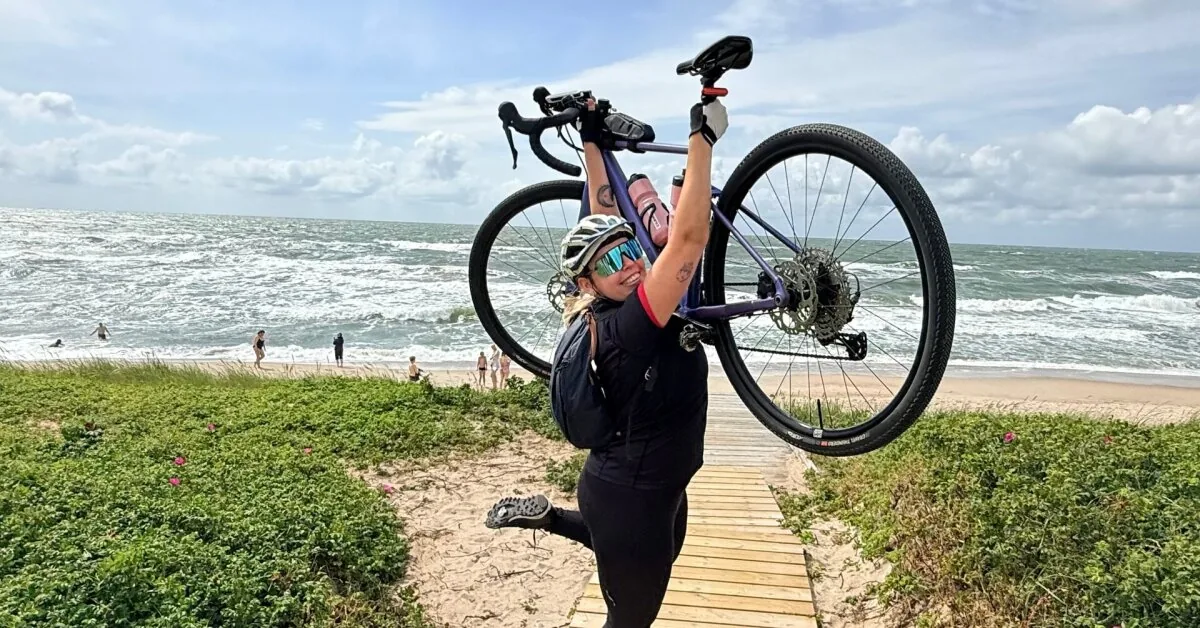
The woman says that probably for everyone who has received a second chance at life, life itself seems completely different – much more valuable. Maybe that is why Roberta tries never to stand still, to look positively. Roberta is fond of art, so she thinks that maybe in life she will still devote time to this field; she also tries to stay active and really enjoys cycling.
Looking back, Roberta says there was everything – relatives were always nearby, some friends remained, but there were also those who withdrew. The woman smiles that back then transplantation was very rare, but no one knew about something like dialysis, yet she never hid it, never avoided talking about it because she always saw meaning in it.
“I talk, always encourage as many people as possible to learn about it because in reality it can affect anyone at any time. We are not necessarily talking about, say, a disease from childhood. Some things happen suddenly, so it is very important to know about it, to understand,” Roberta insisted.
According to her, her work also helps spread the message – both to patients and more broadly. Roberta says she likes her job and is doing well, but she would not dare to say if this is her final professional stop, simply because she always wants to take more from life.
“I cannot stop, stagnate somewhere because I got a second chance at life and understand that I need to take as much as possible from it. I have just finished leveling studies, a master’s awaits me. Generally, I am very active, I have a bike, and I just cycled 100 km.
I also graduated from art school and really do not want to lose that artistic side of mine. Maybe in life I will decide to study something related to the arts. What drives me forward is that I have desires, and as long as I still have health and strength – only forward,” Roberta spoke resolutely about the future.
Read more Vilius Gaubas lost in a tough battle to a top hundred player