








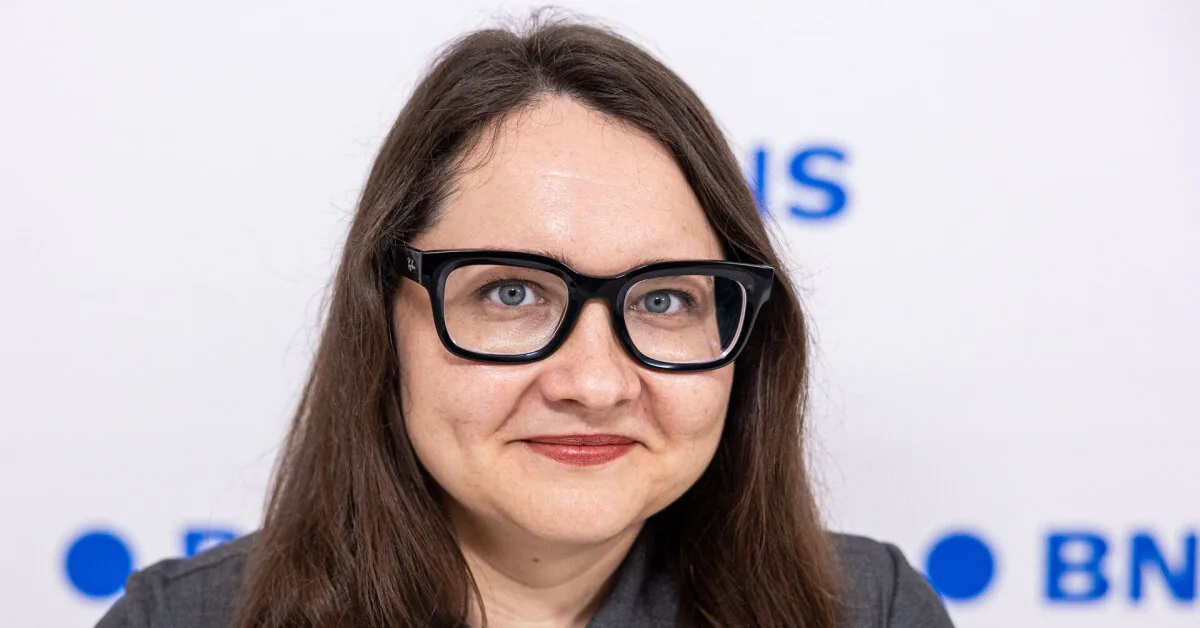
We talk about freedom of speech, the influence of social networks, journalists’ responsibility, and the future of the media with the director of the Lithuanian Journalism Center, assistant at the Journalism and Media Research Center Dr. Džina Donauskaitė.
Read more British oil giant BP plans to sell its North Sea business
– Is freedom of speech under threat in Lithuania today? What poses the greatest danger to it?
– Freedom of speech is one of the values of a free liberal democracy that must be constantly guarded. There are always people with different interests seeking to influence public discourse. Therefore, freedom of speech faces certain threats constantly.
Overall, Lithuania’s situation in the global context is quite good. However, in recent years we have also seen political pressure, which led to protests. Many people also notice economic pressure on freedom of speech. So, threats can be institutional, economic, and political. In recent years, we have seen quite significant political pressure, which has essentially been withstood thanks to civil society, international organizations, and perhaps European regulation. So, there is no single factor threatening freedom of speech.
– How are the media themselves changing? Do journalists take enough responsibility for the information they publish and adhere to professional ethical principles?
– There are self-regulation mechanisms and court decisions. People can defend their rights both in courts and through self-regulatory institutions. When we talk about freedom of speech, we do not mean that anything can be said.
Freedom of speech in the media is quite clearly regulated. There are laws, a national code of ethics, as well as internal codes of ethics of individual editorial offices. In other words, journalists’ freedom of speech is subject to clear rules and limits – a kind of social agreement expressed in laws and ethical norms.
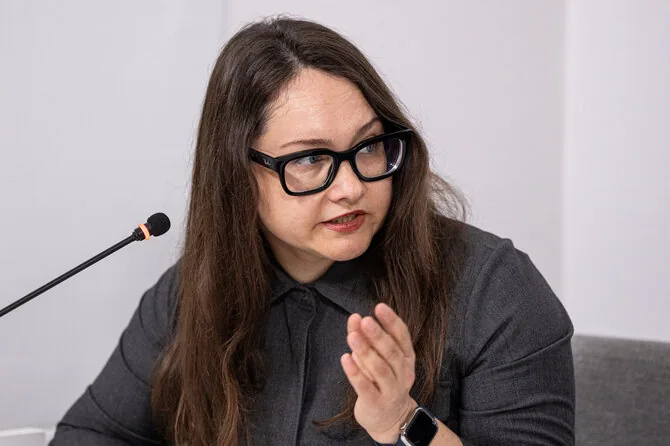
However, there is another thing – personally, I really miss professional discussions among journalists themselves about whether a particular topic was prepared ethically. Journalists are generally quite hard to get to discuss this. For some, it is an uncomfortable topic because it involves criticizing colleagues; others simply do not have time – they need to do daily work, have family and other commitments, as in every profession.
I think Lithuanian journalism is professional, but there is also quite a lot of unprofessional content in the public space. It could become more professional if journalists were more actively involved in internal professional discussions: what is ethical, what is right or wrong, what impact do my texts and other journalistic information have. I see quite a few problems in this area.
– Media outlets compete for audiences. How can content quality be maintained in such competition?
– I think competition among media outlets themselves is the least problematic layer of this situation. The biggest competitor to the media today is social networks because the audience is moving to social networks. A very large part of it, especially the younger generation, which is the future audience, does not even purposefully seek out the media. They simply encounter journalists’ work on social networks.

Moreover, social networks strongly influence how journalists work: what topics they choose, what questions they ask, what generally comes into their focus. There is also a certain convergence happening here. Social networks are very powerful attention-grabbing objects, so to compete with them, the media must partly adapt to them and be more active there.
Of course, later media outlets compete among themselves for the same audience, but the biggest competition is still with social networks. This also creates economic pressure because the audience is also an economic resource for the media.
This is reality, but I would not agree that nothing can be done. Just as the media was regulated in Western democracies over the past century, social networks can also be regulated.
In Lithuania, we do not discuss this much – this area seems to be left to the prerogative of the European Union. However, the decisions that will be made in negotiations with social network platforms are very important.
The audience’s shift to social networks is only one part of the problem. Another is that platforms do not always manage to ensure the safety of their audience, especially young people. This leads to discussions about whether minors’ access to social networks should be restricted.

Platforms fail to completely prevent hate speech or harmful content, such as information about suicides or other self-harm. Disinformation and foreign influence also very often spread precisely through social networks.
Journalists put a lot of effort into exposing such information, but in terms of power and audience size, social networks still have a huge advantage.
Moreover, social networks do not aim to inform – their primary goal is to provide entertainment. Entertainment content is always more attractive and popular even within the media itself. The architecture of social networks is also designed to provide entertainment to the user. Therefore, this is huge competition and at the same time a serious challenge to information quality.
Read more Lithuania sends a team of 32 firefighters to help France fight forest fires
– Under such conditions, can journalists still freely choose topics important to society? Or do they increasingly have to focus on what the audience wants to see and what social network algorithms “catch”?
– The problem is that algorithms constantly change. That means you have to constantly transform yourself. Then the question of identity arises: “Who are you and who do you serve?”
If the audience knows that you are that “good old” journalistic source where they can get verified information, learn important facts, and understand what is happening around, I think sooner or later they will return.
Completely ignoring the innovations brought by social networks would be unwise. But it would be equally unwise to completely lose your mission. In a changing world, you need to update your identity but at the same time not lose the values of media as a business and journalism as a profession.
We see different strategies worldwide. Some media outlets are very cautious about using artificial intelligence and value that their content is created by people – a kind of “handmade” product. Others experiment more actively with modern technologies.
If journalists or editorial strategists constantly focus only on adapting to algorithms, the media will eventually become similar to them, and there will be little difference between social networks and the media.
But if the media maintains its identity and strengthens its value to the audience, I believe the audience will sooner or later turn back. People will continue to need reliable information and a trustworthy source. The media will not disappear.
Of course, the problem is very complicated because we are not only talking about values. It is also an economic issue – journalists and editorial offices need to survive.
People will continue to need reliable information and a trustworthy source. The media will not disappear.
Previously, we clearly separated the editorial office from the advertising department: the editorial office works here, advertising there, and these areas are separated from each other. Today, the audience itself has become a kind of currency, so journalistic decisions are increasingly influenced by the audience factor. There are no easy answers here. If there were easy answers, the economic problems of the media would have been solved long ago.
– Technology, artificial intelligence, and the increasing speed of information consumption are changing the media very rapidly. What do you think is the future of Lithuanian online media?
– It is very difficult to predict. But we have already seen media transformations. As the press changed, some publications disappeared, others appeared. The audience’s need for information has not gone anywhere – the question is only how we will be able to present that information and through which channels we will deliver it.
I think the need for the journalism profession will remain. Individual publications may close, including popular online publications today. However, we now see a trend that the largest ones are doing quite well. The principle applies that “whales” often win: even in a small market, if you are big enough, you have more chances to remain among the winners.
The future of small and innovative projects is much harder to predict. They may appear, offer something new, and after some time close – similar to the startup market. I think we will see more and more such dynamics in the media as well.

Some areas of journalism may experience a revival. For example, such a revival can be seen in investigative journalism. We do not yet see it in science journalism in Lithuania, although in other markets of similar size, such as Denmark, science journalism has quite strong positions.
Therefore, I think that along with technological change, we will see constant renewal in the media market: various new projects will appear, some will grow, others will close. Such dynamics will likely become a more common part of the media market.
“Journalism sees more” is a content section that is part of the project “Real journalism brings real change.”
Read more The first Russian missile incident NATO: «Time to do what the Kremlin does not want»
The project is partially funded by the Media Support Fund – allocated 220,000 Eur.