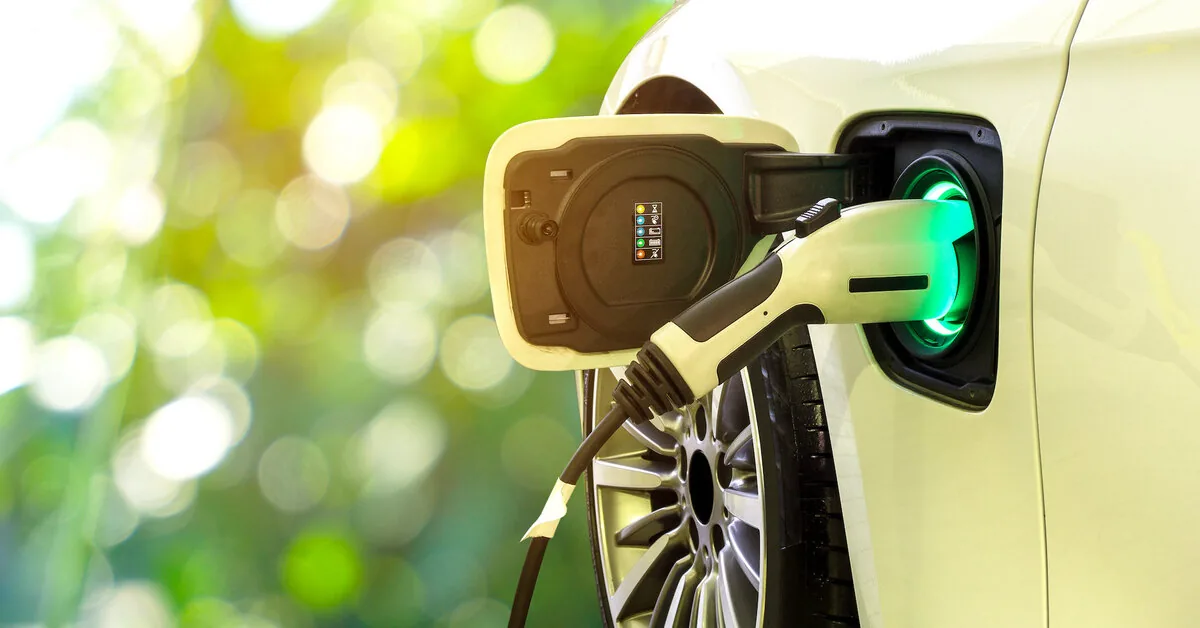
The essence is simple: an electric car is charged at home, and its owner receives a reward for every kilowatt-hour charged. This is because green electricity charged at home helps fuel suppliers meet their obligations, so they are willing to pay for it.
Read more Lithuanian champions in a Turkish cauldron: «Kauno Žalgiris» – «Beşiktaş»
Encouraging greening of the transport sector
DAEI – units of fuel from renewable energy sources accounting. According to the Alternative Fuels Act, fuel suppliers must ensure that an increasing share of the fuels they supply to the market is produced from renewable sources. By 2030, energy from these sources must account for 29% of the energy consumed in the transport sector.
The DAEI system was created to account for the fulfillment of this obligation and is administered by the energy resources exchange operator “Baltpool”. DAEI units are generated for green energy supplied to the transport sector, which can be traded. Suppliers who do not reach the required share themselves purchase the missing units from other market participants.
Until now, DAEI units could be generated by fuel suppliers and public electric vehicle charging point operators. In February this year, the procedure was updated by order of the Minister of Energy – now DAEI units can also be generated for electricity supplied through private charging stations, including those used in households.
Aggregators will represent residents
Residents themselves will not need to register in the system or trade units – aggregators will take care of this. These are legal entities representing private charging station owners: they account for and declare the electricity consumed for charging electric vehicles at the stations, sell the generated DAEI units to fuel suppliers, and return part of the received benefit to the station owners.

“Electrification is the next important stage in Lithuania’s energy transformation. It is very important that the benefits of renewable energy development, electromobility, and flexible consumption are felt as much as possible by the whole society. Therefore, at the Ministry of Energy, we created the DAEI system and integrated electric vehicle users into it as one of our ‘EnergyTech’ solutions, facilitating the expansion of electrification and the integration of renewable energy,” says Minister of Energy Lukas Savickas.
It is expected that with the new procedure coming into effect, the number of market participants offering aggregator services and the offers to residents will steadily increase. The system itself and the Alternative Fuels Act were created to encourage the electrification of the transport sector and the use of alternative fuels. Such an incentive should lead to a faster phase-out of fossil fuels, while also strengthening economic stability and reducing dependence on fuel price fluctuations.
Read more Nurse Nina never tells the patient that everything will be fine: revealed what works better
First offers already on the market
Energy company “Ignitis” was one of the first to offer aggregator services. The “Ignitis bONus” program is intended for residents: independent electricity supply customers who join it accumulate 3 cents for every kilowatt-hour consumed at the home station. The accumulated amount replenishes the balance of the “Ignitis ON” app monthly and can be used to pay for charging in the public network.
The benefit is easy to calculate. If an electric car travels about 20,000 kilometers per year and its average energy consumption is 18 kWh/100 km, about 3,600 kWh of energy is needed annually. If the electric car received all the required energy from the home station, approximately 108 euros would accumulate per year according to the “Ignitis bONus” rate. This amount could be used to pay for charging in the public network.
A separate model is provided for business and the public sector: the aggregator connects to the company’s private charging station management system, accounts for the electricity consumed for charging there, and transfers the set amount per megawatt-hour directly to the company’s account. Employees’ charging habits do not change because of this.

“The DAEI system turns the daily habit – charging an electric car – into a part of a common goal. Every kilowatt-hour charged at home or in a company parking lot helps make transport greener and provides concrete benefits to the station owner. Our task is to ensure that participation is so simple that one does not even have to think about the system itself,” says “Ignitis” CEO Andrius Kavaliauskas.
What is important to know for those who want to participate
Participation conditions depend on the chosen aggregator. For example, participants in the “Ignitis bONus” program need the “EnergySmart” app with smart charging enabled and an active “Ignitis ON” account. Both the electric car and the home charging station must be compatible with the app. The contract is signed in self-service, and consent for data exchange must be submitted in the ESO self-service.
For business clients, most of the work is done by the operator: before signing the contract, the stations are checked and connected to the management system, and the data on electricity consumed for charging is then declared automatically. The first results of the new procedure are expected to be seen this year – as the number of electric cars increases, it should accelerate the greening of the entire transport sector.
Read more The masterpiece «Girl with a Pearl Earring» exhibited in Japan