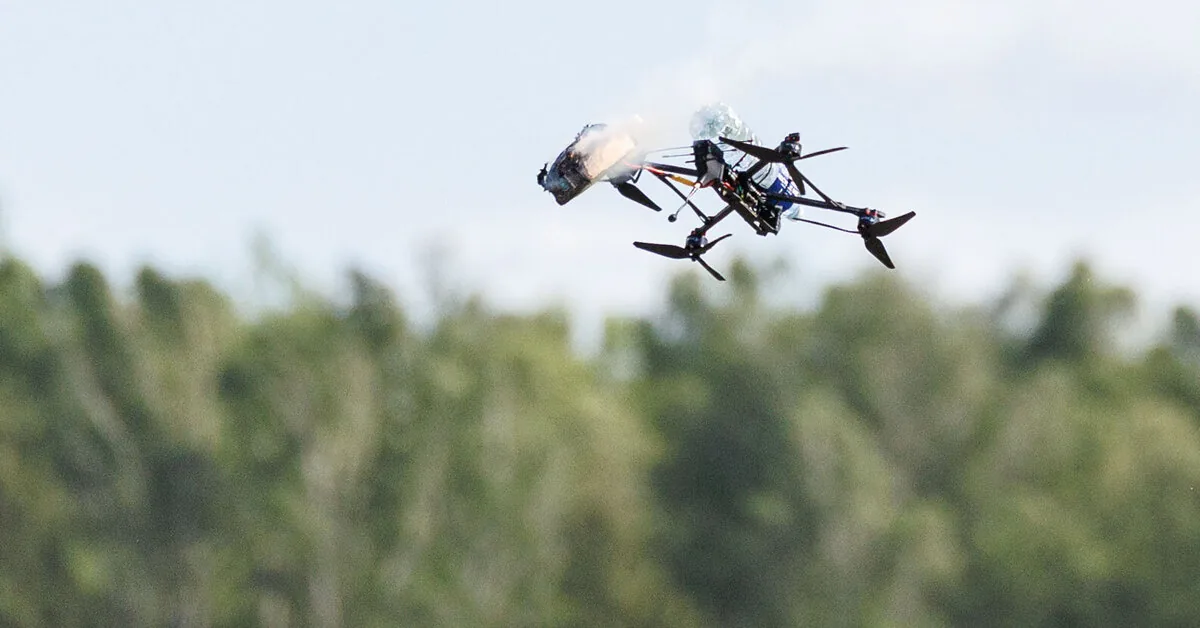
“Considering the hybrid air threats facing Lithuania, we must further strengthen the country’s defense and security. Therefore, we will allocate funding to businesses that implement innovations in the defense sector. This will help strengthen the country’s defense capabilities, ensure technological independence, and resilience to threats,” says the Minister of Economy and Innovation Edvinas Grikšas.
Read more The toilet visitor needed both patience and rescuers, and the rescuers only needed a crowbar
Companies that conduct scientific research, experimental development, and create innovations or purchase such services from Lithuanian science and study institutions (universities, research centers) or experienced innovation creators will be eligible for funding.
“Currently, we observe growing business interest in defense technologies and their development. Therefore, we help Lithuanian companies strengthen competencies, test new ideas, and grow in high value-added areas that are important today both for the country’s economy and security. Even small investments often become an important impulse for companies to experiment, create prototypes, and move faster to real solutions,” says Monika Paulė, head of the Innovation Agency coordinating the call implementation.
Funding will be available to very small, small, or medium-sized companies registered in Lithuania, whose sales revenue in the last financial year was at least 10 thousand euros. Funding will be allocated only to high-level technology readiness solutions. This will reduce the risk of financing early-stage or low-applicability technologies.
The call for business is prepared considering the operational and functional needs of the Lithuanian Armed Forces and 4 priorities set with the participation of the Ministry of Economy and Innovation, the Lithuanian Armed Forces, the Ministry of National Defence, and the Innovation Agency.
Two projects will be funded under each priority, so funding can be received by 8 defense and security industry projects.
Read more Source: six people killed in Israeli strikes near the Lebanese city of Tyre
Under the first priority, increasing security and integrating remote control solutions in air, land, and sea, technologies will be developed that enable sensors and connect them in various geographical environments.
Under the second priority, systems that destroy hostile unmanned systems or block their activities, as well as innovative technological solutions that determine the location of hostile unmanned system operators, can be created.
Implementing the third priority will enable force protection and survivability solutions, which can be autonomous and hard-to-detect tactical communication solutions for data or voice.
Under the fourth priority, developing counter-mobility and mobility solutions, underwater sensors for critical infrastructure monitoring can be created.
Applications under the “Defense Innovation Vouchers 3” measure can be submitted until July 3. The Innovation Agency coordinates the implementation of the call.