As the history of the center shows, Kęstutis Kuizinas led the Contemporary Art Center for 32 years – from 1992 to 2024, clarifying that until the center was established in 1997, he headed the Lithuanian Art Exhibitions Directorate, and was the director of the CAC until October 2024. 32 years is a solid result, say, for a marriage. Dramatic gaps and conflicts are in the past, decisions and prospects are balanced in the present together with a look to the future.
It was truly an era, so the first public moves of the new director (but not a new CAC employee) with openly welcoming texts and speeches attract attention and focus. Valentinas Klimašauskas worked as a curator at the CAC for 10 years – from 2003 to 2013. After leaving, he mostly worked as an independent curator, art critic, writer, and lecturer, and from January 2025 he is working here again, this time as director. Therefore, it can be said that his current position means a non-hostile opposition to the previous institution’s policy, which he knows well, as well as the international context. And he knows how to heal that policy if it was sick (or was it?).
What if we chose a characteristic Kuizinas exhibition as an example of his curatorship and compared it with Klimašauskas’s event? To form a pure equation.
What if we chose a characteristic Kuizinas exhibition as an example of his curatorship and compared it with Klimašauskas’s event? To form a pure equation. For example, “Cool Places,” the 7th Baltic States Triennial, held from October 2 to November 1, 1998. This was the first more ambitious international exhibition he himself contributed to. The CAC’s heyday and wild times, in which the center operated aggressively and ambitiously, like everything around at that time. And it was very good, wonderful, the best.
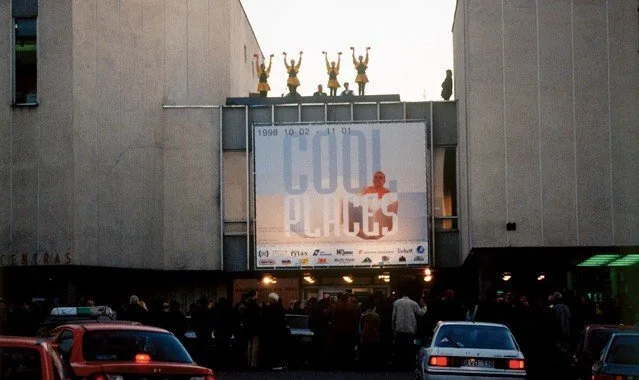
In this exhibition, the institution declared itself throughout the Baltic and Northern region with very strong, complex-to-implement works not only from guests but also from local authors and especially from them. It was a time when traffic almost stopped on Vokiečių Street due to overcrowding at exhibition openings. It was precisely at this exhibition that Artūras Raila, failing to realize a work with a National Socialist group, commissioned a percussion group with dancers on the CAC roof (“Us or Nobody”). Who now remembers the then-famous Mindaugas Murza, whose organization was illegal?
In this exhibition, the institution declared itself throughout the Baltic and Northern region with very strong, complex-to-implement works not only from guests but also from local authors and especially from them.
Evaldas Jansas revealed the building’s video system for security, and in one of the secret spaces grew cannabis (“Backstage and Scenes”). Deimantas Narkevičius in this exhibition merged the blacksmith Ignotas’s truth and the Catholic Mass radio broadcast (“Mass for the Truth of Blacksmith Ignotas”). Another cool installation was Dainius Liškevičius’s “In/Out,” automatic doors working on a reverse principle, one of the novelties of everyday life at the time (the doors close when the viewer approaches). At that time, the duo Aida Čeponytė and Valdas Ozarinskas was still active, immortalizing the process of changing the CAC floors with one of their most conceptual works (“Better to do something than nothing”). And Kuizinas himself immortalized in a rather sensitive way – publishing his love diary in the catalog.
At that time, no one spoke about speed and slowing down yet, but the famous Icelander Olafur Eliasson sowed grass in the center’s courtyard, documenting the natural process of grass sprouting on the walls nearby. And the Danish duo Ingar Dragset and Michael Elmgreen installed one of their “Structures of Helplessness” – “The Strange Bar Without Spectators.”
Everyone sought strangeness: to shock, surprise, stun. Estonian Annika Tonts set up a garbage truck remembered from Soviet times but already eradicated in the lower hall. Without explanations and long texts in the exhibition. Few large-scale and strong expressive works in the spacious CAC halls, welcoming an audience willing to swallow anything from the hands of the revered institution for the sake of art not yet fully known. The air was filled with the enthusiasm of the first free decade.
After ten years, in December 2008, Kuizinas told Jurij Dobriakov: “At one point, we ran too far, detached from our context, and now, as if having turned around and returned to a certain point, we have to try to explain what we are doing, because at least in the local context there are no institutions with which we could develop a smooth dialogue. That dialogue exists only at the international level, which probably is not very good either, since we rushed ahead too quickly. (…) I have often written about the CAC (especially in English) that it is undoubtedly a power structure, but in a rather powerless context – ‘a structure of power in a powerless context.’” The director missed contemporary and modern art museums and other activity units around.
The National Art Gallery in Vilnius was officially opened in 2009. Since 2015, fresh energy has been gaining in the exhibition halls of the Vilnius Academy of Arts. The MO Museum in Vilnius opened a few years later, in 2018. In the following year, 2019, with new leadership, other branches of the Lithuanian National Art Museum began to accelerate. In 2020, after the change of leadership of the Lithuanian Artists’ Union, the organization’s galleries revived. And now, after the reconstruction stillness (2021-2024), the center opens itself in a flourishing environment and has expanded its territory, which must be circled entirely (Sapiegų Palace to open from 2024).
And from January 2025, the new CAC director steps onto the stage using a completely different rhetoric. He names generosity – aesthetic, intellectual, informational, emotional, and empathetic – as the main principle of activity. He promises a more open and audience-understandable CAC, while preserving the ambitions of a professional art institution. Without arrogance, to which the viewer was accustomed, but with an open heart and noble goals.
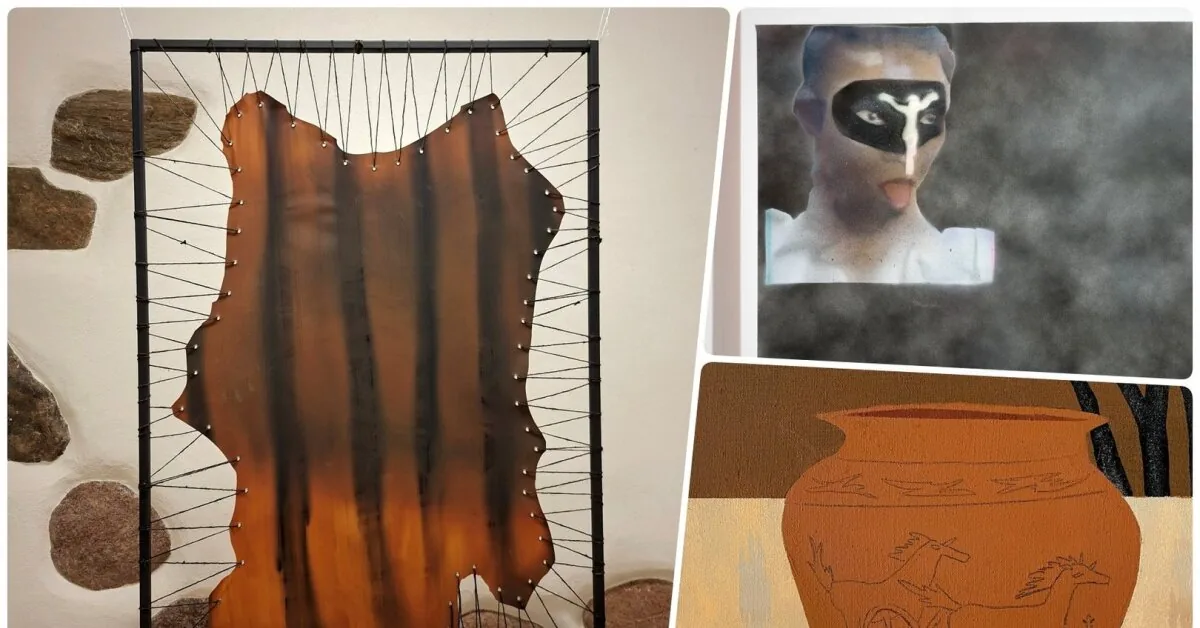
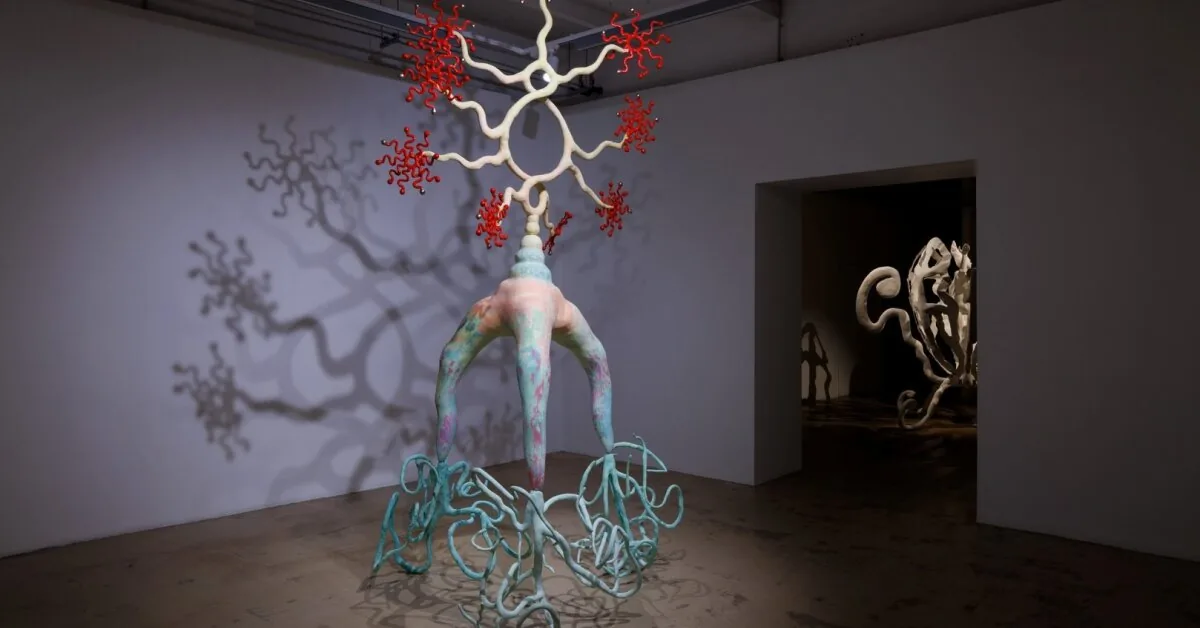
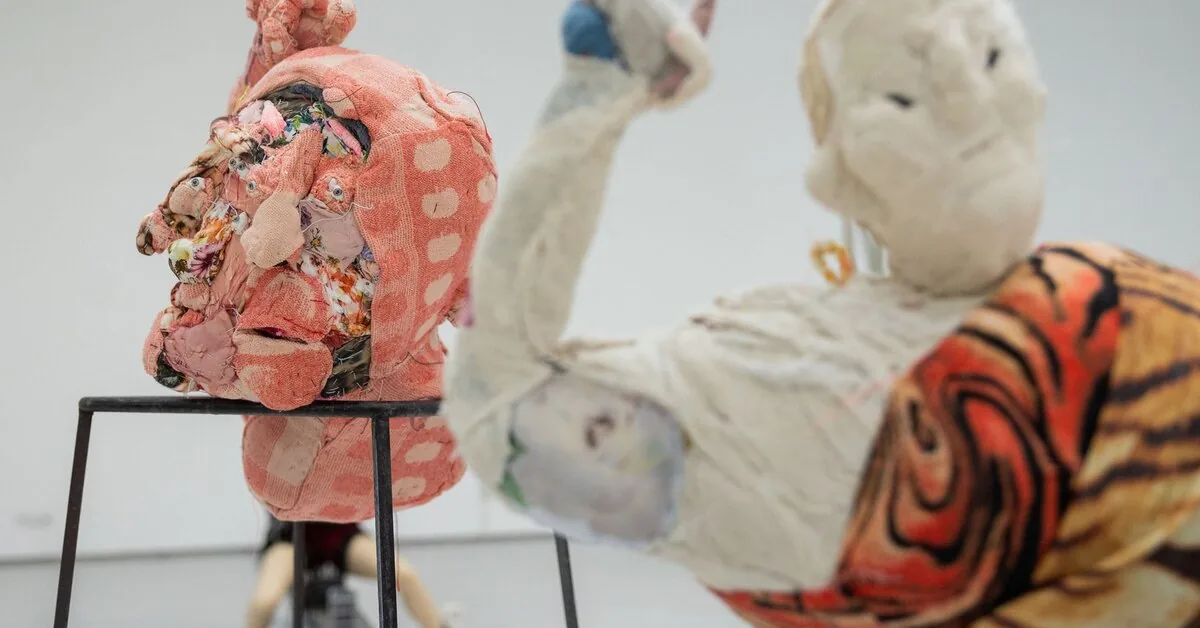
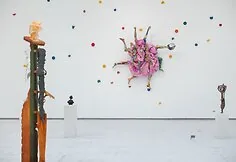
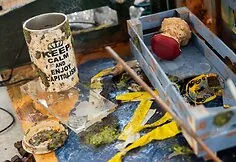
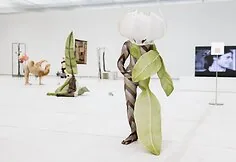
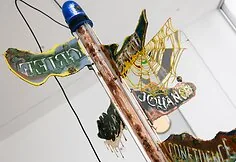
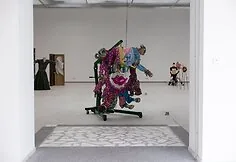
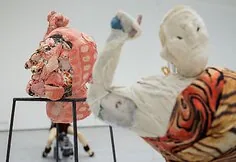
True, almost three decades have passed since the “Cool Places” era, the exhibition authors have built long careers, and the middle generation has entered relevant art platforms. In the didactics of the “Superglue…” exhibition, the geographical coordinates of the artists are no longer indicated – they live in many places, without a fixed single country. They create a lot – their works, placed in the CAC halls, seem to be created in a unified style – the exhibition arranged in the spaces looks so uniform, full of visual adventures.
It is convenient to read about possible interpretations of the objects right here in the compact and laconic exhibition guide. There are many of them, they form a coherent network of figures in which the viewer does not need to wander, but it is not a literal illustration of ideas either. Compared to Kuizinas’s exhibition, the representation of Lithuanian artists is almost analogous, with many forgotten and newly presented names or currently active authors. The large LGBTQ+ category that has appeared seems to be not a geographical or age difference, but gender.
In the didactics of the “Superglue…” exhibition, the geographical coordinates of the artists are no longer indicated – they live in many places, without a fixed single country. They create a lot…
Both Kęstutis’s and Valentinas’s exhibitions are a celebration of art and a feast for the eyes, a festival. “Superglue…” is many intimate stories hiding dramas and joys. This exhibition is layered, architectural, grown tall: heavy things are sunk deep into the basement. It is the short film “Martin Cries” (2017) by the openly emotional Jonathan Vinel: a computer-freckled young man wanders looking for friends and not finding them, does not hide the pains of loneliness, and acts according to the language of the game “Grand Theft Auto V.” It seems the electronic screen is the only existence accepting tears, the last refuge of a hero fallen into despair, and it is one of the works most fitting the exhibition’s theme.
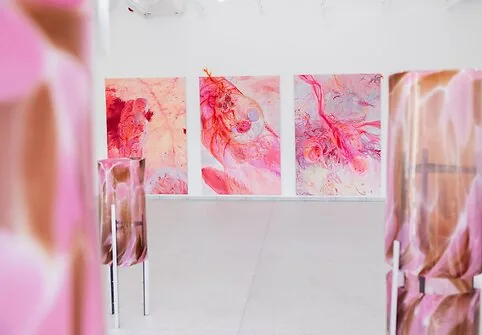
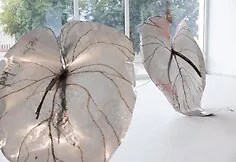
Going upstairs, the bright Southern Hall delights as an introduction with a spacious, sketchy, uncluttered color impression: glass columns, large metal flowers, wall and canvas paintings, and pink shades everywhere, shining even on a not sunny day. All this creates eager curiosity: what’s next?
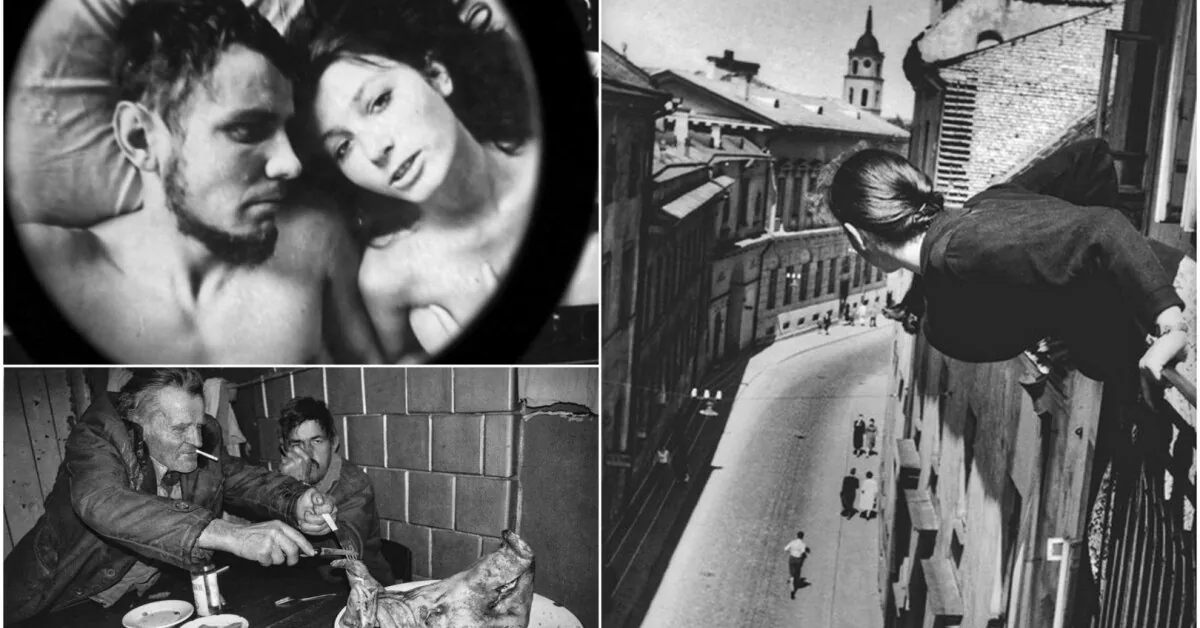
And next – the Great Hall, which is quite a challenge for every curator. Valentinas decided to conquer it with content, placing in the center a 1968 excerpt from the film “When I Was Little” by film director Algirdas Araminas, which voices the space and spreads a romantic, positive aura of the film’s characters. The key black-and-white retro insert from the past of the Art Exhibitions Palace gathers around a whole group of colorful, crafted, often handmade or simply primitively made, strange construction compositions.
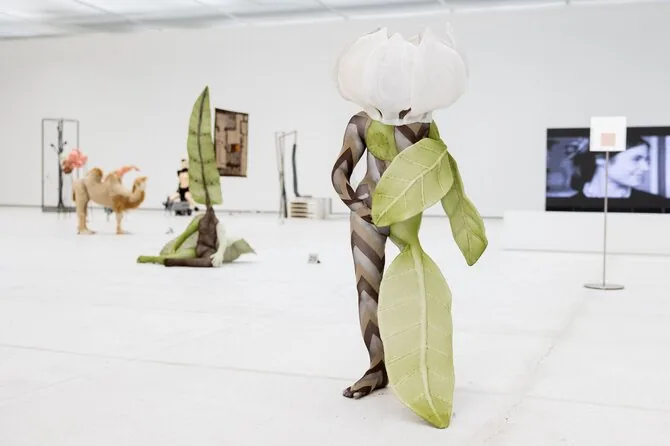
And although the initial impression of this hall also charms with its visual beauty, a closer acquaintance thanks to the guide calms the joyful confusion – everything is covered and clear. The Northern Hall subtly continues the black-and-white tradition and speaks with muted photographic and drawing plots. (Cheers to the architectural studio “INBLUM architects”!)
“Superglue…” seems to have turned heads and made one forget the equation mentioned at the beginning of the text. The obvious mastery of both exhibition concepts, although opposite to each other. One is cold, charming, and emotionally restrained, the other more based on networks, smaller scales, community. Maybe it is important that the present is alive and impactful, which is optimistic. And who wins?
Read more War in Ukraine. Analysts explained Putin’s strategy: why the Kremlin rejects peace talks