








Dr. Marija Montvydaitė, a rheumatologist at „Hila“, points out that gout is still accompanied by many misconceptions that can complicate its recognition and treatment, according to a press release.
Read more Ukraine appealed to the countries of the world: calls to close the «Russian houses»
Several risk factors come together in autumn
According to the doctor, there is no clear seasonality of gout, but when the weather cools down, several daily habits change, which can be significant.
“At lower temperatures, the solubility of urate crystals decreases, so they tend to accumulate more in joints farther from the body’s center. At the same time, in autumn we drink less fluids, eat heavier food more often, and move less,” explains M. Montvydaitė.

When the weather cools, thirst is felt less strongly, so the amount of fluids consumed often decreases. This is important because a large part of uric acid is eliminated from the body through the kidneys.
Diet also changes – lighter summer dishes are often replaced by heavier food with more meat. Lower physical activity can also contribute to weight gain and metabolic disorders, which are closely related to gout.
Nothing hurt in the evening, but in the early morning it’s hard even to touch
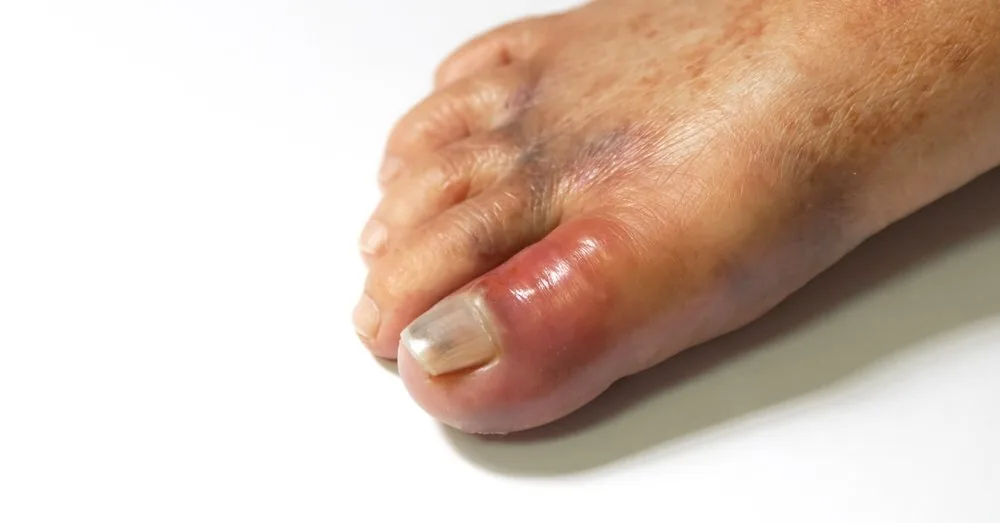
According to M. Montvydaitė, one of the distinguishing signs of gout is the very sudden onset of an attack. Unlike some other joint diseases, symptoms can develop in just a few hours.
“A person may go to bed in the evening without feeling any symptoms, and wake up in the early morning due to very severe joint pain and swelling. Sometimes the pain is so intense that even the touch of a blanket can cause it,” the doctor says.
The most commonly affected joint is the base joint of the big toe, but gout can also start in the ankle, knee, or other foot joints. The first attacks are not necessarily very severe – sometimes they last briefly and pass on their own.
M. Montvydaitė also draws attention to another stereotype – gout is not only a disease of older men. Women, especially after menopause, can also suffer from it, and with a genetic predisposition or certain metabolic disorders, it can manifest at a young age.

Gout is still surrounded by many myths
One of the most common myths about gout is the belief that the disease can be confirmed or ruled out solely based on the concentration of uric acid in the blood.
“During an acute gout attack, the uric acid concentration can be normal or even decreased. Therefore, a normal test result alone does not exclude the diagnosis. Likewise, an increased uric acid concentration does not necessarily mean that a person definitely has gout,” emphasizes M. Montvydaitė.
Read more Latvian President: Europe would struggle to withstand a Russian missile attack
Increased uric acid concentration without symptoms typical of gout is called asymptomatic hyperuricemia. Diagnosis considers not only the test result but also the nature of the attack, comorbidities, and risk factors. If necessary, an ultrasound examination of the joints is performed, which allows assessment of both active inflammation and signs of urate crystal deposits typical of gout.
Another common belief is that gout is primarily a consequence of improper diet.
“Lifestyle matters, but gout should not be called solely a disease of improper diet. Very strict diets are usually neither purposeful nor sustainable, and if a person already needs uric acid-lowering treatment, dietary changes alone usually will not replace it,” says the doctor.
According to her, in gout it is recommended to limit large amounts of red meat and especially offal, some fish including herring, seafood, fructose-sweetened drinks, and alcohol, especially beer and strong alcoholic beverages. Adequate fluid intake, normal body weight, and regular, individually tolerated physical activity are also important. However, during an acute attack, the strongly inflamed joint should not be exercised – it is better to give it rest.
Attacks may even increase when treatment starts
Paradoxically, gout attacks may temporarily increase at the beginning of treatment. According to the doctor, this does not mean that the medication is unsuitable or has worsened the disease.
“As uric acid concentration decreases, urate deposits accumulated in tissues begin to mobilize, so attacks may temporarily increase at the start of treatment. For this reason, treatment is started at a low dose and gradually increased,” explains M. Montvydaitė.
It is also wrong to think that when an attack starts, the ongoing uric acid-lowering medication must be stopped. If the patient is continuously taking, for example, allopurinol, it is usually continued, and the acute inflammation itself is treated separately.
The goal of long-term treatment is to achieve and maintain a sufficiently low uric acid concentration. Usually, a concentration below 360 µmol/l is targeted, and in more severe gout – below 300 µmol/l.
“The most important thing is that the patient is not treated only for individual attacks for years. By maintaining the target uric acid concentration for a long time, urate crystals can gradually dissolve, and attacks can completely disappear,” says the rheumatologist.
Read more The «Banga» that won the Žemaitija derby remains in the fight for a ticket to Europe