





One of the authors, young writer Emilija Švobaitė, writes in the 2019 publication “#30. New Lithuanian Painting”: “Compiling a collection representing the artistic activity of one generation is an extremely difficult task. Especially if that generation, as in this album, we try to describe with the word youth. The concept of time is no longer self-sufficient, and chronology has long lost the power to name and define. (…)
Read more Employee training will pay off before retirement: study reveals employers’ attitude towards age
Nevertheless, the significance of youth today is exceptional. As the statistical life expectancy constantly lengthens, a person remains young longer than ever before. This period of life seems extraordinarily attractive and vibrant to us. (…) Constant youth, the working age, has become the only desirable mode of existence.”
Consciously, as an introduction to fragments of young painting in the map of September exhibitions in Vilnius and Kaunas, I use the thoughts of a young person. I myself have the advantage of distance from this age period, while Emilija has the courage and freedom to juggle thoughts. Seven years have passed since the release of the collection, including the strange quarantine years and the war that began. Some of the authors from those 30 selected young artists have become “famous and recognized,” while some are almost invisible.
It seems to me that it is still too early to prepare a new publication, but it is always interesting to fish in the abundance of current art events. Finally, I warn that this time I will limit myself to the traditional concept of painting not only due to the limited scope of the text but also consciously specifying the problematics. Although a considerable number of young painters are no longer satisfied with painting alone and go beyond the discipline, conceptualizing and amusing themselves and the viewer in various ways.
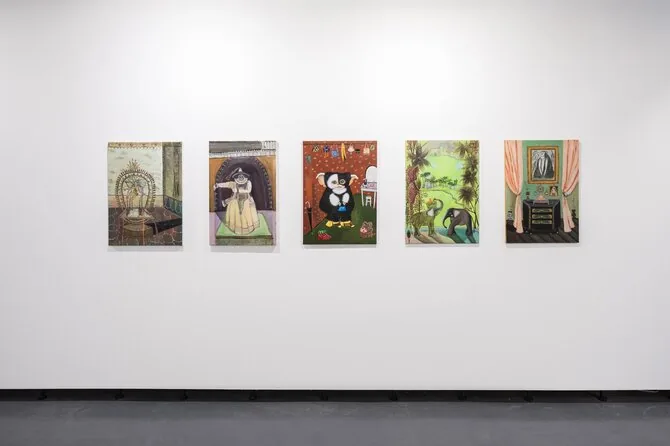
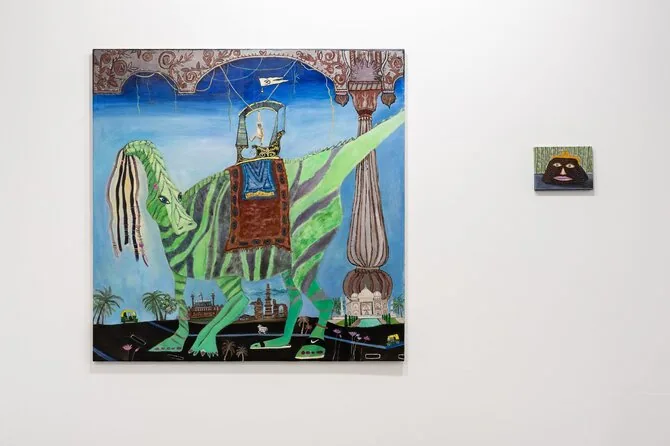
But let’s start from the beginning. More precisely – from “The Rooster Gallery,” which claims to be the guardian of the young. Therefore, I gladly dive into the world of Raminta Blaževičiūtė-Mozūraitienė’s “Myths of Everyday Life” shown there in September. If the youth of a woman-child means games and toys, fairy tales and myths, fantastic animals and palaces – we have hit the mark. The author is inspired by two trips and countries – India and Finland. However, the exhibition is homogeneous, and guessing the origin of the images is pointless because everything is united by fantasy. True, the colorful childishness of the canvases can be addressed as much to the ordinary exhibition visitor as to the artist’s offspring.
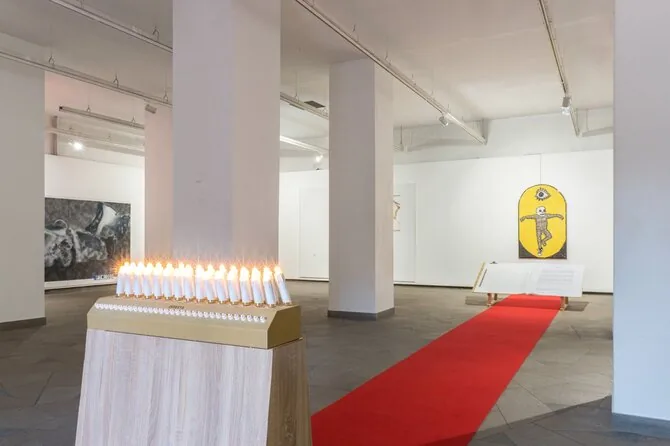
Another author from “The Rooster Gallery,” Kazimieras Brazdžiūnas, exhibits his “Dance with Death” at the Pamėnkalnio Gallery and can be compared with Raminta as a diametrically opposite world. This author stands out with very ambitious ideas and a dose of sarcasm. Many of his sprayed paintings are repetitions based on historical paintings, but not only. We were already able to observe the advantages of his sprayed painting last year in the huge “Battle of Žalgiris Project” shown at the Radvilos Palace.
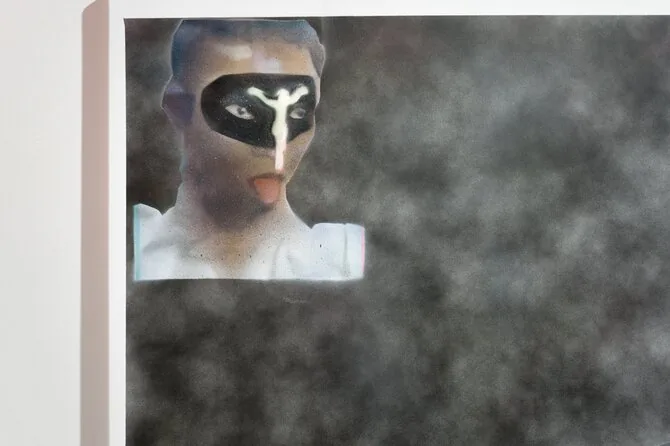
At Pamėnkalnis, we have more detailed versions of the work, a lot of bare canvas, so the images seem to be created in one breath, watercolor-like. With the entire three-dimensional installation, this is a contemporary techno insert into the “danse macabre,” whose iconography traditionally breathes the Middle Ages, but here beats to the rhythm of rave. Kazimieras tries to formulate references for the viewer and writes a sharp annotation. His older predecessors did not bother with verbal articulation in such cases, and contemporaries rather invite text writers. Therefore, I respect Kazimieras’s honest efforts.
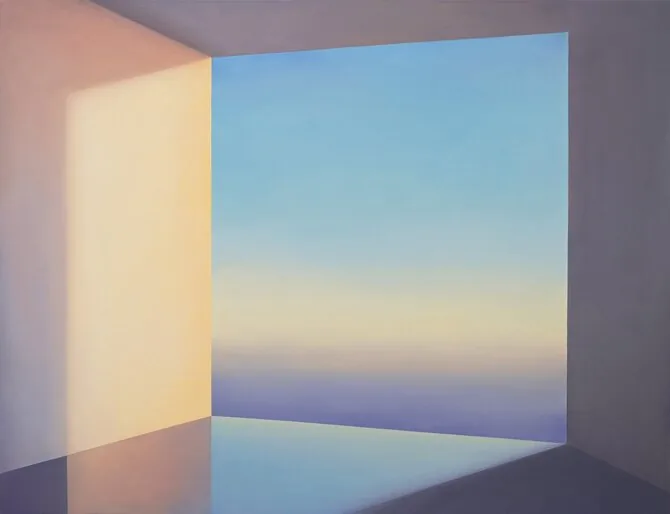
Meanwhile, Gabrielė Aleksė’s solo exhibition “Frequency 7” at the “Meno parkas” gallery in Kaunas presents new, never-before-shown paintings created by the artist while exploring the connection of binaural rhythms with perception, visual imagination, and the creative process. What does all this mean? I don’t know, although I read the annotation and lay in a dark tent with headphones on.
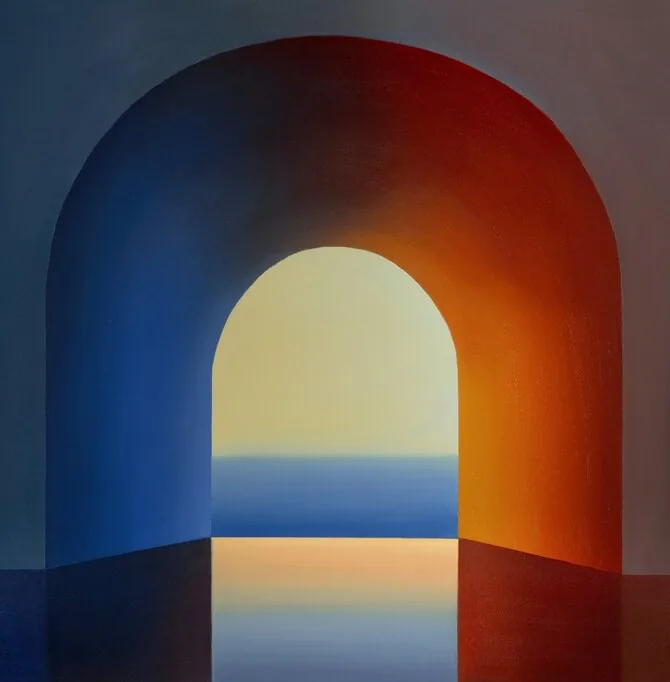
“The starting point of the exhibition is the 7 Hz rhythm, corresponding to the theta brainwave range and associated with hypnagogia, dreams, and deep relaxation. In the exhibition, 7 Hz becomes not so much a number as a threshold to more difficult-to-define territories of experience.” It is based on the theory of American consciousness researcher Robert A. Monroe (1915–1995), grounded in the belief that human consciousness can operate independently of the physical body. Despite the complex theories, the bright streams of light and space attract and invite but also threaten with repetition and doubt whether it is possible to illustrate neurotheory with quality painting.
Read more Rare antique treasure stolen – but thieves left the most valuable item
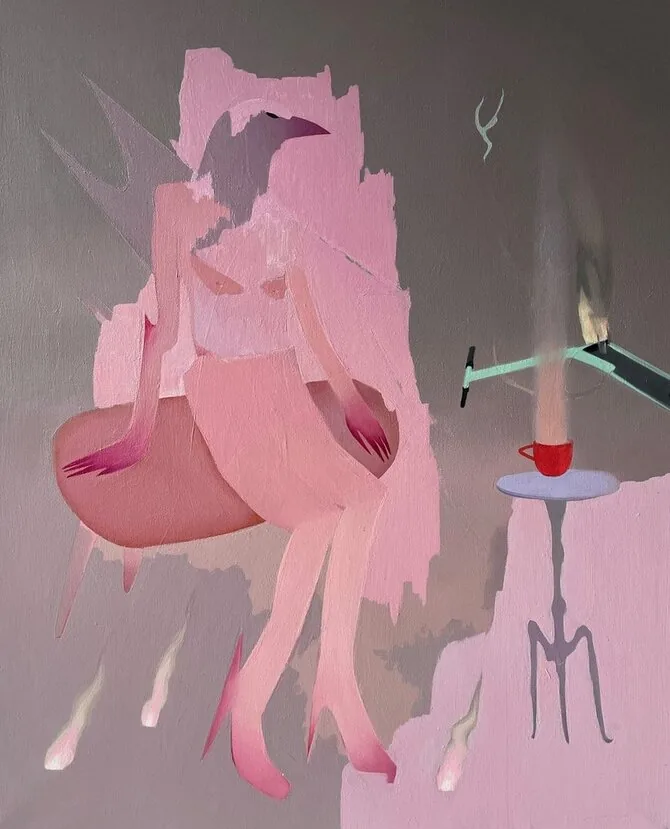
“Contour Art Gallery,” located in Vilnius, stands out for its original choices and persistence, and not only because of the premises (only last year, after migrating through locations, the gallery finally settled in its permanent premises, where it will celebrate its 10th anniversary on September 30). In autumn, it dedicated its spaces to Ana Vostruchovaitė’s “Digital Garden,” which has not yet been exhibited here and who lives between Lithuania and Poland. After all, in everyday life, we encounter an abundance of virtual reality and all-powerful screens, so the digital does not bypass gardens either.
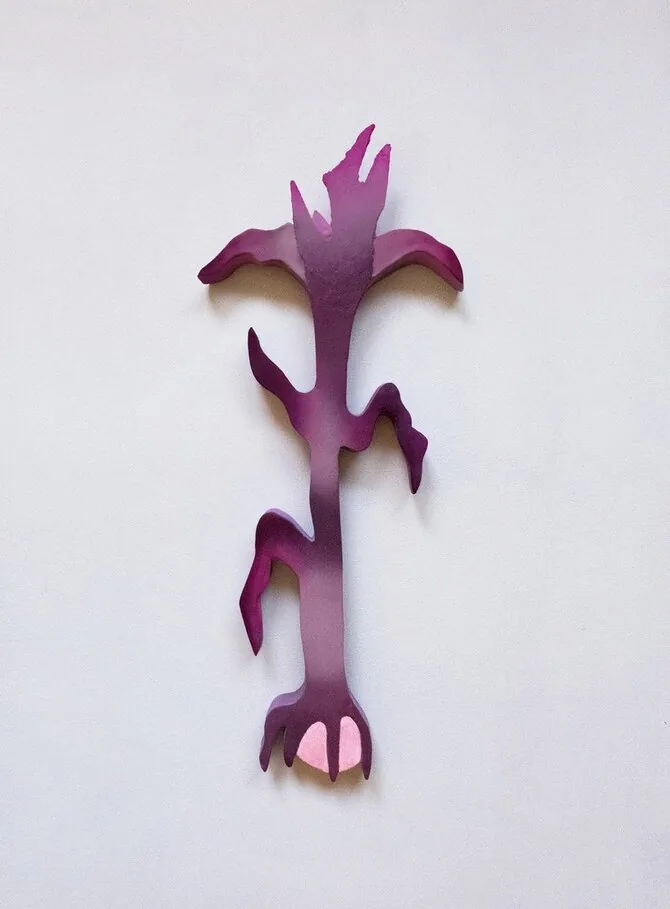
Ana Vostruchovaitė, born in Vilnius, graduated from the Warsaw Academy of Fine Arts in 2019. Her diploma work was awarded the Rector’s and Stefan Gierowski’s prizes of the Academy and presented at the exhibition of the best diploma works of 2019. It is no coincidence that Ana’s painting and the jacquard fabrics and plaster reliefs woven for the exhibition represent a completely different school than those discussed earlier.
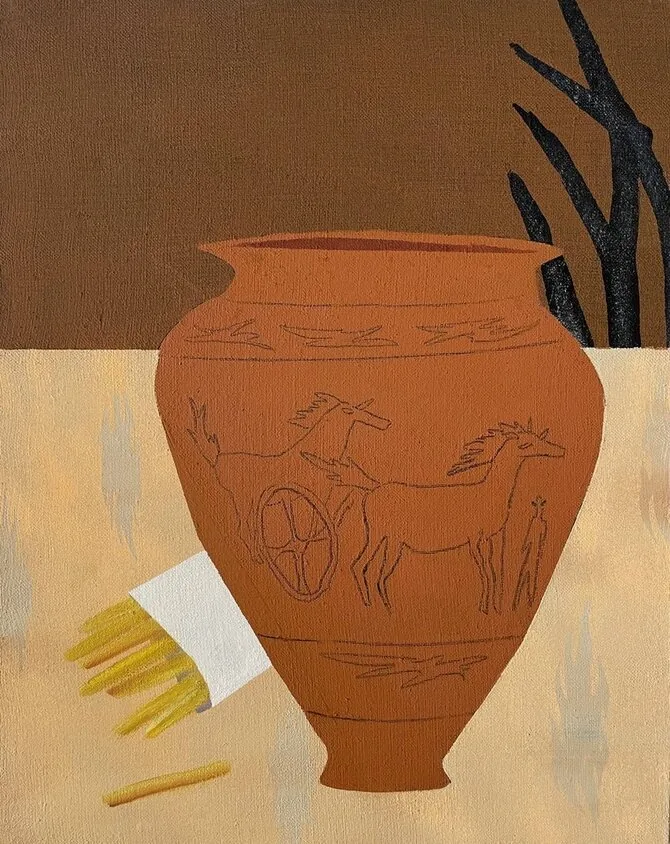
Her paintings float very easily, they are decorative, soaked in pinkness, thin-layered, stylized, and flat-figured. Their language is as light as air, they can organically fit into the atmosphere of beauty salons and the sweet world of young girls.
At the VDA Kaunas Faculty gallery “Muitinė” – “Young Kaunas Painting ‘26” (curator Aušra Vaitkūnienė), gathering a group of 12 more or less advanced personalities, distanced from school or not yet. This differs from personal shows by its diversity, in which unity is impossible, as in group overviews of one generation, which we see in the “Young Painter Prize” (YPP) or “Zabolis Art Prize” young painting competitions.
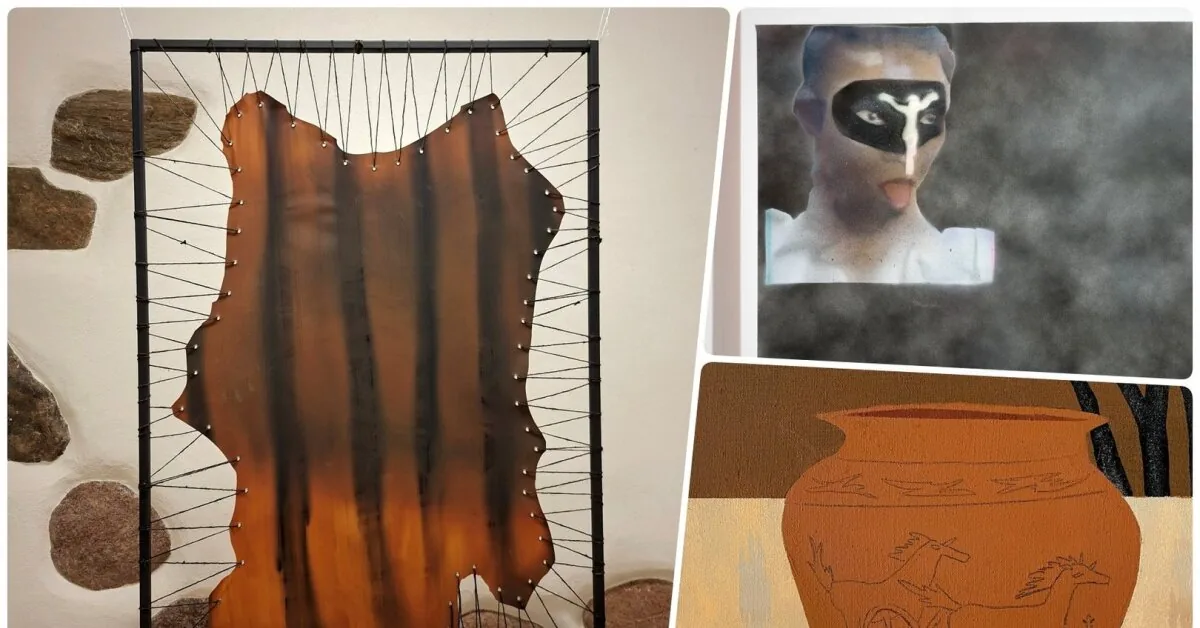
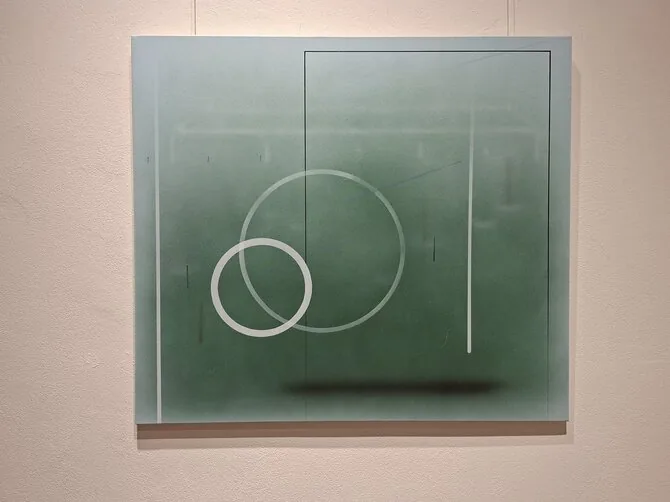
I chose three favorites as types of painting subgenres. These are Lukas Marciulevičius’s geometric abstraction “GO4.03,” which probably required both a compass and a ruler, but a stylish, although perhaps too restrained, result was achieved;
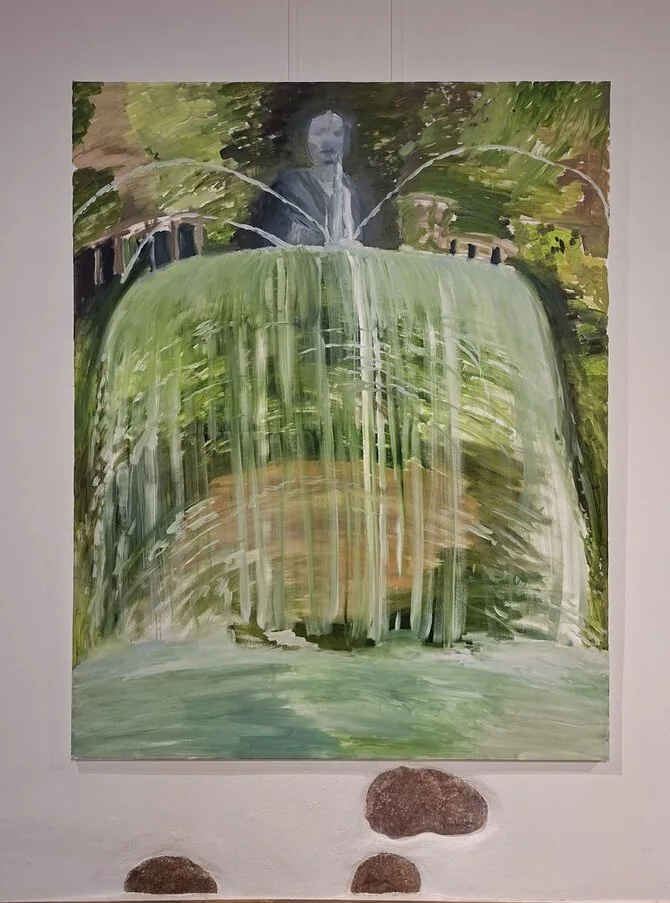
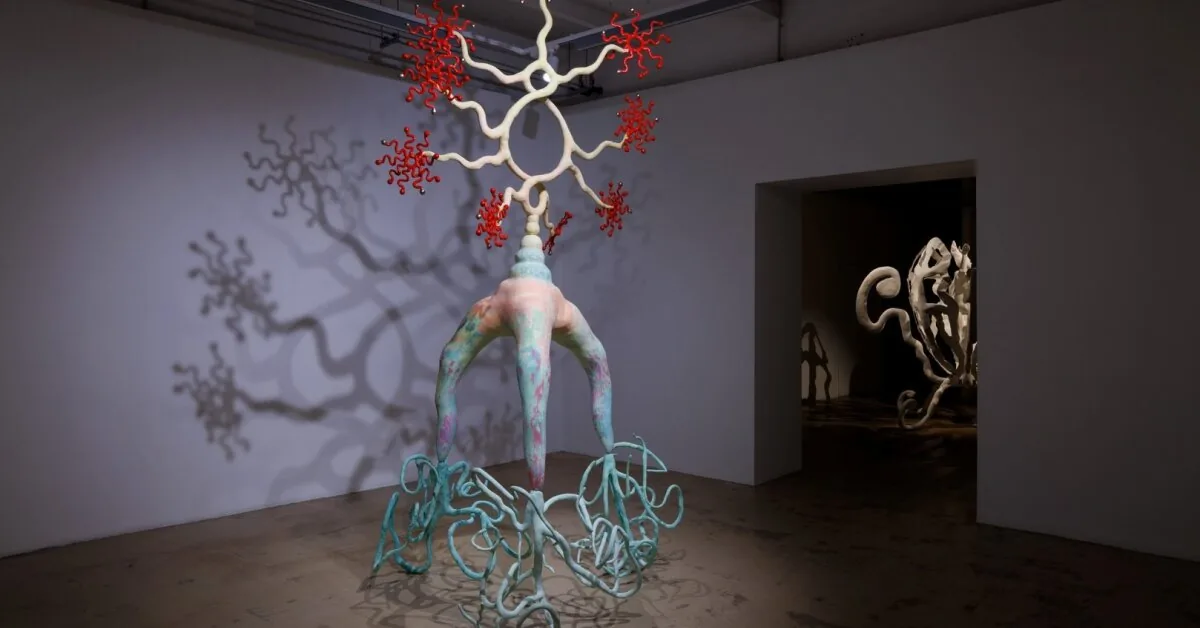
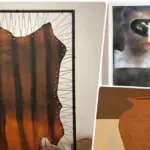
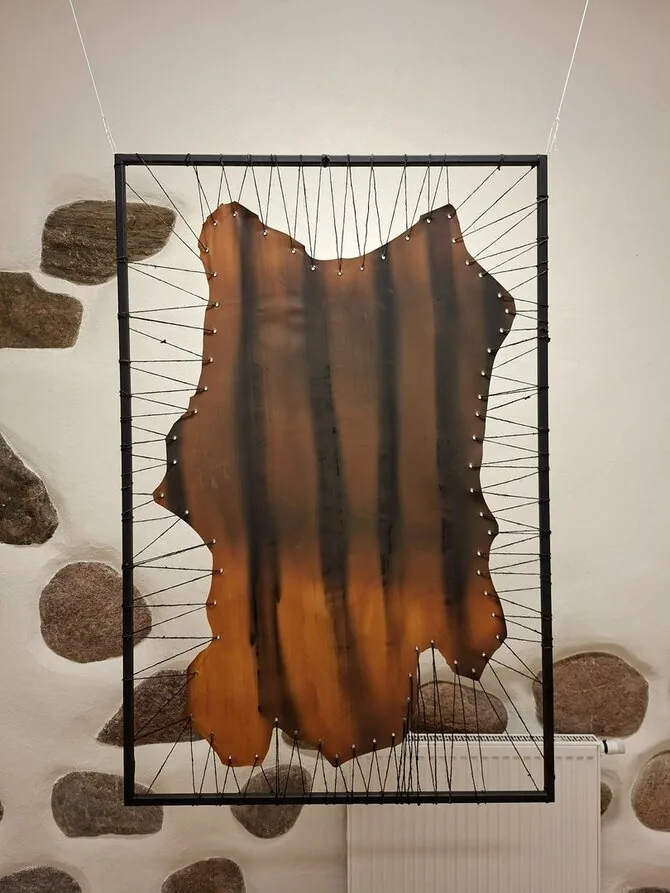
Sandra Kvilytė’s “Sketch for a Spring,” dominating the halls as an expression and earth color frenzy, and Ligija Žilinskienė’s “Residue” – like a relic from prehistoric hunter times, an interesting and less popular technological experiment here made from bioplastic (gelatin, glycerin, red clay), ink, jute twine, and metal. I wish young artists to experiment more boldly, despite the still prevailing melancholy and fear to dare.
I offer this tour through the exhibitions as a small compensation for those who did not participate in the 11th Vilnius Gallery Weekend from September 10-13, when international experts and ordinary art lovers, evaluating in family or friend circles, roamed the city.
Also for those who have not yet visited Kaunas this autumn, without which our cultural panorama would be incomplete and fragmented. And finally, I dedicate the text to young art enthusiasts, regardless of its type or genre. For all the reasons listed at the beginning.
Read more Rising fuel prices hit US airlines: flights canceled and capacity reduced