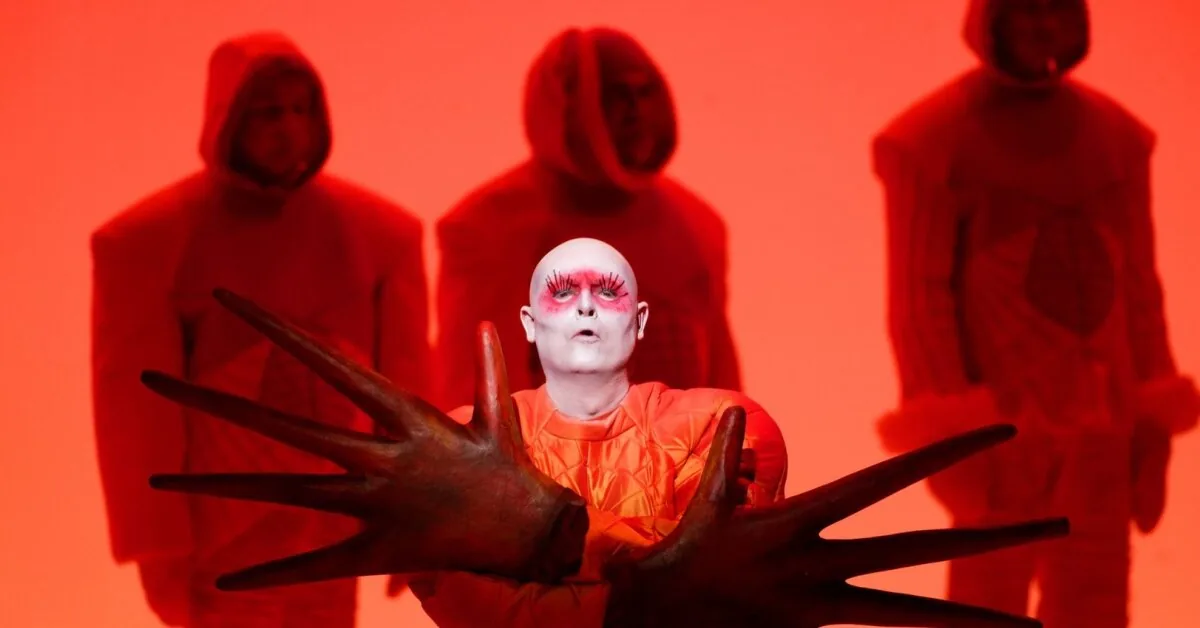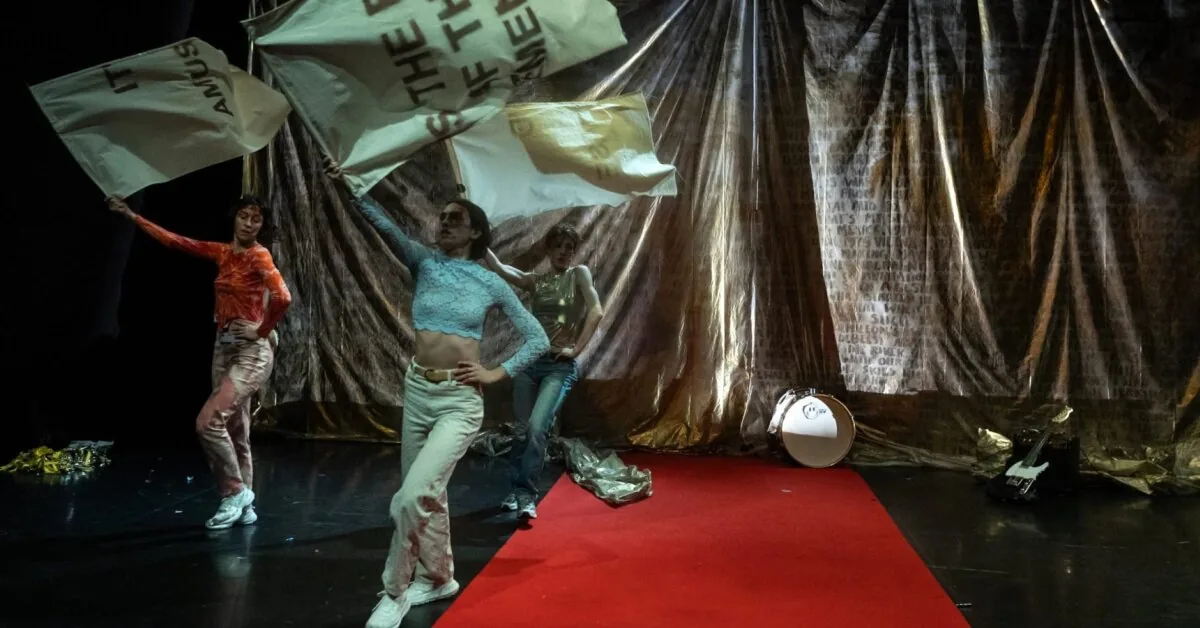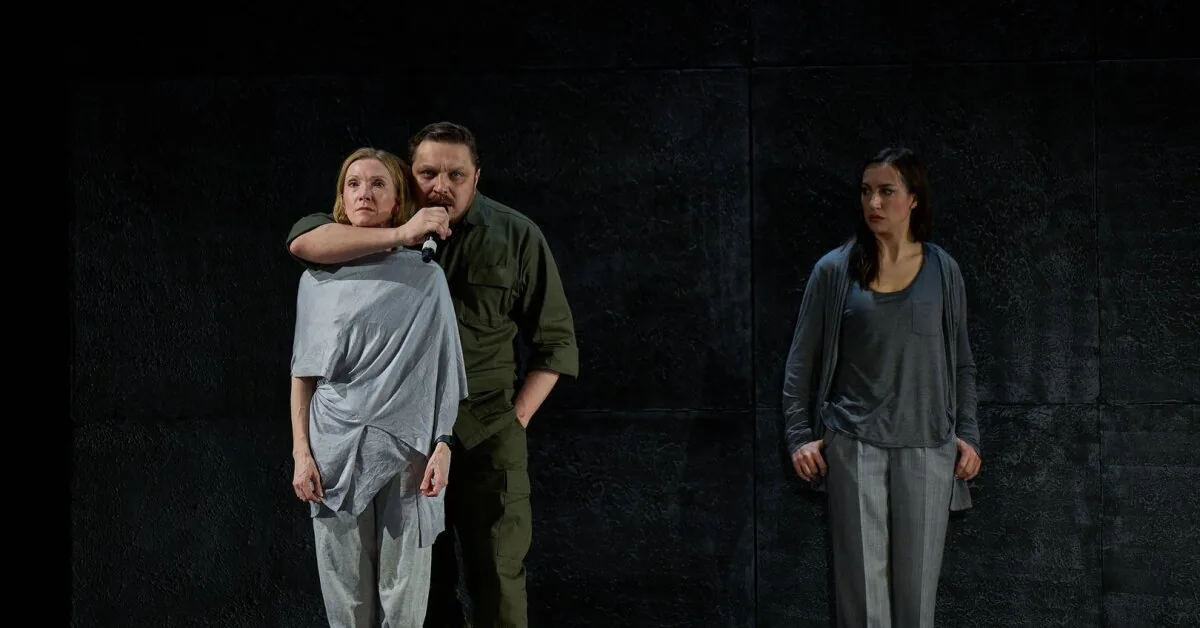







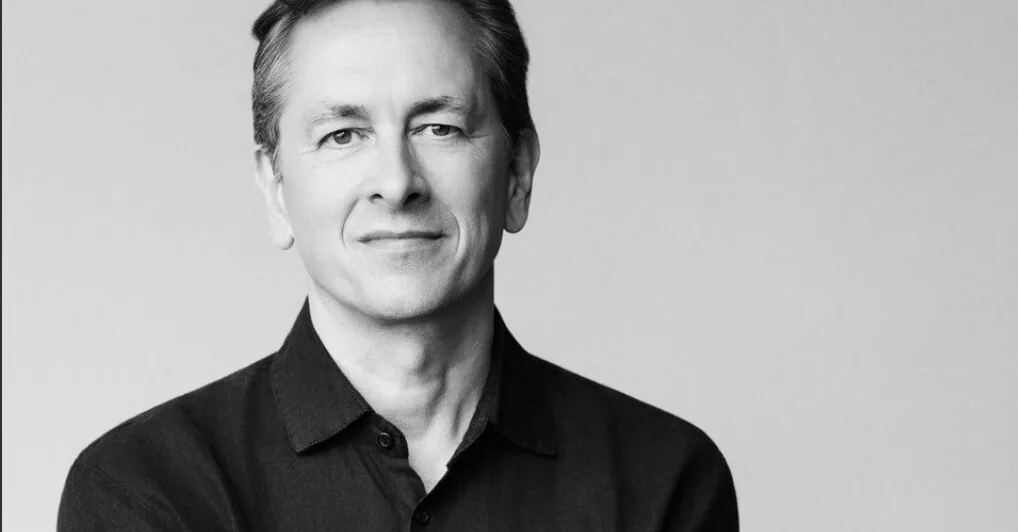
The connection of Morrellas, a Laurence Olivier award winner, with Lithuania began even before he became part of the “bohemians” creative team – his other half is from Lithuania, so Vilnius was already familiar to the creator. Here he saw some of the troupe’s first performances, and soon Dalia Ibelhauptaitė included him as well. From “Werther” to “The Troubadour,” “Faust,” “Tosca,” “Macbeth,” and other works, Morrellas became one of the people shaping the aesthetic language of “Vilnius City Opera.”
Read more Premiere at the «Auto Expo Vilnius» show: «Omoda 5 Electric» debuted in Lithuania
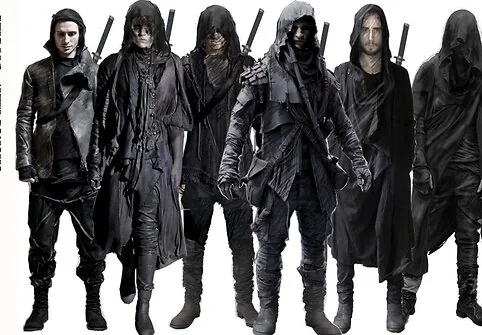
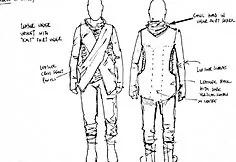
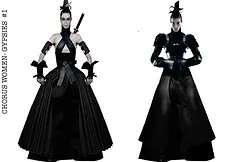
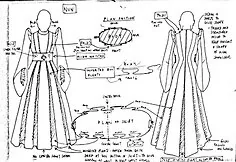
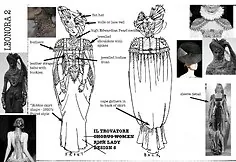
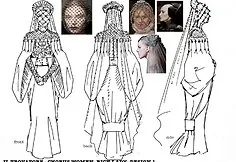
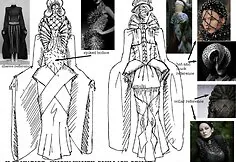
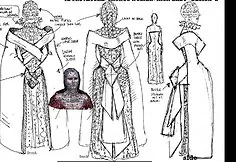
“Dalia awakens the teenager in me,” says Morrellas. And this phrase perfectly describes not only their creative relationship but also his entire experience in Vilnius: lots of improvisation, very little time, limited resources, but so much imagination! That’s what we are talking about one September morning.
– Your connection with Vilnius began even before you started working with the “bohemians.” How did you meet Dalia and become part of her creative team?
– To be honest, I don’t exactly remember when we first met. I already knew about Dalia from her work in the United Kingdom, we had mutual friends in the theater and opera world, and my other half is from Lithuania, so I used to travel to Lithuania myself. We got to know each other better in London, I started hanging out with Dalia and Dexter Fletcher, and I saw “La Bohème” in Vilnius.
Then one day Dalia asked if I would like to create the scenography for “Werther.” How did she invite me? Threatening with a gun! [Laughs.] No, I’m joking. She simply offered, it seemed interesting to me, I also saw that I had time – and everything started very organically. Then I got caught up in that completely crazy process of how performances were realized in Lithuania back then: you get in the car, drive across all of Vilnius looking for props or a sewing workshop, you don’t really know where you’re going or what you’ll find there. Since I didn’t speak the language, it was a crazy excursion for me.
– You have worked with many large opera institutions. From that perspective, how were the early “bohemians” different? What creative freedom or risk was easier to allow yourself in Vilnius than in a big theater?
– There is chaos even in big institutions. [Laughs.] But the first time working in Vilnius, I hardly knew anyone, didn’t know the audience, didn’t have many friends here, so in a way, I didn’t feel pressure. When you work in your own city, among your own people, you feel much more observed. In Vilnius, at first, it was quite a liberating state.
Also, the Congress Hall space itself and the company’s way of working had an experimental energy. Sometimes you take risks and hit the mark, sometimes not. Some ideas were born without even knowing if they would work at all, and we found solutions during the process.
It’s also important that in the case of “Vilnius City Opera,” Dalia is essentially the company herself. In a large institution, when you submit a project, it enters a system: management layers, budgets, approvals, and later changing anything becomes difficult. Here, the decision-maker is right here. If we come up with a crazy design idea, Dalia can turn the whole ship because of it.
– What does the beginning of your creative work together generally look like? Does Dalia come with a clear vision, or do you find the direction together?
– Our first conversations can revolve for quite a long time around absolutely everything except design. [Laughs.] We often start with what we don’t want. How not to do this? Which direction do we not want to go? Sometimes we immediately look at images, sometimes we meet, talk for a long time and decide nothing, and I go home, gather materials, and come back again.
Dalia has a very strong visual sense and is very interested in contemporary art, culture, design. I like that she can show something I haven’t seen and say, “Look, maybe this could be a starting point.” I guarantee not all directors work like that.
And I like the pace. With other institutions, a project can start a year or a year and a half before the premiere, but with “Vilnius City Opera,” everything often fits into about six months. I actually find that more convenient – I like to start and finish in one go. When a project drags on for months, you lose momentum and have to check old emails to see who decided what.
– Your relationship with clothes started very early and was based on a “do it yourself” philosophy – as a teenager, you created from found items, old curtains, experimented with goth aesthetics. How did clothing generally become your means of expression?
– My mother sewed, my grandmother knitted a lot, so I started knitting and crocheting myself as a child. I constantly asked my mother to sew something for me, my grandmother to knit, and I explained very precisely what I wanted. A picky child!
As a teenager, I saw no point in earning money during holidays in a café or store. We moved to a house with a garage, I persuaded my parents to let me turn it into a kind of studio, and with a friend, we started selling at a flea market. Back then, you could still find wonderful items from the 1950s or 1960s that others just saw as junk.
Then we started making clothes ourselves. We bought old 1960s party dresses and, to be honest, very poorly remade them into “New Romantic” style clothes. We packed everything into a few suitcases, went to alternative shops in Sheffield, and just asked if anyone wanted to buy those clothes. Now I probably wouldn’t have the courage. But they bought, even ordered more – among them were white, almost wedding dresses, mostly made from net curtains.
Gradually, I started dyeing and cutting my own hair, sewing clothes for myself, rummaging through grandparents’ wardrobes. I got a few 1950s coats from my grandfather and wore them myself. The family probably thought I was a bit crazy and that not everything was quite right with me.
– How much of that teenager remains in your current work? And are you influenced only by early youth interests and costume history, which you inevitably encounter, or also by contemporary fashion?
– I think Dalia awakens the teenager in me. An artist generally constantly tries to somehow return to childhood, regain a certain naivety. Working with Dalia especially encourages that because the company itself demands improvisation: we try to do a lot with very little. It’s like going back to that garage with an old sewing machine and tools, thinking: how to make that out of this?
Fashion is, of course, a huge source of ideas and inspiration for me. Sometimes an image I see becomes a reference for an idea, sometimes I deconstruct and change it. I’m especially drawn to Japanese designers – Yohji Yamamoto, Rei Kawakubo from “Comme des Garçons.” They know how to rethink clothing, redefine the relationship between body and silhouette. Such fashion is very sculptural and at the same time theatrical.
In general, watching fashion is like reading the news for me. It is directly related to what is happening in society. In theater, you cannot ignore the present even when creating a historical world. Sometimes you want to make the connection to today very direct, and sometimes it’s much more interesting to leave it somewhat metaphorical, not so obvious.
For example, when staging “Macbeth,” very practical circumstances contributed. Soloists sometimes arrive at such concert performances just three days before the premiere, so there is simply no time for proper fittings. Some clothes were bought and altered: you cut off the coat sleeves, make separate parts that can be quickly joined. I jokingly call it a kind of IKEA costume – the aesthetic language is born out of necessity.
– You have said that the first fittings are one of the most exciting and at the same time most frightening moments of the work. What really happens there when a sketch first gets a body?
– Fittings, fittings, fittings! [Laughs.] It’s the moment when everything becomes real, but at the same time, you can see for the first time that something doesn’t work at all. The fabric behaves differently than you expected, the craftsman understood your idea differently, you made a bad decision yourself, the performer’s body is different than you imagined. And the person has twenty minutes.
Sometimes it feels like you have to save the world in those few minutes. In a big institution, there would be a tailor, assistant, costume manager around me, but in Vilnius, often too many fittings happened at once, so I stood with pins and fixed the garment myself. You need diplomacy because you look at the person’s body very practically, and for the performer, that body is, of course, personal.
But there are also wonderful moments when the right shoes or corset are enough, and the person simply changes. They straighten their back, start standing differently, think differently about the character. Clothing can give character even before the person does anything on stage.
– It’s interesting that you talk about costumes as objects that seem to lose life without a body. What is your relationship with old performance costumes, archives, and preserving items?
– I’m quite heartless. [Laughs.] When a performance is over, it’s over for me. If a costume can be reused, altered, cut up – great. Nowadays, a lot is said about sustainability, but in theater, we have always done that because the costume warehouse was always the first place you went to save the budget.
Old costumes without a body look quite sad to me. Until there is a person in them, they seem lifeless. Empty clothes only highlight the absence of a person, the end of an era or creative process.
I’m not inclined to keep costumes for myself. The only exception was silver shiny men’s high heels from an old performance. At that time, I shared a studio with another designer, and our foot sizes were the same. If one of us had a terrible day and everything seemed too serious, the other would say, “Okay, now you’ll work with those shoes for half an hour.” You put on silver high heels, and the mood inevitably changed. In a way, it was therapy. Clothes really have magic.
– Of all the works created with “Vilnius City Opera,” which do you remember with the most nostalgia? And which required the most effort?
– Probably “The Troubadour.” We created almost everything from scratch there; it was my first really big costume performance in Vilnius. I took risks, didn’t know how everything would look in the end, but I was proud of the result. There were really beautiful things, and the people I worked with for the first time in Lithuania did an extraordinary job.
Truth be told, that performance almost killed me. [Laughs.] At the end, I was so exhausted and tense that I had to see doctors, even visit a hospital. There were simply too few of us for such a scale – practically the entire costume department was me and the wonderful Elvita.
But what I liked about “The Troubadour” was that we moved away from direct historical realism. We wanted a very strong aesthetic world. The choir was made up of various bodies, ages, and characters, and we had to turn them into soldiers, outsiders, noble people. Eventually, there was almost a manga, cosplay, playful energy. The performers inhabited those costumes very well, and that’s why everything worked.
– The “bohemians” story seems to have had many situations where decisions had to be made on the fly. What stories do you still tell friends when you want them to understand the “bohemians” working methods?
– One of the most vivid memories is me on the floor backstage, surrounded by pins, and people passing by one after another. I don’t even know who they were, just sitting by their feet and fixing garment lengths like on a production line between rehearsals. Looking back, I think: that was so far from the method I use in other companies.
And, of course, the wonderful Elvita. We used to drive all over Vilnius to tailors and craftsmen, always late, always lacking parking space. I still say she is the best reverse driver I’ve ever met. [Laughs.] You enter a yard with huge potholes, no place to turn around, and she drives us out backwards for hundreds of meters, while we think: we won’t make it, nothing will be done.
At one point, “Tosca” needed about ten 1950s hats, but we no longer had anyone who could sew them. In some Vilnius shopping center, we found a very conservative hat shop with very simple, wedding-appropriate models in the window. I thought: if this woman can make those, she can make something for us too. We came with my sketches, which were very far from her window models, and practically pressed her against the wall: “This is for Dalia, this is for ‘Vilnius City Opera,’ we have no other options!” She looked terribly scared but made the hats. And they were quite good. Maybe after our raid, she retired. [Laughs.]
– And finally – the same question I ask all the interviewees of this story. After so many years and so many different performances, what does being a “bohemian” personally mean to you? What still brings you back to Vilnius?
– Dalia with her weapon! [Laughs.] Just kidding, just kidding. It’s the people. Elvita is an incredibly important creative partner for me. Daiva, the seamstress doing fantastic work, Vaiva from Kaunas, who sews many women’s costumes, and everyone else. Every time you show the project and see on their faces: “No way, I have no time.” And then they still do it. And wonderfully.
I’m always fascinated by the team’s openness to new ideas, the desire to experiment. I think that’s exactly the essence of all my work with “Vilnius City Opera.” If I had to describe in one thing what being a bohemian means to me, I would say: creative freedom.
Read more Don’t be careless: here’s how often you should clean the toilet