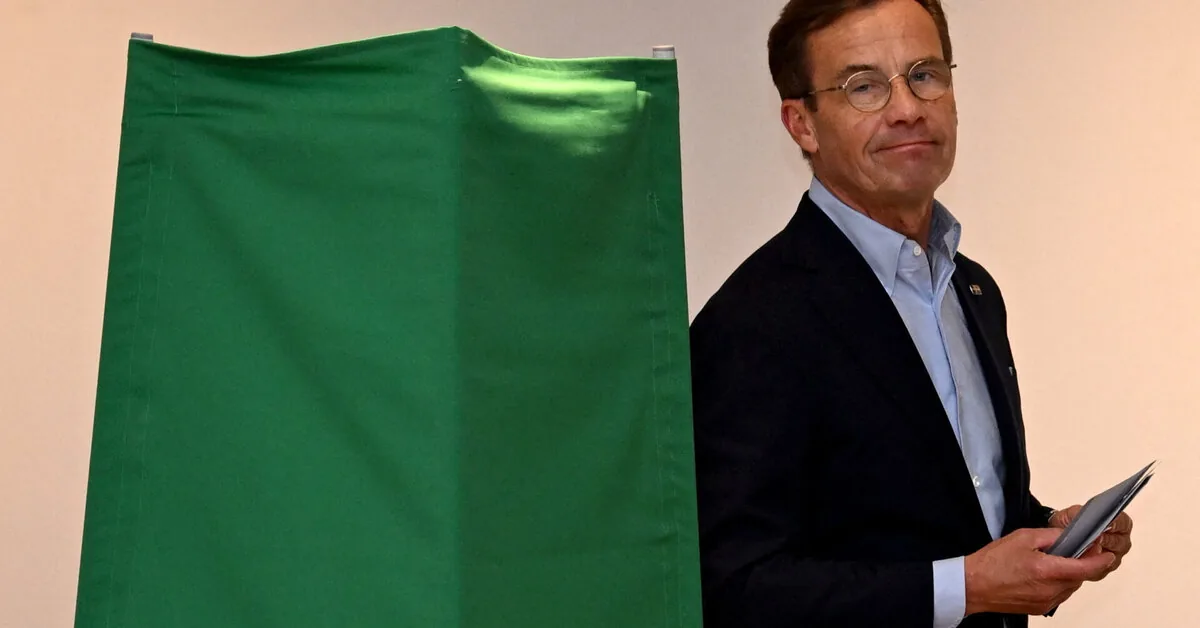









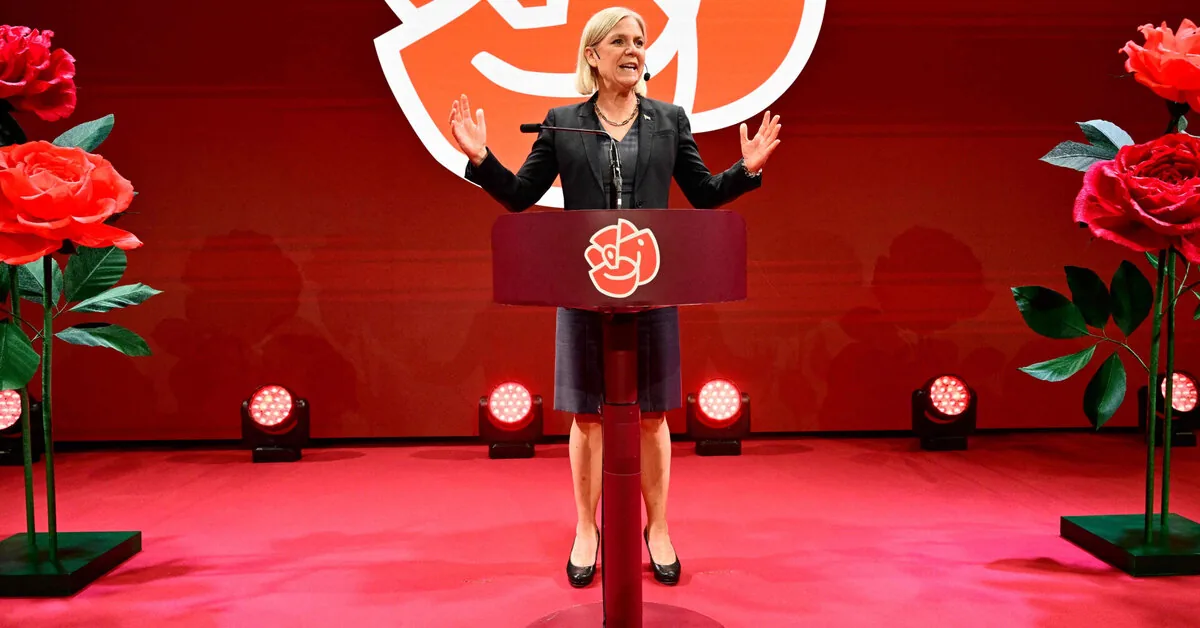
Four left-wing bloc parties won a three-seat majority in the 349-seat parliament against the current Prime Minister Ulf Kristersson’s right-wing alliance, which also includes the anti-immigration Sweden Democrats.
Read more Seimas takes up amendments strengthening agricultural cooperatives
The Swedish Election Authority reported that in the elections held on Sunday, four opposition parties won 176 seats, while the four parties forming or supporting the outgoing conservative-led government received 173 seats.
The two camps are separated by just 50,000 votes in a country of 10.6 million inhabitants.
Initially, the small lead held by the opposition was unclear, but it was confirmed after counting the advance votes – including votes from abroad – which had not yet reached the polling stations on election day.
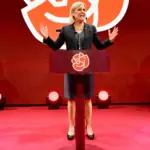
However, the opposition is deeply divided due to ideological differences, so M. Andersson’s negotiation skills and expertise will be tested in uniting the bloc, which consists of the Social Democrats, the Left Party, the Green Party, and the Centre Party.
The 59-year-old politician, who was the first woman to hold the Swedish Prime Minister’s office in 2021–2022 and previously served as Minister of Finance for seven years, is known as a determined technocrat with a direct and precise style.
Negotiations may last several weeks, and if M. Andersson fails, U. Kristersson would wait his turn to try to form his majority.
After the 2022 elections, it took 37 days to form a government – much less than in 2018, when it took 134 days.
M. Andersson will especially need to find a way to reconcile the differences between the socialist Left Party and the liberal Centre Party.
The Centre Party has stated that it will oppose a government in which the Left Party holds ministerial posts, although the latter demands this.
M. Andersson has previously ruled out a government with the Left Party but aims to govern with their support in parliament.
On election night Sunday, M. Andersson already stated that if the result remains the same, “Sweden will have a new government.”
The role of the Centrists
Spanish Prime Minister Pedro Sánchez, who leads one of the few left-wing governments in Europe, welcomed this victory.
Read more 33 cats registered, but where some of them are – unclear: breeder’s activity banned
“The Social Democrats won the Swedish elections. After four years of a right-wing government working with the far right, Swedes again support the welfare state, social justice, and the green agenda,” Sánchez wrote on the social network X.
The parliament can vote on the new prime minister as early as September 29.
U. Kristersson announced his resignation on Thursday, which will allow the Speaker of the Parliament to start negotiations with party leaders to appoint one of them – in this case M. Andersson – to form a government.
On election night, U. Kristersson said he would respect M. Andersson’s attempts to form a government but wished her luck, considering the division within her left-wing bloc.
He said he was ready to explore possibilities to find a majority among “non-socialist” parties.
It is believed he wants to woo the Centre Party, which previously belonged to the right-wing bloc, although it strongly opposes a government that would include the Sweden Democrats.
Centre Party leader Elisabeth Thand Ringqvist emphasized on election night that the political force “clearly made it known that we are entering the elections based on the premise that extremists should not dominate the government.”
On Thursday, when AFP contacted U. Kristersson’s press representative, they indicated that no public statements are planned at this time.
The Social Democrats, who ruled this Scandinavian country for most of the 20th century and remain the largest party in Sweden, also appear to have achieved their worst result in over a century, receiving 28% of the vote.
To great surprise, the anti-immigration Sweden Democrats, who entered parliament in 2010, lost support for the first time and received 17.5% of the vote – three percentage points less than in 2022.
Read more In August, unemployment continued to decrease in Estonia