




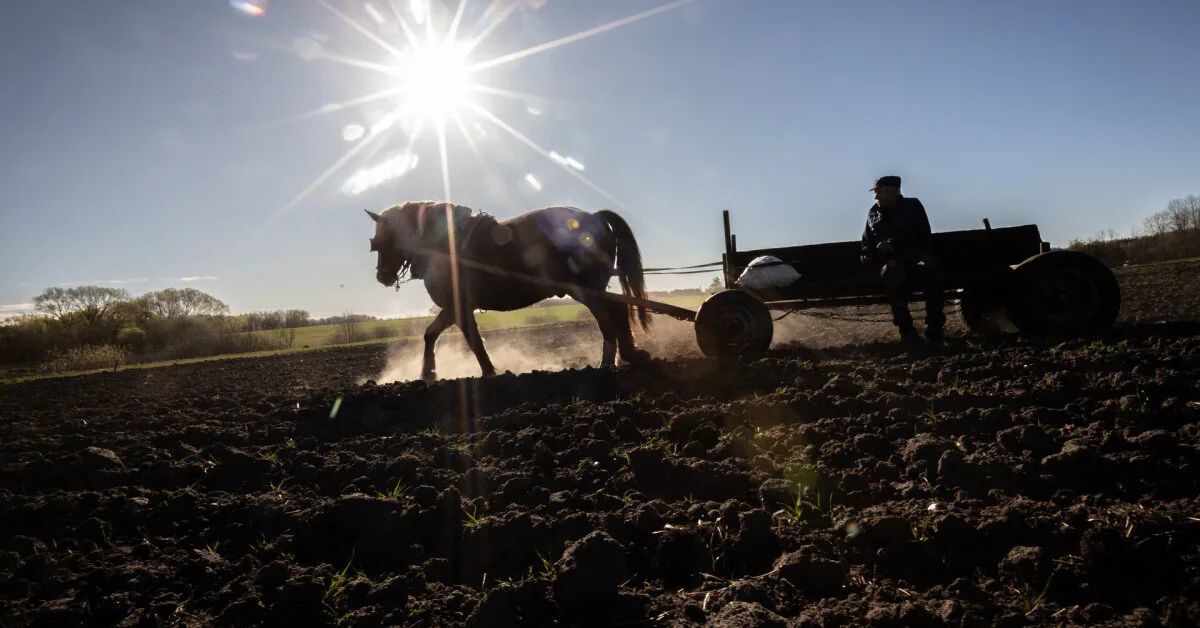
The European Parliament aims to make generational change in agriculture one of the key issues of the future Common Agricultural Policy. MEPs highlight the problem that today, a young person’s desire to farm is not enough – they need land, initial capital, loans, clear support, the opportunity to take over an operating farm, and a real prospect of making a living from it.
Read more Work and studies: what labor market challenges await students in the fall
This discussion is also important for Lithuania, where a young farmer is still more of an exception than the rule. According to the Ministry of Agriculture, young farmers under 40 make up about 11–13% of all agricultural holdings managers, while more than half of farmers are over 55 years old. This means that the question of who will work the land of Lithuania in ten or twenty years is not only an agricultural issue but also a matter of rural vitality, food production, and the future of regions.
Young farmers – a rarity
The problem is even more pronounced at the European level. In the European Union, farmers under 40 manage only about 12% of farms, and young women make up just about 3% of farmers. The EP, in its position on the future agricultural policy, also emphasizes that nearly 58% of EU farmers are over 55 years old, while those under 35 make up only about 6%.
The Parliament seeks to make it easier for young farmers to obtain financing, loans, and guarantees, so that member states pay more attention to land accessibility, farm succession to the younger generation, training, consulting, and living conditions in rural areas. In other words, the EP sees generational change as a systemic issue, not just a one-off support measure.
The Parliament seeks to make it easier for young farmers to obtain financing, loans, and guarantees.
In October 2025, the European Commission presented a strategy for generational change in agriculture aiming to double the share of young and new farmers by 2040 – from about 12% to 24%. The strategy proposes that member states allocate at least 6% of agricultural funds after 2027 to generational change. However, the EP takes a more ambitious stance – some MEPs call for an even larger share of future CAP funding to be dedicated to this goal.
EP rapporteur on generational change in agriculture Maria Walsh proposes that at least 10% of funding in the future Common Agricultural Policy period be allocated to young farmers. Her position is clear – if Europe wants young people to come into agriculture, general promises will not be enough.
“If we seriously want to change this trend, ambitions must be backed by necessary funding. We need not only good goals or voluntary support but clear and binding funding for the generation of young farmers,” emphasizes M. Walsh.
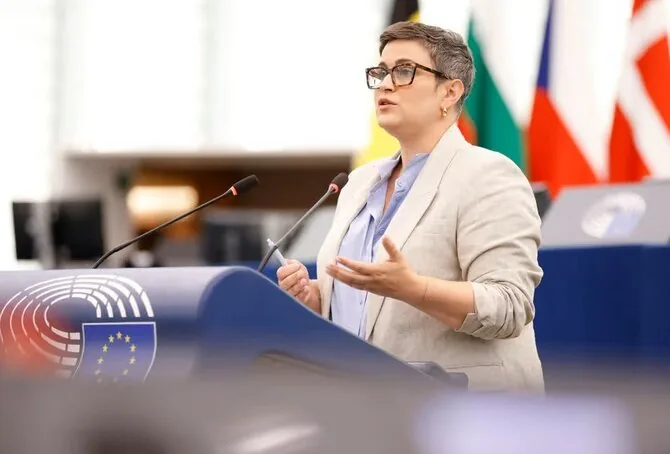
Further decisions will depend on the future Common Agricultural Policy negotiations, where the EP together with the Council will shape the final rules.
The number of farmers in Lithuania has halved
Vytenis Grigas, Vice-Chairman of the Lithuanian Chamber of Agriculture and Vice-Chairman of the Lithuanian Young Farmers and Youth Union, evaluates the European Parliament initiatives positively. According to him, the most important thing is that generational change is finally raised not as a separate support measure but as a strategic issue for the future of European agriculture.
“The fact that generational change is finally raised not as a separate support measure but as a strategic issue for the future of European agriculture is a very important change. I have been involved in the activities of the European Council of Young Farmers (CEJA) for more than three years, so I see how much effort young farmers’ organizations in Europe have put into ensuring this topic takes a proper place on the EU agenda,” says V. Grigas.
I see how much effort young farmers’ organizations in Europe have put into ensuring this topic takes a proper place on the EU agenda.
According to him, the problem in Lithuania is very clear: over about 15 years, the number of young farmers has decreased from more than 41,000 to less than 20,000. Therefore, the discussion is not only about the amount of support but also about whether there will be people to take over farms, create new ones, and maintain vibrant rural communities.
In V. Grigas’s assessment, the goal to increase the share of young and new farmers is necessary, but it should not remain just a percentage indicator. A young person needs not only a subsidy but the whole path – from access to land and financing to consulting, farm succession, and living conditions in the region.
In Lithuania, support measures for young farmers are already applied. According to the Lithuanian Agricultural and Rural Development 2023–2027 strategic plan, support is provided for establishment, investments, concessional loans, and direct payments. In the 2026 call, the grant with a concessional loan can reach up to 100,000 euros. However, the practical question remains: is that enough when land, machinery, buildings, livestock, working capital, and financial resilience for several seasons are needed?
Starting without family backing – a tough start
V. Grigas emphasizes that starting farming without family land or capital is possible, but it is still more of an exception than an easily accessible path. A person taking over a family farm often receives at least part of the land, machinery, buildings, experience, and connections. A beginner starting from scratch has to create all this themselves.
“A first-generation farmer not only has to start a business – they first have to buy themselves a job. This means that even before earning the first stable income, they have to invest in land, machinery, buildings, livestock, or other production bases,” says V. Grigas.
Read more Man dies as Spain is hit by heavy rains
According to him, there is more desire among young people to farm than opportunities. In one of the recent young farmers’ establishment calls, 1,022 applications were submitted requesting more than 61 million euros in support, but the available funding was sufficient for only about 205 applicants.
One-off support is not enough
Dr. Paulius Astrauskas, Chairman of the Lithuanian Young Farmers and Youth Union, also positively evaluates the European Parliament initiatives but emphasizes another aspect – it is important not only to help a young person start but also to create conditions to live from the farm.
“The European Commission’s strategy already talks about a broader package – financing, training, consulting, land accessibility, and living conditions in rural areas. We support this, but what matters most to me is what happens after the first investment: how will the person finance the next season, how will the family live at that time, and will they have the opportunity to sell the products under better conditions,” says Dr. P. Astrauskas.
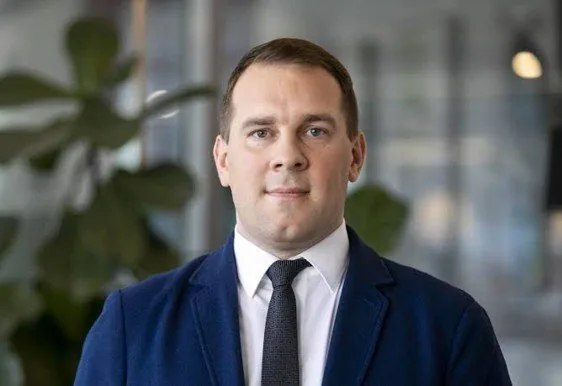
In his assessment, support must be planned for several years, not just the first start. A farm can start generating sufficient income only after several seasons, but the family needs to live immediately. Therefore, according to P. Astrauskas, it is necessary to separate the farm’s working capital from the family income support.
Support must be planned for several years, not just the first start. A farm can start generating sufficient income only after several seasons, but the family needs to live immediately.
He also draws attention to farm enlargement. If the land of a retiring farmer is simply annexed by a neighbor, a new farming family does not appear. Therefore, generational change should not be measured only by the area of arable land or investments – it is important how many young people enter the sector and how many remain in it.
A separate emphasis by P. Astrauskas is cooperation. According to him, not every starting farmer has to immediately acquire all the machinery, storage, processing, or logistics solutions.
“We believe that cooperation and collaboration in agriculture must be clearly encouraged. If a joint investment in machinery, processing, or storage helps several young farms establish themselves, its benefit should be assessed not only through the project but by how many families can continue farming,” says Dr. P. Astrauskas.
According to him, the needs of young farmers should be visible everywhere in the future Common Agricultural Policy – when allocating investments, creating financing and guarantee mechanisms, supporting cooperation, planning rural services, and assessing whether measures really help a young person establish themselves.
Ministry of Agriculture: a broader system will be needed
The Ministry of Agriculture also positively evaluates the EU institutions’ attention to generational change. According to the Ministry, attracting young farmers and their retention in the sector is important not only for agricultural competitiveness but also for long-term food security and the preservation of vibrant rural areas.
The Ministry emphasizes that the issues raised in the European Parliament are relevant to Lithuania as well: land accessibility, financing, farm succession, the need for knowledge and consulting. Therefore, the Ministry supports the direction that generational change policy should not be limited to a one-off payment to a young farmer.
After 2027, the details of support measures will depend on the final EU legal regulations, the needs of the Lithuanian agricultural sector, and the financial resources allocated for CAP implementation. However, it is already clear that the European Commission’s proposals talk about national generational change strategies and a broader “start-up package” for young farmers, covering not only establishment support but also investment support, concessional loans, direct payments, consulting, and training.
An important planned change in Lithuania is a new pilot Strategic Plan measure “Cooperation for farm succession.” It aims to create conditions to transfer operating farms to the younger generation while preserving accumulated professional knowledge, practical skills, and farming experience. This measure would support cooperation between the retiring farmer and the farm successor during the transition period and could also finance necessary adaptation investments.
However, the Ministry acknowledges that land accessibility remains one of the most challenging problems. Current support measures can help accumulate initial capital and finance farm creation or expansion, but they cannot by themselves increase land supply on the market or solve the problem of high land prices.
The project is partly funded by the European Parliament. However, the author(s) alone are responsible for the opinions or views expressed in the content; the European Parliament cannot be held responsible for them.
Read more Famous writer and playwright Bonnie Greer has died