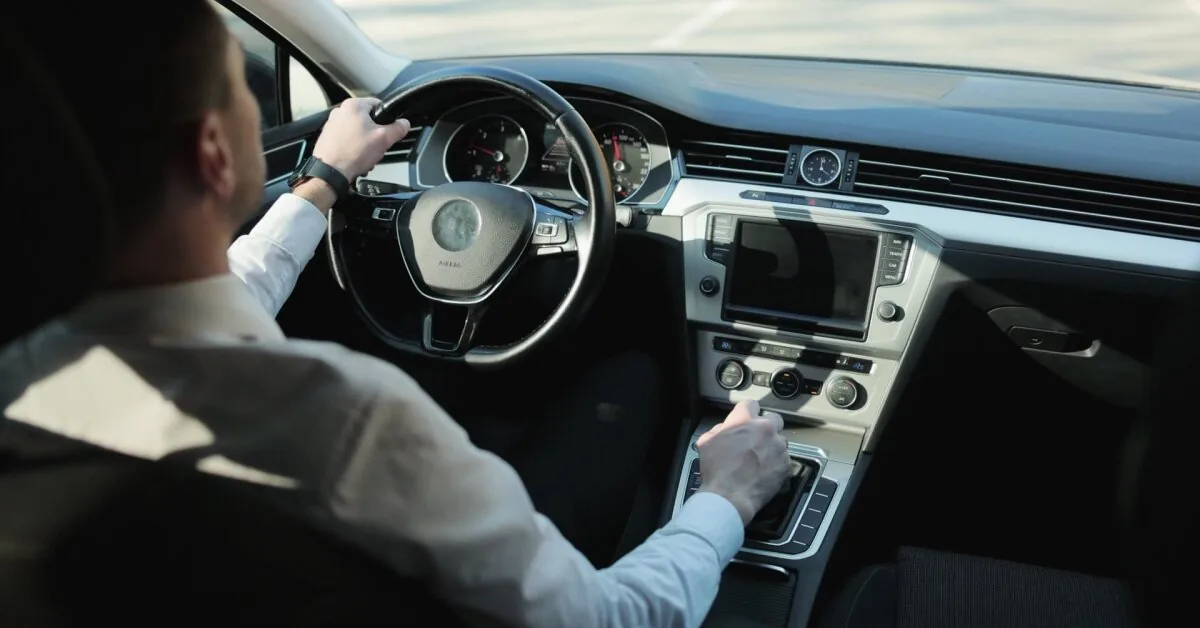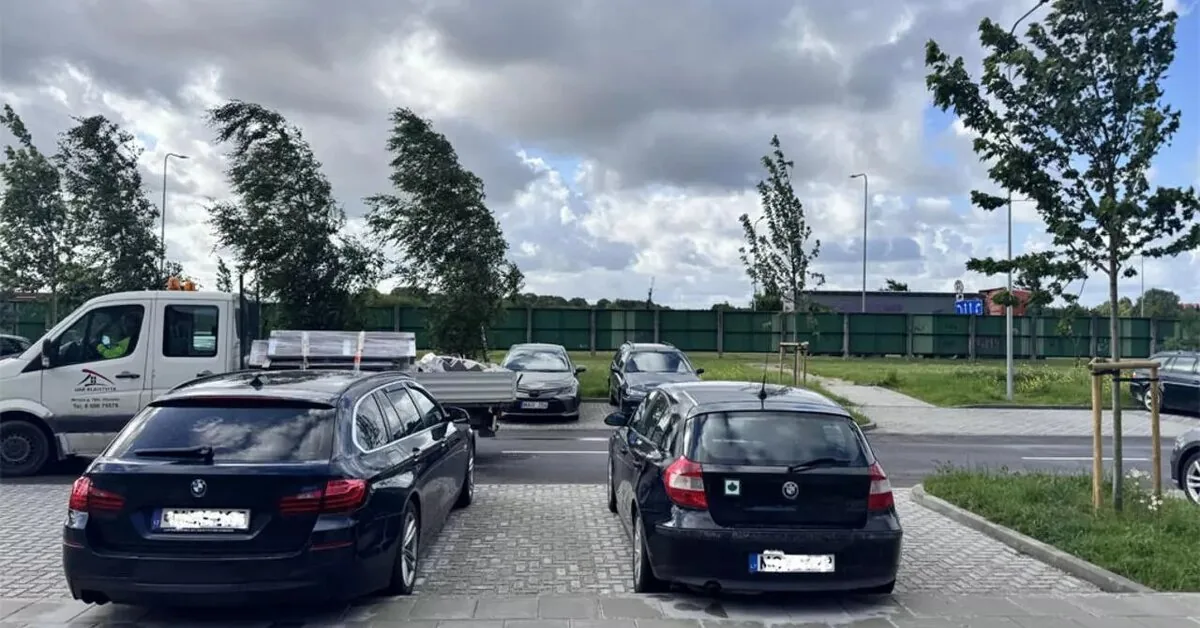









The more time we spend behind the wheel, the more actions we perform automatically, which can lead to overconfidence in our abilities. Psychologist and psychotherapist Lina Bagdonavičienė notes that many people tend to believe they drive at least somewhat better than the average driver and sometimes overestimate their abilities, which can pose a risk. Traffic rules, cars, and their technologies are changing, and new road users are appearing, so relying solely on accumulated driving experience is not enough.
Read more Officers: 18 people injured during Russian attacks in Kyiv
Requirements are even higher for professional drivers. They spend a large part of the day on the road, with heavy traffic, varying weather and road conditions, and sometimes unpredictable behavior of other road users being their daily routine. Therefore, even many years of experience does not mean there is nothing left to learn.
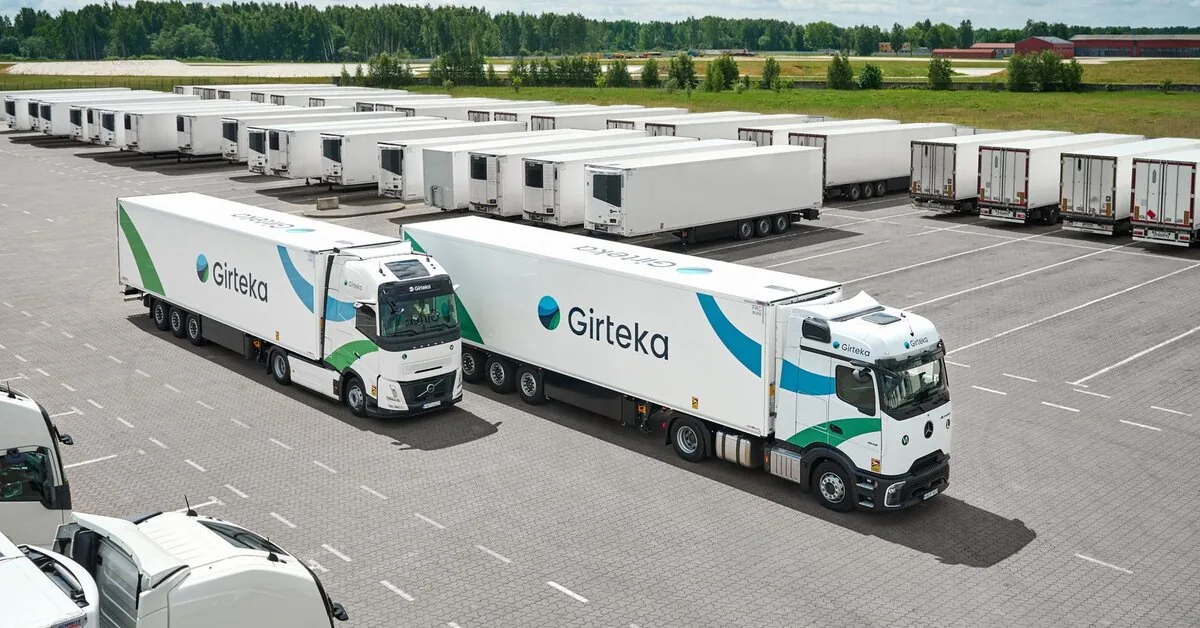
Girteka, the logistics company managing the largest private vehicle fleet in Europe, considers safe driving a skill that must be constantly improved. The company employs truck drivers with very diverse experience – from those just starting their professional journey to those who have spent most of their working life on the roads.
Singaras Čepaitis, head of Girteka’s driver training team, says that continuous skill improvement is important to all of them: “We periodically conduct safe driving training, analyze traffic incidents, and pay a lot of attention to economical driving.” According to the expert, economical driving is primarily safe driving because it requires insight – the ability to assess the situation in advance, anticipate possible actions of other road users, choose the appropriate speed, and brake smoothly. There is also another benefit – lower fuel consumption and less environmental impact.
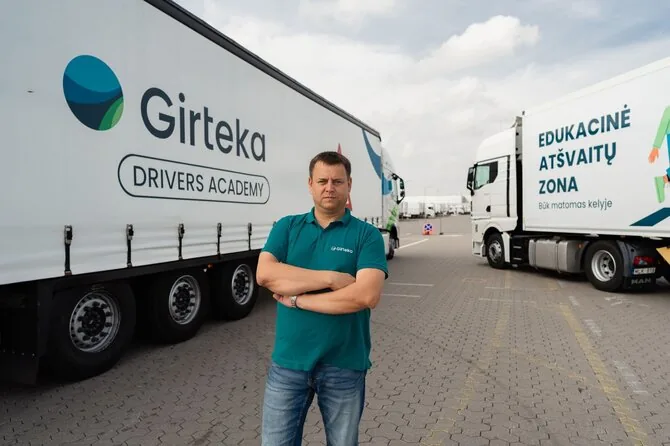
At Girteka, drivers learn not only from mistakes but also from risky situations
An important part of Girteka’s driver training is the analysis of situations that have already occurred. However, according to S. Čepaitis, the goal is not just to identify the culprit. After a traffic incident, drivers analyze why it happened and what could have been done differently. Even if another road user violated the traffic rules, the question is raised whether the dangerous situation could have been noticed earlier and avoided by the driver’s own actions.
“It is important to learn and take lessons after every incident, or even better – before it happens. To ask yourself: what could I have done differently so that in the next situation we would all be safer,” says S. Čepaitis.
This ability is especially important for professional drivers. When driving in different countries, cities, or traffic conditions, knowing the rules is not enough – one must observe the environment and adapt to it. If a driver knows in advance that traffic is heavier or other drivers’ behavior is harder to predict in a certain place, they can use this information to make safer decisions.
Psychologist and psychotherapist L. Bagdonavičienė emphasizes that self-reflection is important for every driver – the ability to evaluate not only the behavior of other road users but also one’s own. Admitting that in a particular situation our decision could have been different or that our skills were insufficient is not a sign of weakness. On the contrary, this ability allows learning from experience and choosing a safer action next time.
We bring emotions behind the wheel
Driving skills are not just about controlling the vehicle and following the rules. A person’s state is equally important for safety. “When we get into a car, we do not leave our emotions somewhere else,” points out L. Bagdonavičienė.
Anger, stress, anxiety, or rushing can change how we assess the environment and react to others’ actions. According to the psychologist, strong emotions narrow attention. Instead of observing the entire traffic situation, a person may remain mentally focused on the driver or conflict that just angered them.
This is especially dangerous when an emotional reaction immediately turns into action – the desire to chase another driver, “teach them a lesson,” or respond with an aggressive maneuver. L. Bagdonavičienė says it is important not only to recognize one’s emotions but also to take responsibility for how we react to them. “Emotions are our own responsibility,” she emphasizes.

According to the psychologist, a culture of safe driving should not be based solely on fear of fines or control. It is important that the safety of oneself and others on the road becomes a value for the driver.
The exam is not the final point
Tautvydas Paliulis, director of the Service Management and Development Department at Regitra, compares the driving exam to a maturity exam: after passing the exam, a person decides on further improvement and learning. The same applies to driving – after passing the exam, we decide how much and how intensively we want to improve our driving skills.

This is especially relevant because the traffic environment itself is changing. Ten years ago, there were far fewer cyclists and micromobility devices on the roads; during that time, vehicle technologies, traffic rules, and traffic organization have changed.
Read more Vilniaus vandenys introduced an innovation: will consume significantly less water
“We ourselves decide how much we want to continue improving and learning in traffic,” notes T. Paliulis.
Driving instructor and trainer Artūras Pakėnas suggests looking at it even more simply – remembering yourself on the day you first got your driver’s license and comparing that driver to who you are today.
The difference is usually obvious. Therefore, according to A. Pakėnas, it makes sense to understand driver training in stages: first, a person is given a foundation that allows them to start driving independently and safely, and then competencies should be deepened along with experience. According to him, this is a “long-term program for life.”
According to the experienced driving instructor, qualification renewal is taken for granted in many professions, but behind the wheel, we often follow a different logic – once we get the license, we think we have learned everything for life. Although a person who got their license decades ago today drives a completely different vehicle and participates in a significantly changed traffic environment.
Sometimes you need to look from another driver’s perspective
Another condition for safer traffic is the ability to understand what another person sees and cannot see on the road. This is especially important near heavy vehicles.
Singaras Čepaitis, head of Girteka’s driver training team, who himself worked as a driver for many years and traveled European roads, reminds that a truck driver sits much higher than a passenger car driver and can see the road ahead very well, but this does not mean they see everything equally well around the vehicle.
The length of a heavy vehicle can reach about 16.5 meters, and the height – 4 meters. It is especially difficult to observe what is happening close to the truck and on its right side. Although several mirrors help with this, their capabilities are limited. “There are six mirrors, but the driver has only two eyes,” says S. Čepaitis.
A driver cannot look at all mirrors at once, so at times parts of the environment remain outside their direct attention. Visibility can also be impaired by rain, darkness, wet road surfaces, or other vehicles blending with the environment.
Therefore, S. Čepaitis advises passenger car drivers not to linger in places near trucks where their vehicle is harder to notice. If overtaking does not seem safe, it is better to fall back and lose a few minutes than to take a risk.
Theory will be tested in practice
Understanding such things theoretically is not always easy. Since 2016, Girteka, which organizes safe traffic education, has been trying to provide an opportunity to look at traffic from the perspective of a heavy vehicle driver.
From September 18 to 20, visitors to the “Auto Expo Vilnius” exhibition at Litexpo will be able to sit in a truck cabin themselves and see with their own eyes what the driver sees well and which zones around the vehicle are harder to observe.
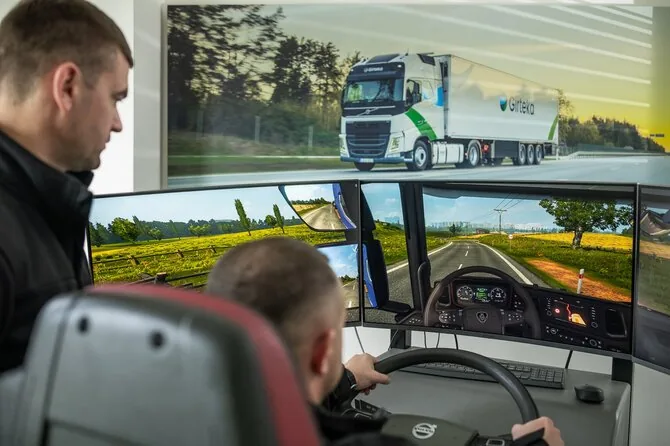
Such experience is important not only for beginner drivers. Even after many years of driving a passenger car, it is difficult to accurately imagine how the same traffic situation looks from the high truck cabin or how much space a vehicle over ten meters long needs to maneuver. And this is just one example of how many new things about driving can be discovered even with extensive experience.
This is exactly the kind of safe driving culture Girteka aims to strengthen both among its professional drivers and in the wider community: road safety starts not from how many years we have had a driver’s license, but from the desire and ability to continue learning.
Read more VRK started an investigation into the services provided by Laura Matjošaitytė to «Nemuno aušra»